Tipping at a nail salon may seem like a small, almost incidental gesture, but in reality, it plays a significant and meaningful role in how the service economy functions. It exists at the intersection of etiquette, compensation, and human interaction, shaping the overall experience for both clients and technicians in subtle yet powerful ways. While it may appear minor to some, the practice of tipping reflects broader societal attitudes toward labor, skill, and appreciation.
Nail technicians perform highly detailed, hands-on work that combines hygiene, technical precision, and creative artistry. Their daily tasks require more than just manual skill—they demand sustained focus, patience, and the ability to adapt to a client’s specific preferences. Many technicians spend long hours standing or sitting in physically demanding positions, contending with repetitive motions that can strain hands, wrists, and backs. Despite the physical and mental effort, base wages in many salons are modest, making tips a vital portion of their overall income. In this context, tipping goes beyond a simple reward for a pleasing result; it is a practical acknowledgment of the time, expertise, and careful attention that a technician invests in every service. It’s a way to say, without words, “I see the effort you’ve put in, and I value it.”
Over time, tipping has become part of the unspoken rhythm of salon culture. Consistent, fair tipping can create a more comfortable, trusting environment, contributing to a sense of mutual respect between client and technician. When clients tip thoughtfully and regularly, appointments can feel less like a simple transaction and more like a personal, familiar interaction. Relationships may develop over months or years, where both parties anticipate preferences, discuss new trends, and build a sense of rapport. In this way, tipping fosters not only economic stability but also a welcoming social atmosphere within the salon.
Clients often wonder whether tipping should apply only to elaborate or high-end services, or if every visit warrants a gratuity. Industry norms generally support tipping for all nail services. Even basic manicures and pedicures involve multiple steps that require skill and precision—sanitation, nail shaping, cuticle care, massage, and careful application of polish—all demanding knowledge and attention to detail. While the visible results may seem simple, the process behind them is intricate, and tipping acknowledges this labor, regardless of the complexity of the final design.
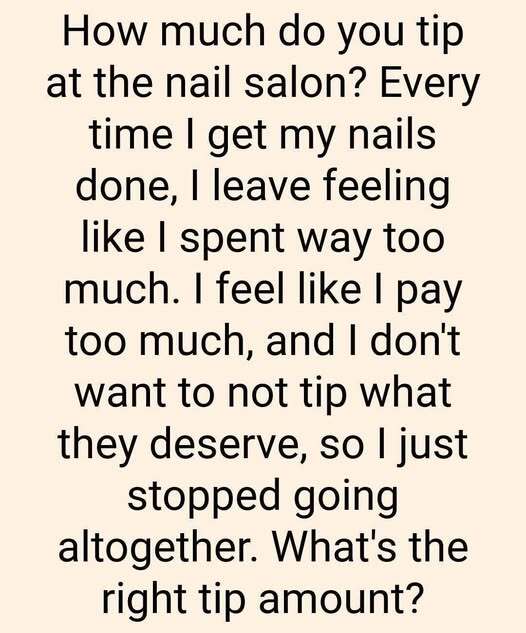
As for how much to tip, there is no universally binding rule, but common practice falls in the range of 15 to 20 percent of the total service cost. For more time-intensive services, such as intricate nail art, acrylic sets, gel extensions, or custom designs, tipping toward the higher end of that range is often appropriate. These services require extra preparation, precision, and creativity, increasing both the physical and cognitive effort for the technician.
Other considerations can also influence tipping decisions. Service quality, punctuality, attention to detail, and responsiveness to special requests may all factor into how clients choose to tip. If a technician accommodates last-minute changes, stays past the scheduled appointment time, or demonstrates exceptional care for a client’s comfort, a thoughtful tip acknowledges that additional effort. In this sense, tipping becomes a nuanced form of communication—expressing gratitude not only for the result but also for the care, professionalism, and dedication behind it.
Ultimately, tipping is about more than percentages or following etiquette; it is a reflection of values. It signals respect for skilled labor, recognition of personal service work, and appreciation for the human effort that goes into making clients feel cared for and valued. Thoughtful tipping reinforces the professionalism of the salon industry, strengthens the client-technician relationship, and contributes to a healthier, fairer working environment for everyone involved. In a world where service work is often undervalued, tipping thoughtfully becomes both a personal choice and a social statement, affirming that effort, skill, and dedication deserve acknowledgment.