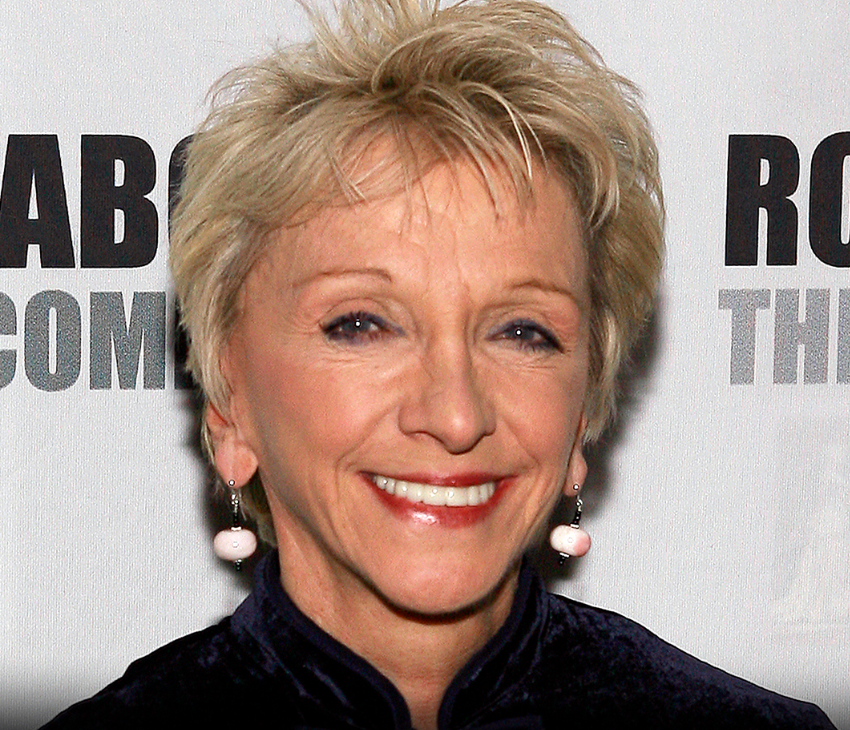
Elizabeth Franz’s passing has left a profound ache across the many worlds she illuminated — Broadway, film, and television. She was never the kind of performer who chased spectacle, celebrity, or fleeting headlines. Instead, she built a legacy that was quiet but undeniable: one grounded in depth, meticulous craft, and unflinching emotional honesty. At 84, after a battle with cancer complicated by a severe reaction to treatment, she passed away at her home in Woodbury, Connecticut, with her husband, Christopher Pelham, confirming the news. Her death is a reminder of just how rare it is for an artist to maintain such consistent excellence over six decades — and yet remain, in many ways, underrated.
Franz’s colleagues often called her “America’s Judi Dench,” a comparison that carried no exaggeration. It reflected the way she inhabited every role fully, stripping away any artifice, and rooting her performances in lived experience. Her rise was never sudden or glamorous. She began her career Off-Broadway, taking on roles that only the most devoted theatergoers remembered, honing her craft in small theaters where the audience was intimate, but the stakes were high. Then she landed the role that would define the early part of her career — Sister Mary Ignatius in Sister Mary Ignatius Explains It All for You. The play was controversial, but Franz’s performance was magnetic. Critics and audiences alike were captivated. She won an Obie Award, and in a striking irony, some of the very nuns who had come to protest the production eventually became friends, drawn in by her humanity and sincerity. This combination of blunt force and tenderness was the hallmark of Franz’s approach to acting.
Perhaps the performance most widely remembered is her portrayal of Linda Loman in the 1999 Broadway revival of Death of a Salesman, opposite Brian Dennehy. Franz didn’t merely act in the role — she reshaped it. Critics and scholars alike recalibrated their understanding of Linda Loman because of the nuance and dignity Franz brought to the character. Arthur Miller himself noted that she restored a fire to Linda, a mix of protectiveness, loyalty, and quiet strength that he felt had been missing in prior interpretations. Her Linda was neither passive nor saintly; she was alert, fierce, painfully human, and quietly holding together a world unraveling around her. The performance earned Franz a Tony Award and later an Emmy nomination when she reprised the role for Showtime’s film adaptation, further cementing her impact on both stage and screen.
Franz’s stage career reads like a comprehensive syllabus of American and international theater. Her credits include Brighton Beach Memoirs, Morning’s at Seven, The Cherry Orchard, The Miracle Worker, Uncle Vanya, and countless other productions that showcased her remarkable versatility. She continued to work well into her later years, not from necessity but from devotion — the craft itself was her lifeblood. Directors relied on her to bring gravity to a production; younger actors sought her guidance and generosity; audiences trusted that she would deliver truth, scene after scene.
Her film and television work mirrored the same grounded power. She stood shoulder-to-shoulder with major stars, holding her own alongside Robert De Niro in Jacknife, Harrison Ford in Sabrina, and Jamie Lee Curtis in Christmas with the Kranks. On television, she became a familiar, beloved presence: Mia, the compassionate innkeeper in Gilmore Girls, and numerous guest appearances on Grey’s Anatomy, Homeland, Judging Amy, Law & Order: SVU, and Cold Case. Franz had the rare ability to enter a supporting role and make it resonate fully. Her characters were never merely decorative; they were lived-in, tactile, and emotionally tangible.
Much of Franz’s artistry can be traced to a difficult upbringing in Akron, Ohio. Her father spent 36 years in a tire factory before being abruptly dismissed, a blow that left him emotionally fractured. Her mother struggled with mental illness, disappearing for stretches of time that forced Franz to mature quickly and internalize her own emotions. Acting became a sanctuary, a space where depth of feeling was not only safe but essential. She eventually honed her talent at the American Academy of Dramatic Arts, and from there she carved out a career that had once seemed nearly impossible.
Her personal life carried its own tapestry of joy and hardship. She was married to actor Edward Binns until his death in 1990. Later, she married Christopher Pelham, who became not only her life partner but also her steadfast support through the final, most challenging months of her illness. She leaves behind her husband Pelham and her brother Joe, both of whom witnessed the private, grounded side of a woman who was extraordinary onstage yet deeply human off it.
Elizabeth Franz leaves behind more than an impressive list of credits. She leaves a blueprint for honest acting: performances that are emotionally rigorous, deeply empathetic, and unpretentious. Her work didn’t merely entertain; it revealed the complexities of human life — our contradictions, our resilience, our quiet suffering. For those who saw her on stage, her presence was unforgettable. For television audiences, she was a steady, comforting force. For colleagues, she was a master class in generosity and technique. And for new audiences discovering her work, she serves as a reminder that greatness is often subtle, disciplined, and profoundly human.
Her legacy stretches beyond awards and reviews. It resides in every actor she mentored, every audience she moved, and every character she brought to life with authenticity. She demonstrated that brilliance doesn’t always need fanfare, that craft is worth devotion, and that truth in performance is a gift that continues long after the curtain falls. Franz never phoned it in — she gave her full self to every role, every performance, every day she could. Her impact will continue to outlast the footlights, inspiring generations of performers and audiences alike to value integrity, depth, and heart in the art of storytelling.
Rest in peace to a remarkable woman whose artistry, dedication, and humanity made the world brighter. Elizabeth Franz’s contributions will endure, reminding us that some artists don’t just perform — they elevate every space they touch, leaving behind lessons in grace, power, and unflinching honesty that few can match.