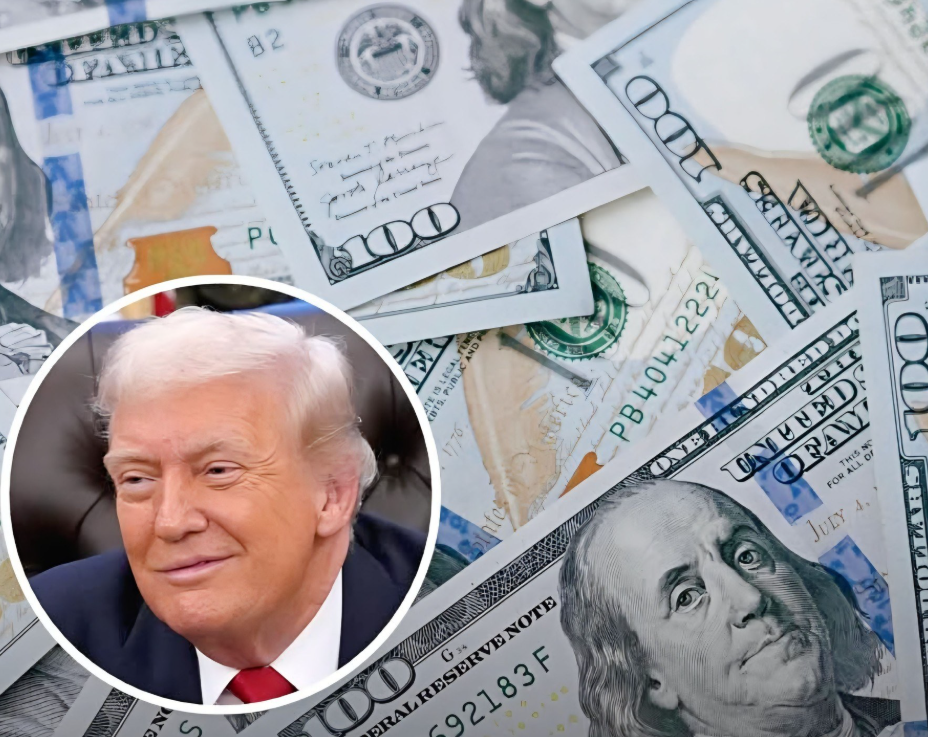
He stood before his followers and proclaimed, with a confidence shaped by months of campaigning, that every ordinary American could soon receive a sweeping new “dividend.” This payment, he insisted, would not require raising anyone’s income taxes or expanding federal deficits in the usual ways. Instead, it would be financed entirely by tariffs imposed on the vast flow of foreign goods entering the United States. The idea was framed as bold but straightforward: each qualifying citizen would receive at least several thousand dollars a year, while higher-income households would be excluded. No painful budget cuts were mentioned, no tax increases were suggested, and no trade-offs were acknowledged. The message was crafted to sound clean, empowering, and almost effortless.
Yet beneath the fiery online posts, memorable slogans, and big promises, many essential details remained vague or entirely unaddressed. Key questions about who would ultimately bear the burden of these tariffs, how the revenue would be calculated, who would administer the payouts, and how long such a system could realistically last were left unanswered. The lack of explanation created a gap between the emotional appeal of the proposal and the economic and logistical realities that would inevitably shape its implementation.
When evaluating a policy of this scale, it becomes crucial to look past the resonance of the rhetoric and examine the underlying mechanics. Tariffs, at their core, are taxes on imported goods. Although they are paid directly by importers at the border, the associated costs are often transmitted through the supply chain and end up reflected in higher prices for consumers. In practice, this means the financial impact shows up quietly in everyday transactions—in the cost of clothing, electronics, food items, construction materials, and many other goods that rely on international trade. While a sufficiently high tariff regime can generate significant government revenue, the broader economic costs can be harder to quantify: shifts in consumer spending, reduced business competitiveness, inflationary pressures, and the risk of retaliatory measures from trading partners who may impose their own tariffs in response. Each of these effects can ripple through the economy in ways that extend far beyond the initial policy announcement.
Furthermore, the creation of a nationwide dividend funded exclusively by tariff revenue would require an extensive legal and administrative structure. Lawmakers would need to define clear eligibility criteria, establish income cutoffs, verify citizenship or residency status, and design a reliable system for distributing payments. They would also have to address the practical challenge of fluctuating tariff revenue, which varies depending on trade volume, global economic conditions, and international policy shifts. In years when imports decrease—or when tariff policies trigger trade wars—revenue could fall dramatically, leaving the government unable to finance the promised payments without resorting to borrowing or additional taxes. This raises questions about stability: would the dividend remain consistent year to year, or would households face unpredictable changes in payments?
Without detailed plans addressing these complexities, the proposal remains more of a political vision than a fully articulated policy ready for implementation. For citizens evaluating the idea, the central issues revolve around weighing the potential benefits of receiving annual payments against the likelihood of higher consumer prices and the broader economic adjustments that tariffs tend to trigger. It also requires considering whether a system dependent on volatile tariff revenue could be sustained over time or whether it would eventually require supplemental funding or restructuring. Ultimately, understanding the feasibility of such a dividend means looking beyond the surface promise and engaging with the economic forces, administrative demands, and long-term effects that would shape its success or failure.