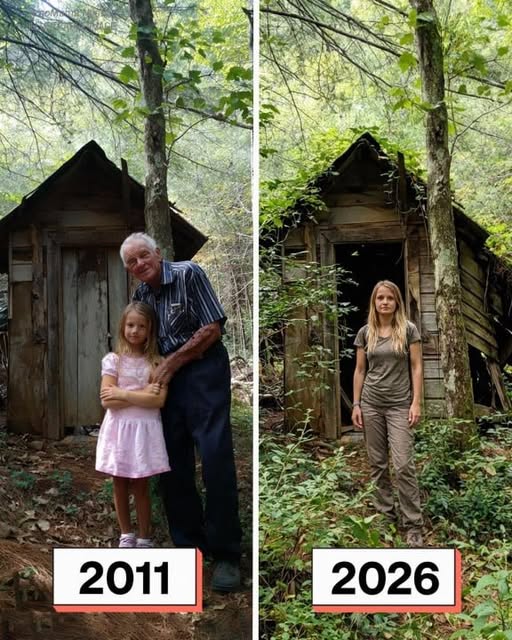
When my father decided how to divide what he owned, it all sounded simple at first. Clean. Practical. Almost fair—at least on the surface. My brother received the family home, the one everyone could see, evaluate, and immediately recognize as valuable. I was given my grandfather’s old cabin—the one most people barely remembered unless they were joking about it. In that moment, it didn’t feel meaningful. It felt like what was left over.
The conversation happened at the kitchen table, quiet but tense in a way no one acknowledged out loud. My father spoke carefully, like he was trying to avoid conflict, not realizing he was creating it.
“The house goes to Chris,” he said. “He has a family. He needs stability.”
Chris didn’t question it. He just nodded, already comfortable with the outcome.
Then my father turned to me.
“You’ll take your grandfather’s cabin.”
I paused, unsure if I had heard correctly.
“The hunting cabin?” I asked.
He nodded quickly, almost too quickly. “You don’t need much right now.”
Chris let out a small laugh under his breath. “You got the shack. Lucky you.”
I didn’t argue. Not because I agreed, but because I didn’t know what to say. Some decisions move too fast—you don’t have time to react before they’re already considered final. By the time I processed it, the moment had passed. It was done.
Later, outside in the driveway, Chris made sure I understood what had just happened.
“You got memories,” he said, leaning casually against his truck. “I got something that actually matters.”
At the time, a part of me believed him.
Because if you looked at it from the outside, the cabin didn’t seem like much. It leaned slightly, surrounded by overgrown brush, its wood faded and weathered by years of neglect. When I finally drove out there alone, I wasn’t expecting anything more than confirmation that I’d been given the lesser share.
But what I found wasn’t empty.
It was waiting.
The door barely opened, the hinges creaking loudly, like they hadn’t been touched in years. Inside, dust floated in the air, untouched and still. The small bed remained in the corner—the same place where my grandfather used to sit beside me, reading quietly by lantern light. I could almost hear his voice again—steady, calm, never rushing through the moment.
That place had never made me feel like I had less.
It had made me feel like I mattered.
Then I noticed the floor.
At first, it looked like damage—boards sunken and broken, a dark gap where the wood had given way. My first instinct was concern. But when I stepped closer, I realized something unexpected.
It wasn’t just a collapse.
It was an opening.
Beneath it were stone steps.
I found a flashlight in the corner and made my way down carefully. With each step, the air shifted—cooler, quieter, untouched by time. At the bottom, I found a small cellar.
Not abandoned.
Not forgotten.
Deliberately hidden.
Shelves lined the walls, filled with metal boxes. A large trunk sat nearby, worn but solid. Everything was organized, placed with purpose. Nothing about it felt accidental.
My hands trembled as I opened the trunk.
Inside were documents—maps, land records, official papers. At first glance, they meant very little to me. Just lines, numbers, names I didn’t recognize.
Until I saw the envelope.
My name was written on it in my grandfather’s handwriting.
I sat down before opening it, instinctively understanding that this wasn’t just another discovery. This mattered.
“My girl,” it began.
And suddenly, I wasn’t standing in that cellar anymore. I was a child again, sitting beside him, listening as he spoke in that familiar, steady voice.
He explained that he hadn’t hidden these things out of secrecy or mistrust—but because he knew who I was. He wrote that my brother had always been drawn to what was obvious, what could be claimed quickly and measured easily. But I had been different. I had stayed. I had listened. I had cared for that place even when it offered nothing in return.
Then he revealed the truth.
The land surrounding that cabin was worth more than the house.
Far more than anyone realized.
But that wasn’t the point.
He hadn’t chosen me because of its value.
He had chosen me because I wouldn’t reduce it to value.
Because I would understand it.
When I finished reading, nothing dramatic happened. There was no sudden rush of emotion, no overwhelming reaction.
Just a quiet certainty settling inside me.
Like something had finally aligned.
A week later, a lawyer confirmed everything. The land was indeed worth more than anyone in my family had imagined.
My father was shocked.
Chris was angry.
He showed up without warning, his frustration clear before he even spoke.
“You knew,” he said immediately. “You let everyone think you got nothing.”
“I didn’t know,” I replied calmly. “Not until I found it.”
He shook his head, unwilling to accept that.
I handed him the letter.
He barely glanced at it before dismissing it.
“So what? That makes it fair?”
“No,” I said. “It explains it.”
That was the moment everything could have gone differently.
I could have offered to share it. Tried to repair the tension. Made a compromise to keep peace.
But I didn’t.
“I’m keeping it,” I said. “I’m restoring the cabin. And I’m protecting the land.”
He laughed, like the idea itself didn’t make sense.
“You’re turning down millions.”
Before I could respond, my father spoke quietly from behind him.
“Your grandfather never believed in wasting what mattered.”
“And he never respected greed,” I added.
Chris left the same way he always had—frustrated, convinced he’d been treated unfairly, unwilling to see beyond what he thought he deserved.
And this time, I didn’t try to stop him.
I let him go.
Months later, the cabin stood strong again.
The land felt alive in a way I hadn’t noticed before. I worked it slowly, learning as I went. I turned down offers that could have changed everything overnight.
People asked me why I would walk away from that kind of money.
The answer was simple.
“Because this wasn’t given to me to sell.”
I framed my grandfather’s letter and hung it above the bed.
Not to prove anything to anyone else.
Not to justify my decision.
But to remind myself.
Because in the end, what I received wasn’t just land.
It wasn’t wealth.
It was something far more lasting.
The feeling of being truly known.
Of being chosen—not for what I had, or what I could gain—but for who I had always been.
And understanding that some inheritances aren’t meant to be spent.
They’re meant to be honored.