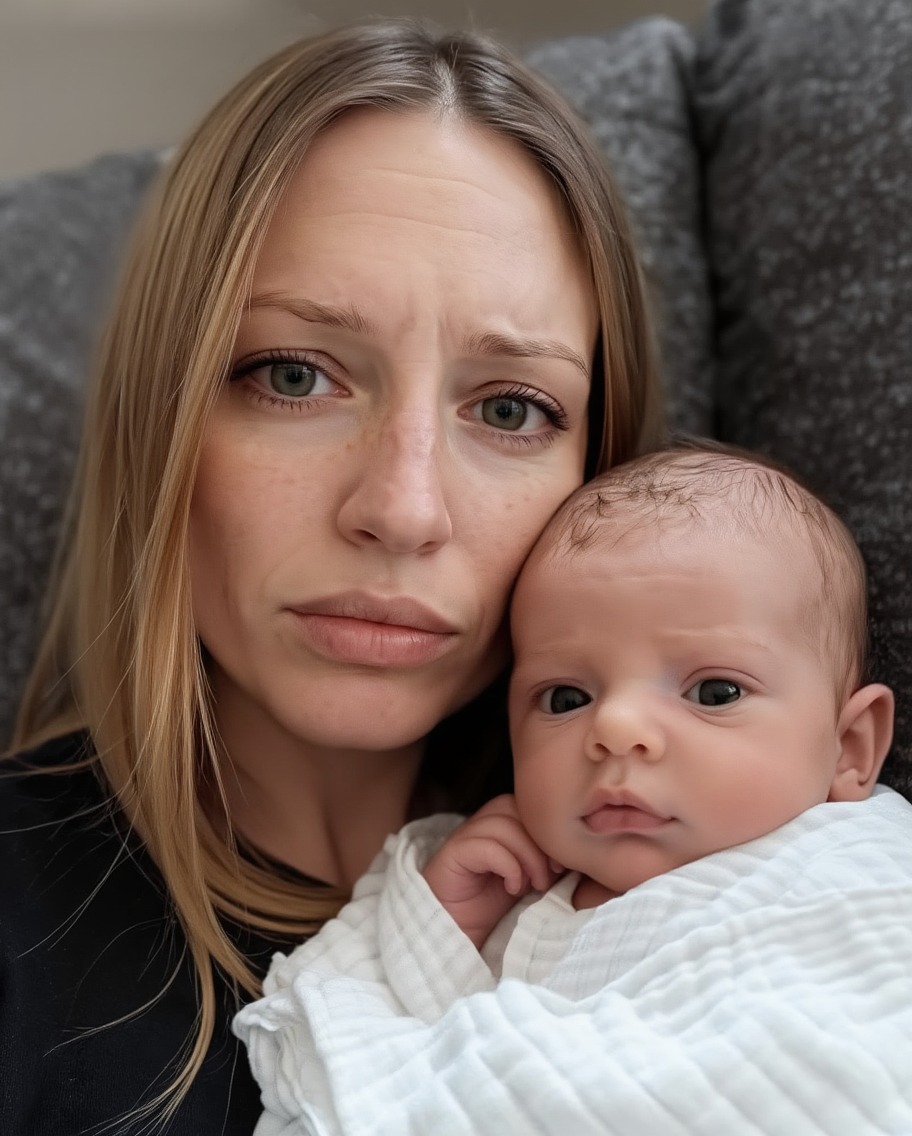
I’m 30, married to Drew, and we have a six-month-old daughter, Sadie — pure sunshine who lights up even the dreariest days. Life had felt full and promising, even exhausting in the usual ways new parents understand, until I caught a brutal virus that left me feverish, coughing, and barely able to stand. I was completely worn out, still recovering from Sadie’s cold, and utterly alone in a way that shook me. I had hoped Drew would step up, at least to share a moment of the load, to hold her while I collapsed for a minute, to reassure me I wasn’t failing as a mother. Instead, he called my coughing “unbearable,” packed a bag, kissed Sadie (but not me), and left to stay at his mother’s house.
I sat on the couch, holding our crying baby, furious, bewildered, and numb all at once. My arms ached, my head throbbed, and every instinct screamed that I couldn’t rely on him. He texted once, coldly: “You’re the mom, you know how to handle it,” and never checked in again. I survived that weekend on Tylenol, a few sips of water, and pure instinct, carrying Sadie around like a tiny, fragile anchor. By Sunday night, a quiet determination had taken root. I made a choice: I wouldn’t beg for help again, not from someone unwilling or unable to step up. I quietly began preparing for a future I hadn’t imagined needing — lawyer consultations, legal documents, opening my own bank account — all while pretending that everything was fine, as if our marriage were still intact.
When Drew returned two days later, acting as if nothing had happened, I smiled, nodded, and played along for two weeks, all while quietly finishing my preparations. I rehearsed conversations in my head, gathered proof, and readied a plan that would protect me and Sadie. Then, one morning, I told him I was visiting my mom — and I didn’t come back. His phone calls began angry, then shifted to panicked, then pleading. My lawyer sent the papers: separation, custody arrangements, financial documentation. I had receipts, timestamps, and every text message from that weekend to prove abandonment during a medical crisis, and it was enough.
Months later, the divorce was final. I moved two hours away, closer to my mom, to a small townhouse where Sadie’s giggles fill the space and I sleep without the heavy ache of dread. Life is quieter now, calmer, and although I still feel sadness for what I lost — the marriage I had once believed in — I see clearly the man Drew truly is. Sickness had revealed him, not changed him. And I had chosen something more important than hope for him: safety, stability, and a positive model for my daughter.
Six months into this new life, Drew appeared at my door. Thin, timid, and apologetic, claiming therapy and personal change. I listened to his words, but I had already given my last chance. He will have visitation under the court order — nothing more. I closed the door behind him, my chest tight but resolute, and whispered to Sadie, holding her close: “You come first, always.” And in that moment, I knew that every choice I had made — every difficult, painful, lonely step — had been for her, for the little sunshine who would grow up knowing what it means to be truly cared for, protected, and prioritized above all else.