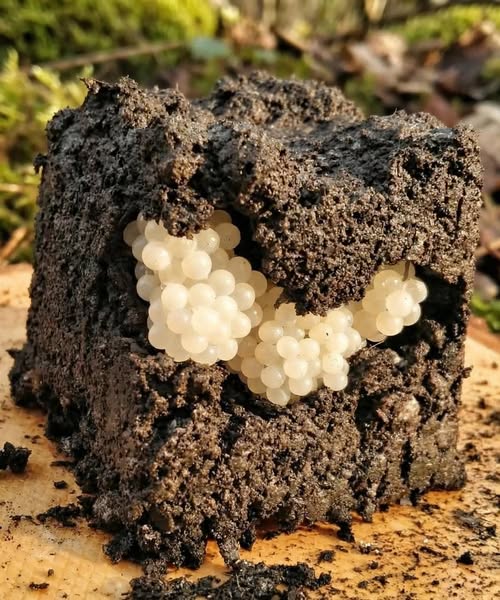
In the quiet ecosystem of a backyard garden, a routine afternoon of maintenance can quickly evolve into a fascinating study of nature’s hidden complexities. For a dedicated gardener, tending to the soil is often a meditative ritual—a steady rhythm of weeding, pruning, and observing the slow, deliberate progress of growth. On one such afternoon, while I was focused on clearing debris from the base of a flourishing flower bed, my attention was drawn to a peculiar sight. Nestled against the dark, damp earth were several clusters of tiny, perfectly symmetrical white spheres. In the clarity of the afternoon sun, they seemed almost ethereal, like a string of fine pearls scattered and partially buried in the soil.
At first glance, the spheres appeared purely decorative. Their uniformity and pristine appearance seemed out of place in the organic chaos of soil and mulch. I initially wondered if they were beads from a broken necklace or a child’s craft project that had found its way into the garden. But as I knelt closer, the “pearls” revealed a more biological character. Semi-translucent with a subtle milky sheen, they caught the light in a soft glow. Wearing my gardening gloves, I reached down and gently pressed one. Unlike plastic or glass, it yielded slightly—soft and fragile. My suspicion was confirmed: these were not inanimate objects but something organic, living, and delicate.
Discovering unexpected life in the soil often triggers a mix of wonder and concern in a gardener. On the surface, there is fascination with nature’s intricacies; underneath, an instinctive urge to protect the plants. To understand these spheres, one must consider the lifecycle of common garden inhabitants. Beneath every beautiful bloom, life and survival unfold quietly just millimeters below the surface. I carefully collected a small cluster of spheres and brought them inside, placing them under a bright desk lamp for closer examination.
Under concentrated light, the translucence revealed a secret: faint, dark shapes within each sphere—tiny embryos in early development. A consultation with horticultural and entomological guides confirmed my discovery: these were snail eggs, sometimes called “snail caviar” for their resemblance to the gourmet delicacy. While the name sounds elegant, for a gardener, the reality is far less appetizing. Snails are prolific breeders; a single cluster can contain dozens of eggs, and multiple clusters can appear throughout a healthy garden. Left unchecked, they would soon hatch into a small army of plant-eating gastropods.
The challenge with snails lies in their appetite for tender, young plants. While they help decompose organic matter, they are notorious for devouring seedlings, hosta leaves, and delicate flower petals. An unchecked population can undo weeks of care in just a few nights, leaving behind silver slime trails and ragged, skeletonized foliage. My curiosity quickly shifted to strategic action. As the garden’s caretaker, it fell to me to restore balance among the competing species.
Addressing the situation required precision. Ignoring the eggs would invite disaster, but I also wanted to act responsibly. I returned to the garden and carefully excavated the remaining clusters. I conducted a thorough audit of surrounding flower beds, checking the undersides of leaves and the bases of rocks—preferred hiding spots for moisture-loving snails. This active search revealed additional caches, which I also removed to prevent an infestation.
This experience reminded me that a garden is never truly “finished.” It is a dynamic, living environment where natural processes constantly unfold beneath our feet. The snail eggs were a sign of healthy, moist soil, but also a call for vigilance to maintain a thriving garden. For other enthusiasts, it illustrates the delicate balance of a backyard ecosystem and the impacts of even the smallest garden inhabitants.
Looking back, the encounter with these “garden pearls” reinforced the importance of observation. In our fast-paced lives, it is easy to overlook subtle details—the change in a leaf’s color, the texture of soil, or tiny white spheres that resemble jewelry but herald transformation. Attentiveness allows us to participate actively in the health of our surroundings rather than passively observe. The garden taught me that beauty sometimes conceals a burden, and proactive care honors the connection between nature and our own backyard sanctuaries.
Now, my routine has shifted slightly. I no longer focus solely on flowers; I examine the soil and check dark corners and damp edges with renewed purpose. This is not about controlling nature, but respecting its efficiency. The “snail caviar” incident was a quiet call to action, a reminder that in the garden—as in life—the things we ignore often grow the fastest. By embracing observation and proactive care, I ensure that my garden remains a place of beauty and balance, where surprises foster understanding rather than chaos.