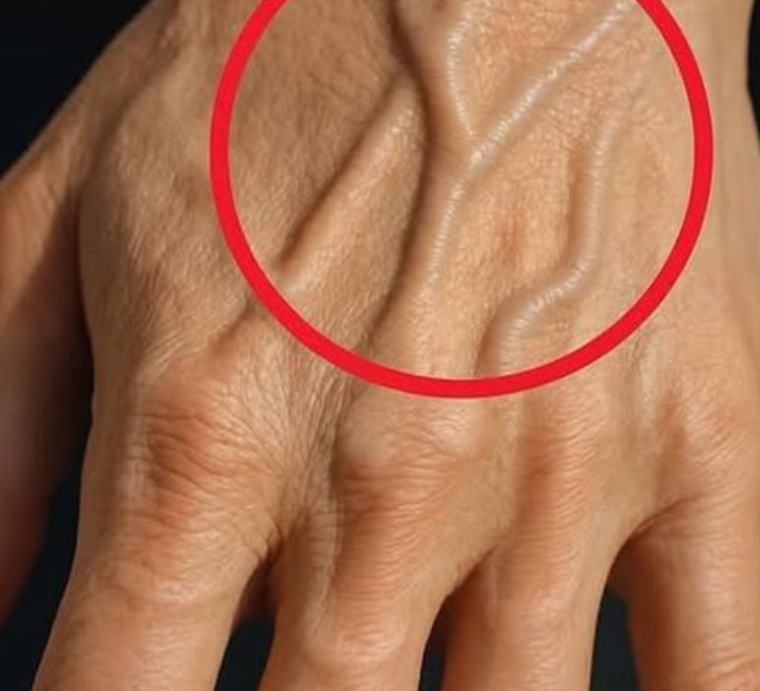
The human body is a marvel of intricate systems, a living tapestry in which every freckle, line, and vein is part of a vast network of biological signals. In this complex map of human anatomy, the hands occupy a unique place: they are both tools for interaction and delicate indicators of internal physiology. For many people, a sudden awareness that the veins on the back of the hand have become more prominent—raised, bluish, or corded—triggers concern. The internet quickly amplifies these anxieties, with forums and wellness blogs suggesting everything from dehydration to severe disease. Among the more persistent myths circulating in these digital wellness spaces is the notion that visible hand veins could be a “silent” warning of kidney disease. However, when examined through the lens of clinical nephrology and vascular biology, this connection largely dissolves, revealing a far more ordinary explanation grounded in anatomy, lifestyle, and the natural aging process.
To truly understand why veins become prominent, it helps to explore the architecture of the hand. Veins exist at multiple layers, but the ones visible on the dorsal (back) side are superficial. These veins lie just beneath the skin, interwoven with a thin layer of subcutaneous fat, and above the deeper veins that run closer to the bones and muscles. Consequently, the visibility of these vessels has much more to do with the “canvas” covering them—the skin, fat, and connective tissue—than with the blood contained within them. When a vein seems to “pop” into view, it is usually a reflection of the skin’s transparency, the surrounding tissue’s thickness, and vascular dilation, rather than a red flag for renal dysfunction.
A major contributor to prominent veins is aging. Over time, our skin undergoes structural and biochemical changes: collagen production slows, elastin fibers degrade, and subcutaneous fat thins. This process reduces the natural padding that conceals veins, making them appear more pronounced. The result is a normal anatomical progression, not an indication of disease. Similarly, individuals with lower body fat or greater muscular definition often display highly visible veins, as the musculature presses the veins closer to the skin. This is why athletes, bodybuilders, and people who engage in regular strength training often have “ropelike” veins—their bodies simply have less insulating tissue between the skin and the vascular system.
Lifestyle factors and environmental conditions also play a substantial role. Heat exposure, for example, triggers vasodilation: veins expand to bring blood closer to the skin’s surface, facilitating heat dissipation. Exercise produces a similar effect, as the heart pumps increased volumes of blood to the extremities to meet metabolic demand. Even hydration can alter vascular visibility. Mild dehydration reduces skin turgor, making veins more conspicuous, while proper hydration may soften the skin and obscure them. Temporary conditions such as standing for long periods or strenuous activity can also cause veins to appear more pronounced, even in perfectly healthy individuals.
When we examine kidney disease specifically, the “visible vein” hypothesis becomes particularly questionable. The kidneys are critical organs, regulating fluid balance, blood pressure, and the removal of metabolic waste. In chronic kidney disease (CKD), the body typically retains fluid rather than losing it, leading to edema rather than vascular prominence. Swelling occurs in the extremities, including hands, feet, and sometimes the face. This fluid accumulation actually places more tissue between the skin and the veins, making them less noticeable. In other words, visible veins are not a natural or early indicator of kidney dysfunction.
Instead, nephrologists rely on systemic and measurable signs of kidney trouble. Fatigue caused by anemia, changes in urinary frequency, foamy urine indicating protein leakage, and high, resistant blood pressure are classic red flags. Early-stage kidney disease often produces minimal symptoms, which is why lab tests—blood creatinine, estimated glomerular filtration rate (eGFR), and urine albumin—are the reliable markers for detecting problems. These clinical measures provide a clear, quantitative view of kidney health, far more informative than observing superficial veins.
There is, however, a situation in which kidney disease and prominent veins intersect, but it is the result of treatment rather than the disease itself. Patients with end-stage renal disease often require hemodialysis, which necessitates the creation of an arteriovenous (AV) fistula. In this surgical procedure, an artery is connected directly to a vein—typically in the arm or hand. The arterial blood, under higher pressure, flows into the vein, which gradually enlarges and strengthens to accommodate repeated needle insertions. This creates highly visible, robust veins, but this is intentional and life-saving, not a spontaneous symptom of kidney disease.
Focusing on hand veins as a diagnostic tool can be misleading, potentially fostering unnecessary anxiety. While people may worry about the “silent” messages their body sends, it is critical to distinguish between cosmetic vascular changes and genuine health indicators. Visible veins on the hands are generally benign and can reflect normal anatomy, aging, physical fitness, or temporary physiological states such as heat exposure or exercise. Only when accompanied by pain, redness, swelling, or systemic symptoms should vascular issues prompt further medical investigation.
Ultimately, the story our hands tell is layered and complex. They carry evidence of our lives, from the work we perform to the environments we endure. Veins that stand out are a natural consequence of anatomy and lifestyle, not a reliable window into kidney function. Protecting the kidneys involves maintaining healthy blood pressure, regulating blood sugar, staying hydrated, avoiding excessive medications that strain renal function, and attending regular check-ups. Trusting laboratory results and professional assessments far outweighs relying on aesthetic cues.
In this sense, prominent hand veins are a testament to life itself: circulation, activity, and vitality. Rather than fearing them as ominous signals, they can be appreciated as markers of a functioning, active body. They reflect the body’s ability to move blood efficiently, adapt to environmental conditions, and respond to physical activity. If you have healthy labs and no systemic symptoms, the veins visible on your hands are more likely evidence of your body performing well than of any hidden illness. Observing them can even be a reminder of personal health: they indicate the underlying physiological efficiency that supports daily activity, from lifting objects to gesturing, shaking hands, or embracing loved ones.
Moreover, examining veins through this broader lens highlights how the body communicates through subtle signals. While the internet may propagate fear-inducing myths, true understanding arises from integrating anatomy, physiology, and evidence-based medicine. Hand veins are a window into the microcosm of circulation, and when interpreted correctly, they tell a story not of hidden pathology, but of resilience and bodily functionality.
In conclusion, while the prominent veins on the back of the hand may initially provoke concern, they are almost always benign. Their appearance is shaped by skin thickness, fat distribution, muscle development, aging, environmental exposure, and hydration status. Kidney disease, in contrast, manifests through systemic, measurable signs, rarely through superficial vascular changes. By prioritizing medical testing over visual assumptions, individuals can accurately monitor their renal health. In the meantime, the veins that run across our hands are better celebrated as signs of life in motion: the quiet, reliable rivers that allow our bodies to function, adapt, and thrive.