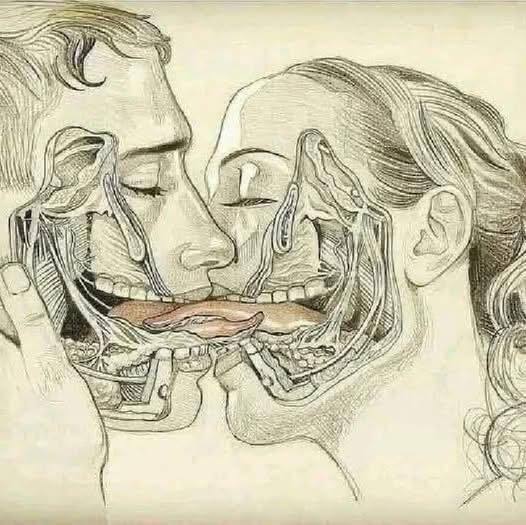
In the complex and often unspoken dialogue of a romantic relationship, physical touch is one of the most profound forms of communication. While a simple hug or a quick peck on the cheek carries its own weight of affection, French kissing—incorporating the tongue—elevates the interaction to a different emotional and physiological plane. When a partner begins initiating this type of kissing more frequently, it’s rarely a random shift in behavior. Instead, it serves as a multifaceted indicator of the relationship’s current state, reflecting everything from psychological safety to the depths of unspoken desire. To truly understand this shift, we must look beyond the physical act and into the psychological foundations of intimacy.
At its core, French kissing is an act of radical vulnerability. Unlike a closed-mouth kiss, which maintains a certain boundary of self, the introduction of the tongue is an invitation into one’s private space. It is inherently “messy” and visceral, stripping away the polished facades people often maintain in social settings. When a partner leans into this level of intimacy more frequently, it signals a growing closeness. It suggests that the formal barriers have dissolved, replaced by a trust so profound that they no longer feel the need to guard their inhibitions. It’s a non-verbal way of saying, “I am comfortable being my most authentic, unedited self with you.”
Additionally, a sudden or sustained increase in French kissing is a direct barometer of rising passion and physical craving. In long-term partnerships, affection can sometimes become routine—a quick kiss before work or a peck before bed. When the intensity of these kisses deepens, it indicates that the attraction has moved beyond the “routine” and is now pulsing with active, heightened desire. It’s a sign of craving and presence, showing that the partner is not just going through the motions but is actively engaged in the magnetic pull of their significant other. This type of kissing is often spontaneous, a clear signal that the spark of attraction is not just flickering but burning with renewed energy.
The specific style of a French kiss can also offer insight into a partner’s personality and their emotional “love style.” Those who are confident and assertive in their professional or social lives often carry that leadership into their physical intimacy, using bold, decisive movements to set the pace. Conversely, a partner who favors a slow, tender, and lingering approach is often a romantic who values the journey over the destination, savoring each micro-moment of connection. Some may use the kiss as a form of playful interaction—teasing, lighthearted, and dynamic—reflecting a personality that sees fun and lightheartedness as essential components of love. By paying attention to the “texture” of the kiss, one can learn a lot about how their partner views the world and their place in the relationship.
Beyond passion, there is the essential element of emotional intelligence and “attunement.” A kiss is rarely a monologue; in its most beautiful form, it is a duet. When a partner mirrors your rhythm, matches your intensity, and responds to the subtle shifts in your breath and movement, they are showing a high level of empathy. This mirroring is a physical manifestation of emotional awareness. It indicates that they are not only focused on their own experience but are deeply attuned to yours. A partner who kisses with this level of attentiveness is usually someone equally aware of your needs outside of the bedroom, possessing the emotional maturity to navigate the complexities of a shared life with grace and sensitivity.
Security and safety also play a significant role in the frequency of French kissing. For many, the ability to “let go” during a kiss is directly linked to how safe they feel within the relationship. In a world where we are often judged or pressured to perform, the home—and especially the embrace of a partner—should be a sanctuary. If a partner has recently become more adventurous or uninhibited in their kissing, it often signals a sense of profound security. They trust that they will not be judged for their passion or vulnerability. This freedom to explore physical boundaries is a testament to the strength of the relationship’s emotional foundation; the deeper the roots of trust, the more the branches of intimacy can grow and expand.
Exploration and curiosity are also key drivers behind shifts in kissing habits. Relationships need constant renewal to prevent stagnation. For some couples, an increase in French kissing is a subconscious or conscious effort to keep the connection fresh and vibrant. It represents a desire to keep “discovering” one another, acknowledging that even after years together, there are still layers of the other person yet to be explored. This curiosity is the hallmark of a healthy, growing partnership—it demonstrates a commitment to the “newness” of the other person, ensuring the relationship remains an active adventure rather than a static arrangement.
Finally, the frequency of these kisses speaks to the concept of “presence.” In an age of digital distractions and mental clutter, being fully present with another person is one of the greatest gifts one can give. A deep, soulful kiss requires one to be in the “here and now.” When a partner initiates more of these moments, they are effectively hitting the pause button on the rest of the world. They are choosing, in that moment, to prioritize connection over to-do lists, phones, and external stress. This boldness and mindfulness transform a simple act of affection into a meaningful ritual of reconnection.
In conclusion, French kissing is far more than “just kissing.” It is a sophisticated language that mirrors the ebb and flow of passion, comfort, and vulnerability within a relationship. Each kiss reflects a partner’s deepest feelings—sometimes fiery and demanding, other times tender and restorative, but always full of meaning. Whether used to signal trust, ignite desire, or offer a safe haven in a chaotic world, an increase in this type of intimacy is a clear sign that a relationship is deepening, evolving, and thriving on its own unique terms.