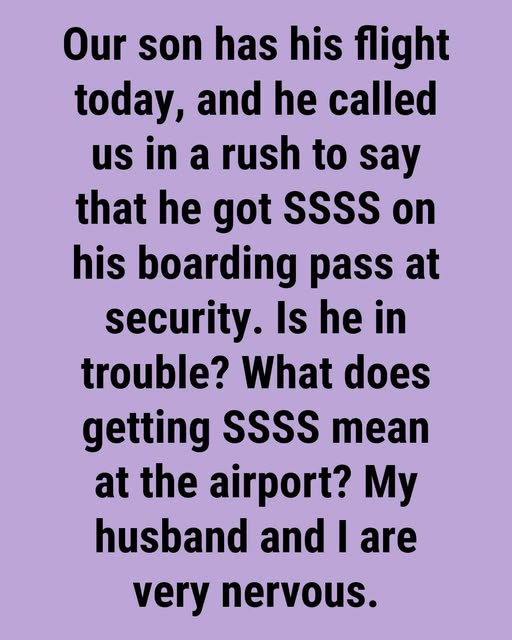
Air travel, despite its speed and convenience, often subjects passengers to a gauntlet of small but cumulative stresses. The anxiety begins well before the plane doors close—in the frantic weighing of luggage, the timed rush through check-in counters, and the seemingly endless queues at security checkpoints. Travelers hope to move efficiently and anonymously through the airport, blending into the stream of humanity heading toward the gate. Yet for some passengers, this journey takes an unexpected turn, marked by four innocuous-looking letters printed on their boarding pass: SSSS.
These letters stand for Secondary Security Screening Selection, a designation that removes the traveler from the standard flow and subjects them to intensified scrutiny by Transportation Security Administration (TSA) officers. Spotting “SSSS” near your gate or seat information is a universal warning: your airport experience is about to become significantly more detailed, involved, and time-consuming. For travelers already pressed for time or weary from a long day, it can instantly heighten stress.
The assignment of “SSSS” is not random, nor is it typically a result of direct suspicion. It is part of the Secure Flight program, a risk-based pre-screening system run by the TSA in coordination with airlines. Operating long before the passenger arrives at the terminal, the program’s purpose is twofold: to identify passengers who may pose a higher security risk, and conversely, to streamline travel for known, low-risk passengers.
Secure Flight uses biographical information collected during booking—full name, date of birth, and gender—to compare travelers against government watchlists. A TSA spokesperson once explained, “Secure Flight identifies low- and high-risk passengers before they arrive at the airport. It matches names against trusted traveler lists and watchlists to enhance security.” Essentially, the system ensures that individuals prohibited from flying or on watchlists are flagged, while preventing innocent travelers from being mistakenly selected simply because their name matches someone else’s.
Although a genuine high-risk match can trigger the “SSSS” code, the majority of passengers selected have done nothing wrong. Some travelers are chosen randomly or semi-randomly, maintaining unpredictability in the security process. This random element ensures that even those attempting to study or circumvent airport procedures cannot reliably avoid additional scrutiny. For most passengers, seeing “SSSS” is an inconvenience, a routine—albeit frustrating—part of modern aviation security.
Once flagged, the standard security process is replaced by a thorough secondary screening. Travelers are directed to a designated area, where both luggage and personal items undergo meticulous examination. Carry-ons may be unpacked entirely, swabbed for explosive traces, and subjected to additional functional tests for electronics such as laptops and tablets.
The personal screening is equally extensive. Beyond the standard metal detector and body scanner, passengers usually undergo a detailed pat-down. Shoes, belts, and even specialized medical devices may be swabbed for traces of explosives using explosive trace detection (ETD) technology. This procedure can add 15–45 minutes to the security timeline, turning an otherwise comfortable connection into a hurried race to the gate.
A subtle warning of an impending “SSSS” experience is the inability to check in online or at an airport kiosk. Passengers must see an airline agent in person to receive a manually printed boarding pass with the code. This early step is often the first signal that extra scrutiny lies ahead. At the checkpoint, TSA officers immediately recognize the designation and initiate the enhanced protocol.
Navigating the SSSS process requires patience and preparation. Remaining calm and cooperating fully is essential. Expressing frustration or arguing will only prolong the process. Travelers should allow at least an extra hour when anticipating a possible SSSS selection. Practical preparation—keeping passports and IDs ready, ensuring electronics are charged and easily removable, and avoiding excessive jewelry or restricted items—can streamline the process significantly.
Ultimately, “SSSS” is a reminder of the complex, largely invisible infrastructure supporting global air travel. While inconvenient, it is a necessary component of layered aviation security, designed to protect everyone on board. For thousands of passengers each year, seeing those four letters is not a mark of suspicion—it is simply a reality of participating in one of the world’s most heavily regulated, risk-managed transportation systems.