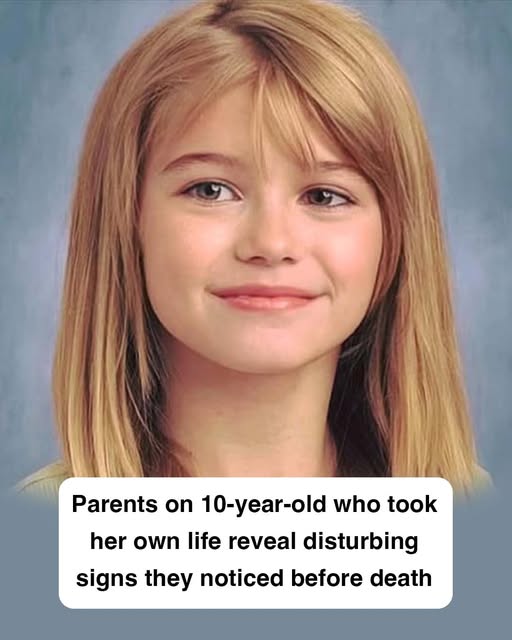
Autumn Bushman was only ten when the light in her eyes began to fade—a quiet dimming that few outside her family noticed at first. At home, her parents, Summer and Mark, watched with growing worry as the girl who once laughed easily and bounded through life with unrestrained joy started to retreat. The mornings became harder. She lingered in her room, the glow of her once-bright presence muted by shadows that seemed to grow with each passing day. At school, teachers noticed changes too—less talking in class, fewer smiles during recess—but the signs were subtle, easy to overlook, easy to chalk up to the whims of childhood. Her parents begged the school to help. Autumn begged to stay home. And no one realized how little time was left before tragedy would strike.
When Autumn’s passing finally came, it shattered an entire community. A tiny casket lay buried beneath freshly turned earth, leaving family, friends, neighbors, and classmates grappling with grief that felt impossibly raw and uncontainable. Questions hung in the air like jagged shards, slicing through the hearts of every parent, every teacher, and every child who had crossed her path. How could this have happened? Could it have been prevented? Was there something more they could have done? In Roanoke, Virginia, her name has become a quiet battle cry—a symbol of the fragility of life and the urgency of awareness. The 10-year-old who once courageously stood up for other children, defending them from bullies, is now driving parents to demand answers, pushing schools to promise systemic reviews, and inspiring experts to plead for earlier, harder conversations about children’s mental health.
Summer and Mark replay every missed sign with heartbreaking precision. They remember the darker clothes Autumn began choosing, the longer naps she took, and the day she asked to stay home “just this once,” a simple request that would later feel like a signal no one fully understood. They recall the nights she retreated to her room, the moments when she seemed distant even in family gatherings, and the small but telling ways she communicated her struggle. These reflections are painful and raw, but they are shared openly in the hope that other families might recognize what they missed before it’s too late.
Autumn was a child who loved deeply and lived fully in her own quiet way. She adored dance and cheer, took joy in archery, and had a particular fondness for baby blue—the color she insisted could brighten even the darkest days. She was kind, compassionate, and sensitive, traits that made her beloved by her friends but also made her a target in a world that can be cruel to those who feel deeply. Her story is not just a tale of tragedy—it is a call to action. Parents, teachers, and caregivers are being urged to listen intently when children express stress, to watch for small behavioral changes that might signal deeper struggles, and to never dismiss a child’s emotional life because of their age.
Autumn could not be saved. But her story, her life, and the awareness it raises have the power to save others. By sharing her experiences, her parents hope to create a ripple effect—encouraging children to speak up, helping peers to recognize the signs in their friends, and motivating adults to intervene with care, urgency, and compassion. Her legacy is now intertwined with the vital conversation about childhood mental health: a reminder that even small gestures of attention, a listening ear, or an early intervention can mean the difference between despair and survival.
In the wake of her passing, the community of Roanoke is forever changed. Schools are reviewing policies, parents are asking tougher questions, and conversations that might once have felt uncomfortable are happening with newfound honesty. Autumn’s story is a painful testament to what can be lost when warning signs are missed—but it is also a beacon of hope. It is a reminder that awareness, vigilance, and empathy can protect the children we love, that every small act of care matters, and that speaking out, believing, and acting early can give a child a chance to stay in the world with their light still shining.
Autumn Bushman may have left too soon, but the impact of her life—and the lessons it teaches—will resonate for years to come, ensuring that her voice, her struggles, and her love continue to speak for those who cannot yet find the words themselves.