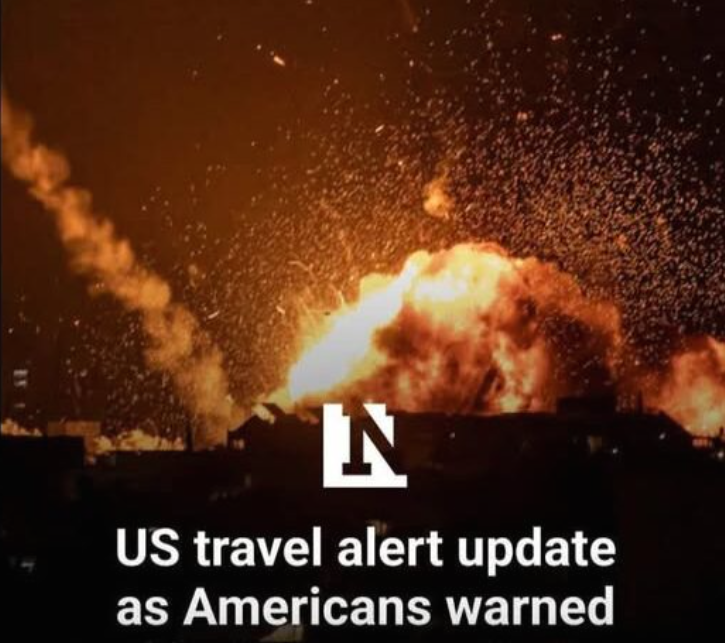
The global security environment has plunged into a state of acute instability following the direct military confrontation between the United States, Israel, and Iran. By early March 2026, the U.S. Department of State has issued a series of urgent travel advisories that go far beyond routine bureaucratic cautions, signaling an unprecedented period of risk for Americans abroad. At the center of this escalating crisis is a pointed and credible warning regarding international hotels—long considered neutral sanctuaries for travelers—which have now been identified as high-priority targets for retaliatory attacks in this rapidly intensifying conflict.
The escalation traces back to late February 2026, when a coordinated series of strikes on Iranian territory triggered a cascade of military and proxy responses across the region. U.S. officials have cautioned that Iranian forces and allied networks are increasingly likely to target “soft targets” such as civilian infrastructure to maximize both psychological and symbolic impact. While fortified military bases and diplomatic compounds remain under heavy security, the hospitality sector presents a more vulnerable and accessible target. For the millions of Americans who regularly traverse the globe, the “Worldwide Caution” issued by the State Department underscores a harsh new reality: nationality itself now carries inherent risk in regions previously regarded as stable travel corridors.
The greatest danger is concentrated in the Middle East and the Gulf Cooperation Council (GCC) nations. Cities and states that were long considered hubs of tourism and commerce—such as the United Arab Emirates, Qatar, and Bahrain—are now confronting a highly unpredictable security environment. In Dubai and Abu Dhabi, where luxury hotels anchor much of the local economy, reports indicate that drone and missile strikes targeting civilian areas have already occurred, affecting high-profile hospitality districts. This strategic pivot aims not only to create chaos but also to destabilize the regional economy and exert pressure on U.S. allies to distance themselves from American military operations.
For Americans currently residing in or visiting the region, the State Department guidance has escalated from a call to “exercise caution” to an urgent mandate to “depart immediately.” This Level 4 advisory now applies to at least sixteen countries, reflecting the effective collapse of traditional safety measures. The targeting of hotels is both strategic and symbolic: these structures are visible representations of Western influence, economic power, and cultural presence. By striking a hotel, adversaries can simultaneously affect international citizens from dozens of nations, generate immediate media attention, and instill widespread fear—a psychological impact often exceeding that of direct military confrontation.
Logistically, the warning has created immense challenges for stranded travelers. With major airlines such as Emirates, Qatar Airways, and Air Canada suspending flights due to restricted airspace over the Persian Gulf and Levant, the windows for evacuation are rapidly shrinking. Travelers are now instructed to follow “shelter-in-place” protocols: remaining in the most secure areas of hotels or residences, avoiding windows, and maintaining constant readiness for sudden alerts. Notably, the guidance stresses that reliance on U.S. government evacuation is not assured, leaving individuals to navigate increasingly precarious commercial options while they remain available.
Beyond the immediate threat of kinetic strikes, the alert highlights an additional layer of danger: civil unrest, targeted kidnappings, and opportunistic attacks in public spaces. In Pakistan, for example, the State Department has authorized non-essential personnel and their families to depart, citing a surge in extremist activity. The guidance explicitly warns that terrorists could strike without warning in public spaces, malls, and hotels. The security landscape is fluid and unpredictable; areas deemed safe in the morning could become active combat zones by evening, leaving travelers with minimal time to react.
The psychological impact on the American expatriate community is profound. For decades, a U.S. passport was seen as a symbol of mobility and security. Today, it has become a marker of vulnerability. Citizens are urged to “maintain a low profile,” minimizing displays of nationality, avoiding patterns that might signal predictable routines, and staying vigilant in spaces that were once considered neutral or welcoming. This shift evokes a Cold War-era mindset, where the world is viewed through a lens of potential danger and every hotel lobby, airport terminal, or public space becomes a potential point of exposure.
Economic repercussions are already reverberating globally. Hotel chains and travel companies are experiencing sharp declines in bookings as the “hospitality sanctuary” model is undermined by the risk of regional warfare. The insurance industry has responded by suspending war-risk coverage across the Persian Gulf, rendering operations in high-risk zones prohibitively expensive. In this environment, safety has become a commodity, accessible only to those able to bear its steep cost, and a basic right for travelers has been transformed into a privilege.
As the conflict extends into its second week, White House statements suggest that the “hardest hits” are yet to come, implying that cycles of retaliation will persist. For American travelers, hotel-targeted advisories are unlikely to be lifted soon. Security experts are urging establishments in the region to adopt unprecedented measures: military-grade screening, reinforced safe rooms, and continuous security drills—practices that sharply contrast with traditional expectations of comfort and hospitality.
This State Department alert marks a watershed moment in the history of American travel. It signals the end of an era in which international movement was largely assumed safe, and it delineates a new reality in which the distinction between civilian life and theater of war is increasingly blurred. For Americans abroad, the luxury of a secure hotel room no longer exists; vigilance has become a matter of survival, and the ordinary rhythms of travel are now punctuated by the extraordinary realities of modern conflict.
Until a ceasefire or meaningful de-escalation occurs, Americans abroad remain high-value targets in a complex geopolitical confrontation. Enrollment in the Smart Traveler Enrollment Program (STEP) and the maintenance of robust communication plans with family and friends are no longer optional—they are essential lifelines. In this new era, the intersection of global mobility and warfare underscores a stark truth: even those seeking refuge in the world’s most secure hotels are not beyond the reach of history’s unfolding storms.