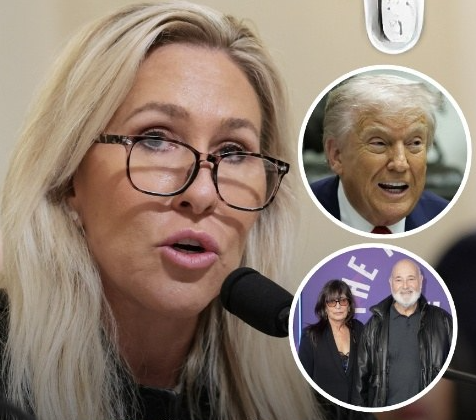
The news of the horrific double homicide of acclaimed filmmaker Rob Reiner and his wife, Michele Singer Reiner, sent immediate and seismic shockwaves through two deeply interconnected worlds: Hollywood and the political media ecosystem centered in Washington, D.C. The brutal nature of the crime alone was enough to dominate headlines, conversations, and social media feeds, as colleagues, fans, and political figures alike struggled to process the sudden and violent loss of a prominent public figure and his spouse. What should have been a moment of collective mourning, however, quickly transformed into something far darker and more divisive.
The gravity of the tragedy was not only amplified but profoundly distorted by a statement from former President Donald Trump, who chose to frame the killings through a sharply political lens. Posting on his Truth Social platform, Trump bypassed even the most basic expressions of condolence or sympathy. There was no acknowledgment of the ongoing homicide investigation, no mention of the surviving Reiner family members, and no recognition of the immense human suffering at the center of the event. Instead, Trump used the deaths to promote the concept of “Trump Derangement Syndrome” (TDS), grotesquely suggesting that Reiner’s decades-long, outspoken criticism of him had somehow contributed to a climate of irrational hatred that culminated in violence.
For countless observers, critics, and even some supporters, the post landed as a political explosion—an unprecedented and deeply unsettling act of politicization. Many viewed it as the lowest possible appropriation of a private, agonizing nightmare: the loss of two lives and the destruction of a family. Rather than uniting the public in grief, the statement widened existing fractures, igniting a fierce backlash across social media, news outlets, and political commentary programs.
Yet amid the predictable outrage from Trump’s critics, the most significant response came from within his own political orbit. Representative Marjorie Taylor Greene, a lawmaker widely recognized for her loyalty and vocal support of the former president, delivered a rare and striking public rebuke. Greene broke ranks, openly criticizing Trump’s lack of empathy and the deeply inappropriate timing and tone of his remarks. Her response marked an unusual but meaningful rupture on the political right—one that signaled a boundary even some allies were unwilling to cross.
Greene’s intervention deliberately shifted the narrative away from partisan provocation and back toward the core human tragedy. She emphasized the devastating reality underlying the headlines: two parents allegedly murdered by their own troubled son; surviving siblings left traumatized and grieving; and a family forced to confront the compounded pain of violence, addiction, and mental illness under the unforgiving glare of public attention. Her insistence on empathy, restraint, and basic human dignity stood in stark contrast to the weaponization of grief for political messaging.
This reframing closely mirrored the tone of tributes pouring in from across the political and cultural spectrum. Former President Barack Obama, acclaimed author Stephen King, and numerous figures from the film industry chose to honor Rob Reiner not as a political adversary in America’s ongoing culture wars, but as a devoted father, a loving husband, and an influential artist whose life was cut short by unimaginable violence. Their statements focused on Reiner’s enduring contributions to American cinema, his mentorship, and his passionate advocacy for social justice, intentionally avoiding inflammatory political rhetoric.
The sharp contrast between Trump’s self-referential, polarizing post and the more human-centered responses from figures like Greene and Obama underscored the extreme polarization now shaping public discourse in the United States. What began as a devastating family tragedy became an unintentional test case for the limits of political decorum, moral restraint, and public tolerance in an era dominated by social media, instant commentary, and hyper-partisanship. For many, the episode raised a troubling question: in a deeply divided society, are there any moments left that remain sacred from politics—or has even grief become just another battleground?