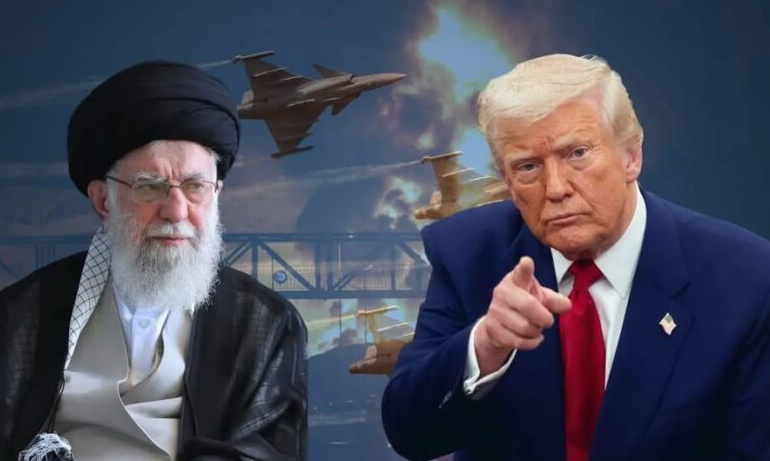
The global security landscape has shifted dramatically, moving from a state of managed friction and tension to one of open, high-intensity conflict. For years, analysts and policymakers warned that the Middle East could become a tinderbox, yet few predicted the immediacy and scale of the current crisis. In the early hours of March 1, 2026, the long-predicted “hot war” finally ignited, triggered by a massive and unprecedented joint military operation by the United States and Israel. Dubbed “Operation Epic Fury,” the campaign began in the early morning hours of February 28, with a meticulously coordinated series of decapitation strikes targeting Iran’s military leadership, nuclear infrastructure, and ballistic missile facilities. In a video statement from the White House, President Donald Trump announced that “major combat operations” had commenced with the explicit goal of “eliminating threats from the Iranian regime.” Reports quickly surfaced indicating that Iran’s Supreme Leader Ali Khamenei and multiple high-ranking military officials had been killed, though verification remains ongoing. The strikes signaled not just a military escalation but a fundamental shift in the strategic calculus of the region, where leadership decapitation is now being used as a central component of modern warfare.
Iran’s response was swift, expansive, and far more aggressive than the “strategic patience” it had maintained in previous years. By the afternoon of March 1, Iranian state media announced a broad retaliatory offensive against the 27 U.S. military bases scattered across the Gulf region. This was not a limited or symbolic response; it was a calculated regional barrage, transforming the sovereign territories of Bahrain, Qatar, Kuwait, and the United Arab Emirates into active combat zones. In Manama, the headquarters of the U.S. Navy’s Fifth Fleet was struck by Iranian ballistic missiles, sending massive plumes of black smoke over the Juffair district. Initial reports suggest that many incoming threats were intercepted by U.S. and allied forces, yet the sheer volume of the Iranian strikes tested regional air defense systems to their limits. Each interception and missile launch heightened tensions and underscored the volatility of the conflict, revealing that even advanced missile defenses cannot entirely mitigate the risks of large-scale warfare in densely militarized regions.
The escalation has had immediate and catastrophic consequences for global trade and energy security. The Strait of Hormuz, one of the world’s most critical oil chokepoints, was effectively paralyzed within hours of the U.S.–Israeli operation. Iran’s Revolutionary Guard warned that the waterway could become a “graveyard for terrorist aggressors,” a threat sufficient to halt maritime traffic. Over 150 tankers carrying nearly 15 million barrels of crude oil per day anchored offshore, unable to risk the perilous passage. Analysts predict that global oil prices could surge to historic highs, exacerbating economic instability and sending shockwaves through energy markets worldwide. Civil aviation has also been severely disrupted, with major hubs in Dubai, Doha, and Abu Dhabi suspending all flights. Thousands of travelers remain stranded, while the ongoing threat of missile and drone attacks across the Persian Gulf underscores the growing danger of collateral impacts on civilian infrastructure and commercial operations.
The humanitarian and diplomatic fallout has also escalated sharply. In the UAE, drone strikes on a naval base in Abu Dhabi, which hosts French forces, ignited significant fires and destroyed key logistical assets. In Saudi Arabia, advanced air defense systems successfully intercepted missiles targeting Riyadh’s international airport and the Prince Sultan Airbase. Even the British sovereign base areas in Cyprus reportedly came under missile threat, highlighting the transnational scope of the conflict. In response, a coalition of thirteen nations has mobilized to attempt regional stabilization, yet the situation is highly precarious. Moscow condemned what it described as “unprovoked aggression,” while Beijing expressed “grave concern,” indicating the risk that the Middle Eastern conflict could escalate into a wider confrontation involving major global powers. The diplomatic landscape is increasingly fraught, with every decision carrying the potential to either defuse or exacerbate tensions, and the risk of miscalculation growing by the hour.
On the ground in Israel, the situation is equally tense and unpredictable. Despite the initial tactical successes against Tehran, the country is facing sustained retaliatory missile barrages. National emergency protocols have been enacted, airspaces closed, and civilians instructed to remain near shelters. The Israel Defense Forces continue targeted operations, focusing on remaining Iranian military command structures while balancing the risk of escalation. The assassination of Iran’s Supreme Leader has created a power vacuum, raising concerns among analysts about erratic or desperate actions by the Revolutionary Guard. Each missile intercepted, and each retaliatory strike launched is now part of a high-stakes chess game, with both sides calculating risk and strategic advantage while civilian populations live under constant threat.
For the United States, “Operation Epic Fury” represents the largest military commitment in the region since the 2003 Iraq conflict. Pentagon sources confirm the first American casualties: three service members killed and five wounded during initial Iranian counterstrikes. The campaign’s objectives—to neutralize Iran’s missile program and prevent further attacks on U.S. interests—face increasingly complex challenges, with the possibility of requiring a full-scale ground operation if air and naval strikes prove insufficient. Regional states, including Saudi Arabia, Qatar, and the UAE, now find themselves in the impossible position of hosting U.S. forces while simultaneously suffering direct consequences of Iran’s retaliation, exposing them to both military and political risks in an intensifying conflict zone.
As night fell on March 1, the Persian Gulf became a tense tableau of uncertainty and danger. The promise of a “new regional order” has been fulfilled in its most immediate sense, yet the human and material cost is mounting by the hour. Reports of Iranian strikes on U.S. and allied forces are no longer hypothetical; they are a stark reality shaping the lives of thousands across the region. The next hours and days will determine whether the thirteen-nation coalition can contain the violence or if the crisis spirals into a war with far-reaching implications, reshaping not just the Middle East, but global security, energy markets, and the balance of international power. Each missile, drone, and defensive maneuver now carries consequences that could reverberate across continents, reminding the world that in modern conflict, no nation exists in isolation, and no strike occurs without ripple effects that extend far beyond the battlefield.