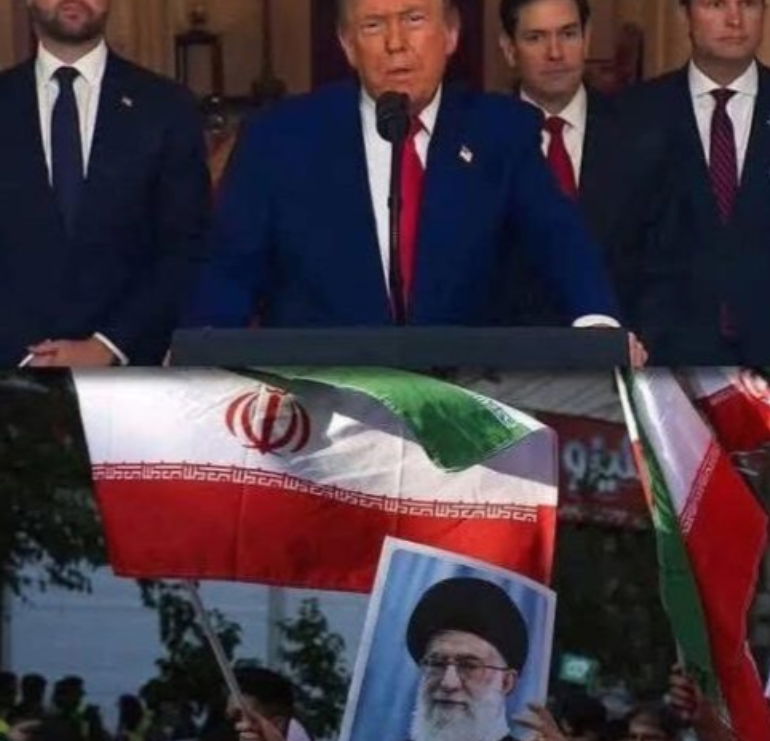
In an era defined by the rapid dissemination of information, the line between credible reporting and sensationalism can often become dangerously blurred. A recent wave of headlines has surfaced, claiming an “urgent” threat of an imminent Iranian strike on the United States, with some reports specifically suggesting that such an attack would start with a targeted strike on a specific state. This narrative, while highly alarming, is part of a complex geopolitical landscape that requires careful examination, separating genuine security concerns from inflammatory rhetoric.
As of mid-February 2026, the relationship between the United States and Iran has reached a critical juncture. Diplomatic channels are strained following a ten-day ultimatum issued by the Trump administration on February 19. The White House has demanded that Tehran present substantive proposals to address long-standing concerns regarding its nuclear program and regional influence. In response, Iran has conducted large-scale naval exercises alongside Russian forces in the Gulf of Oman, signaling its readiness for both defensive and offensive maneuvers. However, it is crucial to clarify that despite the heightened military posturing, there is no verified intelligence or official government warning of an imminent missile strike on American soil. The “urgent” reports circulating on social media and certain websites often leverage the existing geopolitical tension to generate clicks, leading to unnecessary public panic.
The Realities of Modern Geopolitics: A Narrow Corridor
The current geopolitical landscape is characterized by a narrow corridor where diplomacy operates between rigid political red lines and escalating military preparations. On one side, the United States has reinforced its regional presence with hundreds of combat aircraft, including advanced F-35s and F-22s, along with the deployment of the USS Gerald R. Ford carrier strike group to the eastern Mediterranean. On the other side, Iran remains weakened by domestic unrest and the fallout from a twelve-day war with Israel in 2025, which resulted in substantial damage to its nuclear and military infrastructure.
While a conventional missile strike on a specific U.S. state remains a remote possibility, according to defense analysts, the more plausible threats involve asymmetric warfare. This includes cyberstrikes on critical infrastructure, drone operations, and proxy-led attacks on U.S. interests abroad. For the average citizen, the most immediate “attack” often comes in the form of disinformation—the “imminent strike” headlines that create panic without offering any clear guidance on how to stay safe.
A Community in Crisis: The Stockton Tragedy
While the world’s attention is frequently diverted toward international conflicts, localized tragedies continue to cast long shadows over American communities. In Stockton, California, the local community is still reeling from a horrific mass shooting that took place at a child’s birthday party. What began as a joyful Saturday celebration was violently interrupted when gunmen opened fire on a crowd of over 100 people at a banquet hall. The shooting claimed the lives of four individuals, including three children aged eight, nine, and fourteen. Eleven others were injured, leaving the city in a state of deep grief and anger. Local law enforcement, led by San Joaquin County Sheriff Patrick Withrow, has labeled the incident as both “targeted” and “senseless,” urging anyone with video or eyewitness accounts to come forward. The tragedy in Stockton serves as a sobering reminder that while we remain vigilant about global “threats,” the domestic issue of gun violence continues to plague American communities. This remains a persistent crisis that demands urgent attention and effective, community-driven solutions.
The Search for Nancy Guthrie: Forensic Breakthroughs
Simultaneously, in Arizona, a high-stakes search continues for Nancy Guthrie, the 84-year-old mother of Today show co-anchor Savannah Guthrie, who has been missing since the beginning of February. Significant developments in the case have emerged in the last 48 hours. Federal investigators and the Pima County Sheriff’s Department have focused their efforts on a specific lead involving retail data. Surveillance footage from the night of Nancy’s disappearance captured a masked suspect wearing an “Ozark Trail Hiker Pack,” a 25-liter backpack sold exclusively at Walmart. This detail has allowed investigators to collaborate directly with Walmart management to retrieve credit card purchase data and review regional store footage. According to reports, a potential purchase has been tracked, leading to a breakthrough that could link the suspect to the Guthrie family’s broader geographic circle. In addition, a black backpack associated with the case was recently recovered from a trash container five kilometers from Nancy’s residence, and forensic teams are processing the item under strict safety protocols.
Public Figures and the Burden of the Spotlight
In today’s media-driven world, the intersection of politics, wealth, and public perception often creates “viral moments” that overshadow substantive news. A recent example is the scrutiny faced by billionaire philanthropist Susan Dell after her appearance at the White House. While she and her husband pledged a staggering $6.25 billion toward children’s investment accounts—an initiative that could transform the financial future of 25 million Americans—the online conversation was dominated by speculative and often derogatory comments about her physical appearance.
Similarly, Melania Trump’s return as the First Lady has ignited public curiosity about her support system and inner circle. Reports have highlighted her reliance on a select few trusted confidants who have supported her throughout her transition back into the high-profile role. These instances highlight a troubling pattern in 2026: even when public figures engage in historic philanthropic efforts or national leadership, digital discourse often retreats into personal gossip and aesthetic speculation, distracting from the social and economic impact of their work.
Navigating the Information Age
The challenge for the modern news consumer is balancing awareness of global tensions with a critical eye toward sensationalism. While the situation with Iran is undeniably serious and requires the attention of policymakers and defense experts, the “tonight” deadlines seen on unreliable news outlets are frequently designed to manipulate rather than inform. By contrast, the events in Stockton and Tucson are tangible crises with concrete evidence and clear calls to action. The loss of children in California and the abduction of a senior citizen in Arizona are the kinds of stories that should dominate the conversation about our immediate safety concerns.
As we navigate through 2026, the focus must remain on truth rooted in evidence, empathy for those in crisis, and a commitment to stability amidst a volatile global and domestic landscape. The world is watching, and as global tensions rise, it is crucial to remember that in our quest for information, we must differentiate between genuine security threats and the chaos bred by sensationalism.