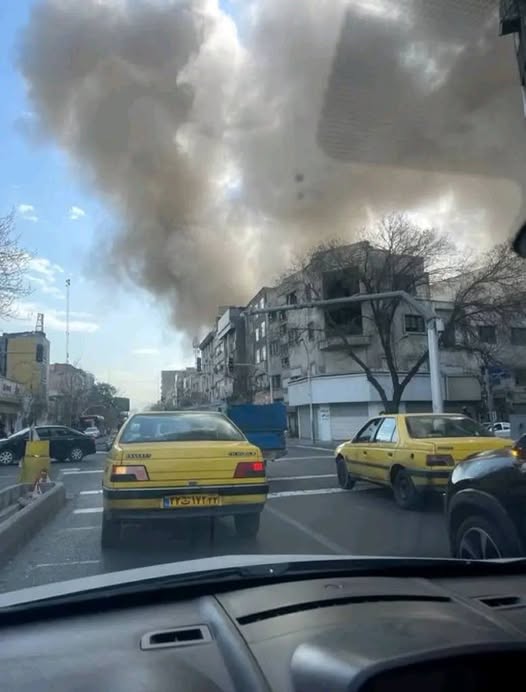
A U.S. official told Fox News that the ongoing airstrikes against targets in Iran are expected to continue for days rather than just hours, signaling a far more sustained and methodical military campaign than many observers initially anticipated. The remark immediately reframed public understanding of the operation. What some had assumed might be a brief punitive strike now appears to be part of a broader and more deliberate strategic effort, designed not simply to send a warning but to systematically degrade specific capabilities over time.
According to the official, the operation is unfolding in clearly defined phases. Rather than concentrating force in a single overwhelming wave, planners are reportedly sequencing the strikes—targeting military infrastructure, command-and-control nodes, weapons storage facilities, air defense systems, and other strategic sites in successive rounds. This phased approach reflects careful preparation and long-term objectives. It suggests that military leaders are prioritizing sustained operational pressure, aiming to weaken critical systems incrementally while maintaining flexibility to adapt as the situation evolves.
Such an approach requires extensive coordination across multiple branches of the armed forces. Air assets, surveillance platforms, cyber capabilities, and intelligence networks must function in concert. Each strike package is likely informed by updated intelligence assessments, satellite imagery, electronic intercepts, and real-time battlefield analysis. By spacing operations over several days, commanders preserve the ability to reassess damage, confirm target effectiveness, and redirect resources toward newly identified threats. In modern warfare, adaptability can be as decisive as firepower.
The air campaign comes amid months of mounting regional tension. Escalating rhetoric, proxy confrontations, maritime incidents, and security concerns had already heightened the atmosphere long before the first bombs fell. Military planners, anticipating the possibility of direct confrontation, reportedly prepared contingency options for both short-term retaliation and extended engagement scenarios. The current operation appears to align with those extended contingency plans, indicating that decision-makers were ready for a campaign that could last beyond an initial exchange.
Officials emphasized that this is not a one-time response driven purely by emotion or immediate provocation. Instead, it is being described as a coordinated effort requiring sustained pressure. The logic behind prolonged strikes is twofold: first, to methodically dismantle targeted capabilities; second, to maintain leverage. By continuing operations over multiple days, U.S. forces can evaluate adversary responses, disrupt potential countermeasures, and prevent rapid regrouping. In essence, duration becomes a strategic tool, not merely a byproduct of escalation.
At the same time, the extended timeline increases complexity and risk. Prolonged military activity raises the likelihood of retaliation, whether through direct military response, cyber operations, or asymmetric actions in neighboring areas. Regional allies and U.S. assets throughout the Middle East may face heightened security concerns as tensions remain elevated. Defensive systems, force protection measures, and intelligence monitoring are likely operating at maximum readiness in anticipation of possible counterstrikes.
International reaction has been swift and cautious. Global leaders are closely monitoring developments, aware that even limited exchanges in this region can reverberate far beyond national borders. Energy markets, shipping lanes, and diplomatic channels all feel the ripple effects of sustained military operations. The longer an air campaign continues, the greater the anxiety about miscalculation or unintended escalation. Diplomatic backchannels, though often invisible to the public, are almost certainly active as governments seek to prevent a broader regional conflict.
U.S. leadership has consistently stated that military options remain on the table when diplomatic avenues fail to address security threats. The current strikes appear to embody that doctrine: force used as a calculated instrument when negotiations or deterrence are judged insufficient. However, officials also stress that objectives remain defined and limited, even as the timeline extends. The distinction between a limited but sustained campaign and an open-ended conflict is one policymakers are keen to emphasize.
As the operation moves forward, the coming days will prove critical. Much will depend on how Iran responds, how effectively targeted capabilities are degraded, and whether diplomatic channels can reassert influence before violence widens. Each additional phase of strikes will send signals—not only to Iran but to regional actors and global observers assessing resolve, restraint, and risk.