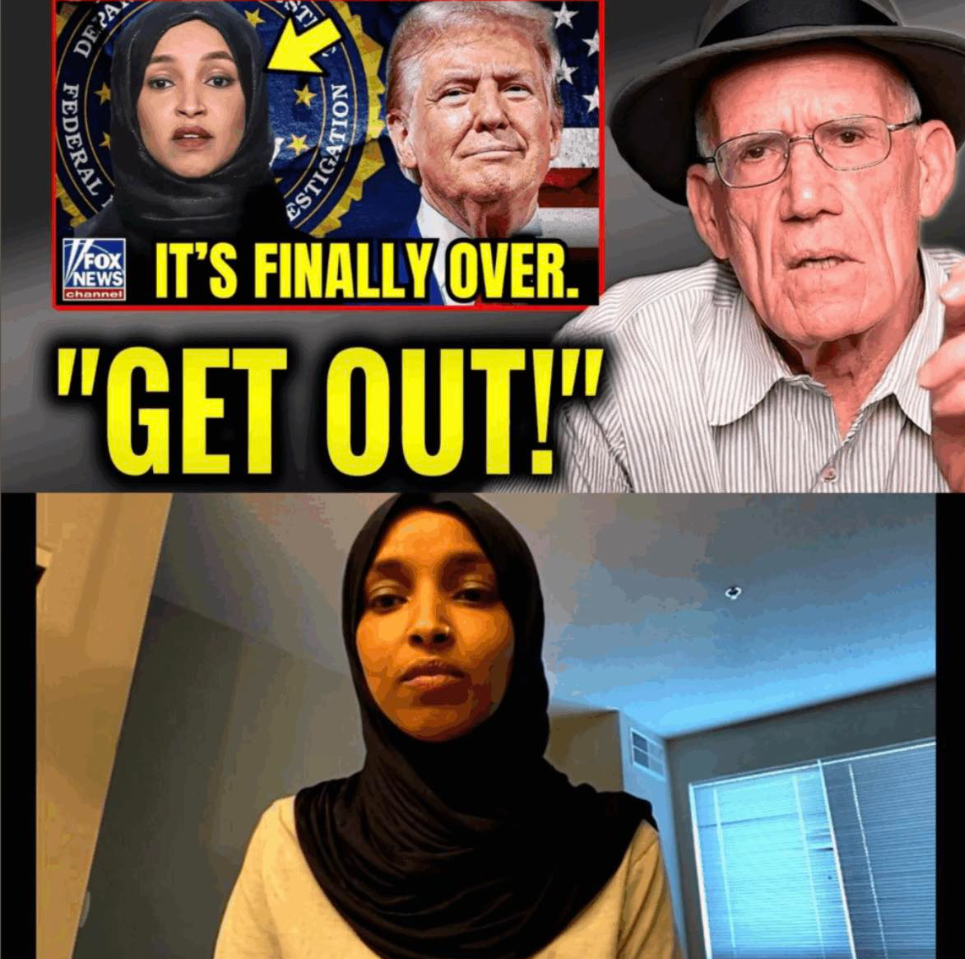
In just a single, turbulent week, Ilhan Omar, once celebrated as an untouchable progressive icon, experienced a political and personal storm that few in American public life have ever faced so suddenly. The catalyst was a single misjudged remark about the sudden death of a conservative commentator, Charlie Kirk, a comment that, in Omar’s own framing, she intended as sharp political critique, aimed at critiquing rhetoric she deemed harmful and extreme. Yet what was meant as commentary exploded far beyond the confines of social media. Her words ricocheted through a nation still raw with grief, through newsrooms, cable networks, and every corner of Twitter, transforming a momentary lapse in judgment into a moral crisis that threatened to define her legacy.
The fallout was immediate and intense. Editorial boards that had once championed her voice criticized her tone as cruel, and many progressives, unsure how to respond, remained silent. The outrage wasn’t abstract; it was deeply human and visceral. Ordinary citizens, grieving a figure they respected or admired, perceived the remark as a personal affront. Constituents she had represented with fierce advocacy for years felt shaken. The protective structures that often shield politicians—rapid-response teams, PR advisors, and coordinated messaging—struggled to contain the narrative. Suddenly, Omar found herself exposed in the public eye, stripped of the usual mechanisms that might have mitigated the damage. There was no immediate corrective framing she could rely on; there was only silence, punctuated by condemnation, disbelief, and an overwhelming sense that the political ground beneath her feet was shifting.
Into that vacuum stepped Donald Trump, calculating, deliberate, and unusually restrained in tone but devastating in effect. Unlike a typical attack tweet or brash statement, his approach was surgical. He waited, watched, and then moved strategically, issuing a precise challenge to her legitimacy and loyalty as a public servant, while simultaneously hinting at questions surrounding her citizenship status and the Temporary Protected Status (TPS) protections for Somali families, an issue intimately connected to her district. This move wasn’t random; it was designed to sow uncertainty and fear among the very community that had rallied around her for years. The ripple effects were immediate: Somali-American families, once confident in her advocacy, faced new anxieties about their legal status; donors, long accustomed to her secure progressive brand, hesitated and pulled back contributions; allies who had stood shoulder-to-shoulder began to freeze, wary of the sudden national scrutiny and potential political liability.
As the days unfolded, the unraveling accelerated at an almost cinematic pace. A town hall intended to demonstrate her resilience and connection to voters instead became a showcase for the backlash: constituents asked sharp, uncomfortable questions, journalists pressed on perceived inconsistencies, and her carefully prepared talking points fell flat under the relentless spotlight. Political operatives whispered about “damage control,” while rival Democrats began considering contingency plans, unsure whether to publicly defend her or distance themselves in order to preserve their own credibility. Meanwhile, extreme groups seized on her words, weaponizing the controversy online to amplify harassment, death threats, and targeted attacks that spanned continents, further compounding the emotional and political strain.
In a week that felt longer than a month, Omar found herself fighting on every conceivable front: morally, defending her intentions and integrity; politically, defending her seat and her broader legislative agenda; and personally, grappling with threats, isolation, and the gnawing uncertainty of whether her years of advocacy could withstand the storm. Trump, by contrast, had achieved what he sought with cold efficiency. He didn’t merely score a political victory; he transformed a symbol of progressive ascendance into a cautionary tale. What had once been a narrative of empowerment, inclusion, and defiance was reframed in real-time as a story of vulnerability, accountability, and the precariousness of public life.
The episode serves as a stark reminder of the fragility of reputation in an era where a single comment, magnified by digital media, can instantaneously reshape political fortunes. It also highlights the intersection of grief, outrage, and partisan strategy: how real human reactions to tragedy can be harnessed, distorted, and amplified for political gain. Omar’s week of crisis reflects the broader dynamics of contemporary politics, where symbolic victories and moral authority are constantly under siege, and where the speed of information—instant, global, unrelenting—can turn a calculated critique into a weaponized scandal.
Yet beneath the headlines, tweets, and strategic maneuvers lies a story of resilience and strategy still unfolding. Omar is navigating not only the external pressures but the internal ones: the demands of her conscience, the needs of her constituents, the expectations of her progressive base, and the ever-present scrutiny of a nation ready to judge her every word. Each statement, each interview, each social media post carries the weight of both immediate impact and long-term legacy. As she works to repair trust, rebuild alliances, and assert her vision, the world watches with anticipation—and, in some quarters, apprehension—aware that how she navigates this crucible may well define the trajectory of her political life for years to comes.