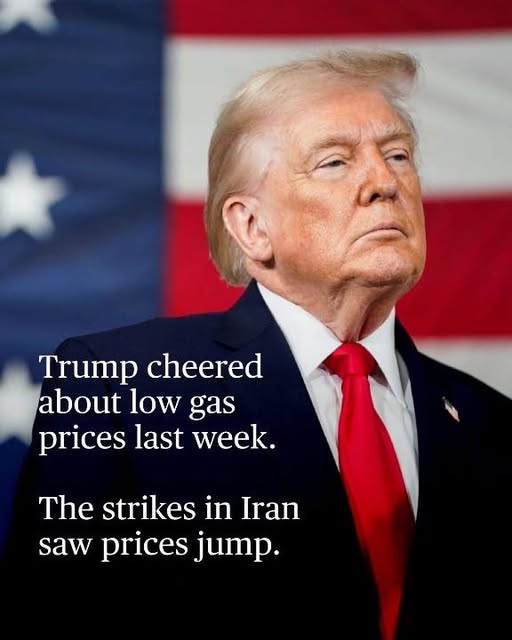
Just a week ago, President Donald Trump delivered a high-profile address before Congress, presenting a message brimming with confidence regarding the current strength of the U.S. economy. In his speech, he pointed to several indicators that he claimed demonstrated economic success: rising stock markets that reflected investor confidence, falling gas prices that eased the financial burden on households, slowing inflation that suggested price stability, and declining mortgage rates that could encourage homeownership and stimulate real estate activity. The president framed these data points as clear evidence that his administration’s policies were producing tangible results, portraying a narrative of economic momentum and reassuring the public that the country was moving toward greater financial stability. His message was carefully crafted to inspire confidence not only among lawmakers but also among Americans who had been closely monitoring the health of the economy.
At the time, the administration emphasized that these improvements were not fleeting or coincidental but rather the outcome of deliberate economic measures, such as tax reforms, deregulation, and initiatives aimed at boosting manufacturing and job growth. Officials highlighted rising employment figures and consumer spending as additional proof that the economy was on a solid trajectory. Supporters of the administration hailed the speech as a confident signal that the nation was poised for continued growth, suggesting that households, investors, and businesses could expect a stable environment for financial planning. Analysts in conservative media praised the address for highlighting what they described as the administration’s successful balancing of fiscal responsibility and pro-business policies. Even international observers noted the upbeat tone, with some suggesting that the U.S. economic narrative provided reassurance amid global uncertainty.
However, the apparent calm and optimism were soon disrupted in a dramatic and unforeseen way. Less than four days after the congressional address, President Trump authorized targeted military strikes against Iran, marking a significant escalation of tensions in the Middle East. This move immediately reverberated across international media and financial markets, creating a wave of uncertainty that contrasted sharply with the confident tone of the prior week’s speech. Investors and policymakers alike scrambled to assess the potential fallout, as concerns grew about the possibility of a broader regional conflict that could affect global economic stability. Financial analysts warned that such sudden geopolitical developments could quickly undo some of the economic optimism the administration had been highlighting.
The escalation in the Middle East introduced multiple layers of uncertainty into the global economy. Financial markets reacted almost instantaneously, with stock indices showing increased volatility as traders sought to account for the potential economic ramifications of sustained conflict. Energy markets, in particular, faced heightened attention, as any disruption in oil production or transport from the region could have immediate and cascading effects on global supply chains. Economists noted that historical patterns often show that instability in the Middle East correlates with spikes in oil prices, which then ripple outward to influence transportation costs, manufacturing expenses, and the price of everyday consumer goods. The interconnectedness of global trade means that even temporary disruptions in key shipping lanes or ports can have broad-reaching effects on production schedules, shipping rates, and commodity prices worldwide.
For American households, the consequences of this geopolitical tension could be significant. Rising fuel costs would not be limited to gasoline prices at the pump but would also affect utility bills, grocery prices, and the cost of goods transported across the country. Inflationary pressures could intensify if energy costs climb, undermining some of the progress cited by the administration just days earlier. Additionally, the uncertainty in financial markets might influence borrowing costs, potentially affecting mortgage rates, credit card interest, and other forms of consumer debt. For many families already managing tight budgets, even modest increases in living expenses could create noticeable strain.
The timing of the military strikes amplifies the potential economic impact. Consumer sentiment surveys over the past year have indicated a rising level of skepticism and concern among Americans about the stability of their personal finances and the broader economy. Many households have expressed apprehension about inflation, employment stability, and the affordability of essential goods. Against this backdrop, the sudden escalation in the Middle East may heighten anxiety and dampen consumer confidence, potentially slowing spending and investment at a critical moment. Retailers, manufacturers, and service providers could all feel the indirect effects of decreased consumer confidence and increased uncertainty, which in turn might feed into broader economic trends.
Global markets are watching the situation closely. Analysts are emphasizing that the coming weeks will be particularly decisive in determining the extent to which the U.S. economy can maintain the trajectory outlined in Trump’s congressional speech. Energy prices, international trade stability, and the potential for a prolonged conflict in the Middle East are all factors that could either erode or reinforce the economic progress highlighted by the administration. Investors will continue monitoring geopolitical developments, currency fluctuations, and commodity prices to anticipate how businesses and consumers might respond to heightened uncertainty.
Moreover, policymakers face difficult decisions in navigating this volatile period. Balancing domestic economic priorities with the need to respond strategically to international tensions requires careful planning and diplomacy. Any misstep could exacerbate market volatility or create ripple effects that undermine the administration’s claims of economic stability. Financial experts caution that even short-term geopolitical crises can have lasting impacts, and decisions made over the next few weeks could play a decisive role in shaping the economic landscape for the remainder of the year.
In sum, while President Trump’s speech to Congress projected an image of confidence and economic strength, the subsequent military escalation underscores the fragility of global economic stability in the face of geopolitical events. The tension in the Middle East has introduced an element of uncertainty that could affect energy prices, financial markets, supply chains, and consumer confidence. Analysts suggest that the coming weeks will be a critical test of whether the economic momentum highlighted in the speech can withstand external shocks and maintain the trajectory of growth, stability, and confidence the administration sought to convey. For American families, investors, and policymakers alike, the situation serves as a reminder that even a strong domestic economy can be vulnerable to sudden shifts in global dynamics, highlighting the importance of monitoring both economic and geopolitical indicators simultaneously.