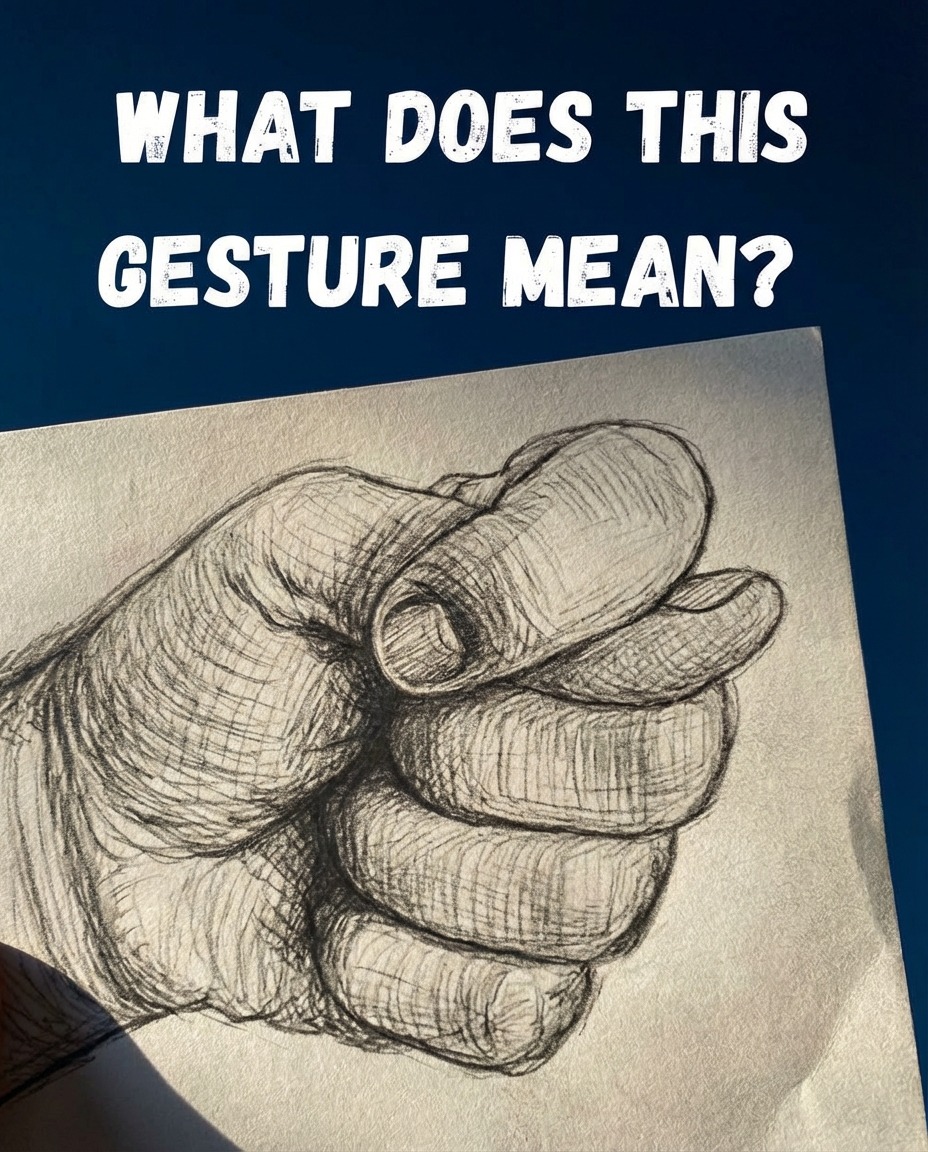
At first glance, it looks like an ordinary, tightly clenched fist. But look closer, and a subtle, intentional detail becomes apparent: the thumb is not curled over the fingers, nor tucked underneath in the usual way. Instead, it is pushed firmly between the index and middle fingers, peeking through the knuckles. This minor anatomical tweak transforms a simple hand into an ancient and powerful symbol known across cultures as the “fig” gesture, or mano fico.
Long before emojis, instant messaging, or universal shorthand existed, this small hand sign carried a clear, unspoken message. It was a silent language that transcended borders, capable of communicating defiance, refusal, or resistance with a single flick of the wrist. For generations, the fig was the tool of the everyday person—a compact statement of rebellion, a sharp “no” without a single word.
In 19th-century European villages, the gesture was far more than an insult; it was a form of social strategy. In a world where overt confrontation could bring legal or physical consequences, the fig offered a safe middle ground. It allowed individuals to resist unjust authority, local bullies, or impossible demands while maintaining plausible deniability. To “show the fig” was to defy with wit, humor, and quiet stubbornness—the ultimate discreet rebellion that preserved dignity while keeping the peace.
Beyond social defiance, the fig carried symbolic and mystical weight. Across the Mediterranean and South America, it was believed to ward off the “evil eye” (malocchio) or shield one from envious glances. The closed fist concentrated hidden strength, while the thumb wedged between fingers acted as a protective charm—a tactile amulet made of flesh and bone, a barrier against unseen forces and misfortune.
Over the decades, the gesture softened and moved from public streets into family homes. It became a playful, intergenerational signal—grandparents teaching children to “steal” a nose or playfully resist teasing. Yet even in these lighthearted contexts, its essence remained: a subtle lesson in standing one’s ground, in claiming one’s right to set boundaries.
The fig also found resonance in quieter, more personal moments—when someone faced separation, fear, or an intimidating challenge. In these cases, it was less defiance and more quiet resolve: a way of telling oneself, “I am strong. I am protected. I will not be moved.” It offered a grounding, physical comfort, a reassurance for the heart during life’s storms.
Today, the fig gesture is increasingly rare. In a world dominated by screens, emojis, and digital shorthand, the nuanced, tactile language of the body has largely been replaced by pixels and text. Defiance comes through bold posts, humor through GIFs, and protection through firewalls. Yet the impulse behind the gesture—strength, boundaries, self-protection—remains as vital as ever.
The history of the fig reminds us that the most potent messages often require no megaphone, no high-speed connection. Sometimes, subtlety speaks louder than volume. Sometimes, humor is the strongest armor.
The fig stands as a testament to human ingenuity in the face of silence. It shows that for centuries, people have found ways to assert themselves, protect their loved ones, and claim personal space using nothing more than their own hands. It is a legacy of wit and resilience, proving that a single, well-placed thumb can speak as loudly as a thousand words. Even in our digitally dominated world, the fig endures—a quiet, clenched fist echoing the defiance and strength of generations past.