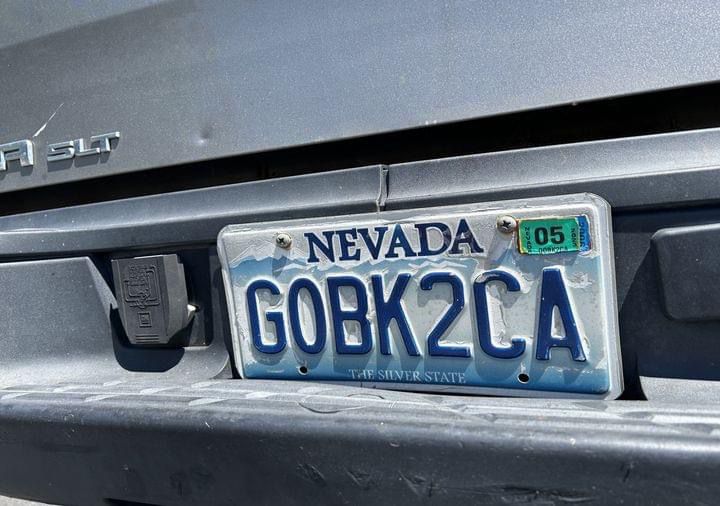
A personalized license plate from the state of Nevada has unexpectedly become a viral sensation on social media, sparking widespread discussion and debate across the internet. The plate, which displayed the message “Go back to California,” was first shared on Facebook, where it quickly attracted massive attention. Within a short time, the image of the plate accumulated more than 80,000 likes, along with tens of thousands of comments and shares, making it one of the most talked-about posts of the week.
The message on the plate resonated with an ongoing and often sensitive topic in the western United States: the growing tension between long-time Nevada residents and people relocating from California. Over the past several years, Nevada has seen an influx of new residents from California, many of whom move in search of lower living costs and new opportunities. While some locals welcome the growth, others feel frustrated by rising housing prices and cultural changes, making the license plate’s message especially provocative.
As the post spread, social media users were divided in their reactions. Some people found the plate humorous and praised it as a bold expression of local sentiment. Others, however, criticized it as rude, exclusionary, or unnecessarily hostile. The comment sections became heated, with users debating freedom of expression, state pride, and whether personalized license plates should be allowed to carry politically or socially charged messages.
Due to the viral attention and the controversy it generated, the Nevada Department of Motor Vehicles (DMV) eventually became aware of the situation. After reviewing the plate, the DMV announced that it would be recalled, explaining that the message violated state regulations governing personalized license plates. According to the DMV, plates must not contain language that could be considered offensive, inflammatory, or discriminatory, even if they initially pass the approval process.
The recall itself further fueled online discussion, with some arguing that the decision infringed on free speech, while others supported the DMV’s action as necessary to maintain respect and neutrality on public roadways. The incident raised broader questions about how such messages are approved, how social media amplifies everyday objects into viral content, and where authorities should draw the line when personal expression enters the public space.
In the end, what began as a simple personalized license plate turned into a nationwide conversation about identity, migration, free expression, and the power of social media. The story serves as yet another example of how quickly a small detail can capture public attention and become a viral phenomenon in the digital age.