Few songs in the annals of contemporary music have the eerie, all-encompassing reverberation of “Unchained Melody.” The ballad was first composed in 1955 by Alex North and Hy Zaret for the minor prison movie Unchained. Its original purpose was to depict the longing of a man who was separated from his loved ones by iron bars. But over the past 70 years, the song has evolved beyond its cinematic beginnings to become a universal hymn of longing, love, and time passing. Its enduring appeal is a tribute to a tune that seems to have always been in the human heart, as evidenced by the more than 670 documented versions in dozens of languages.
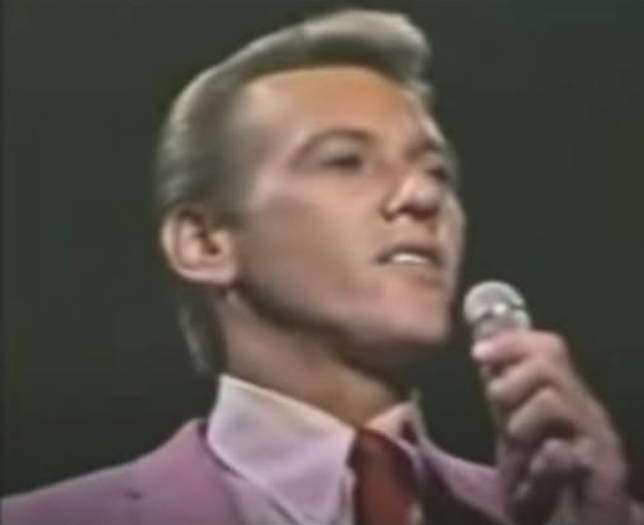
Although Todd Duncan sang the song for the first time, The Righteous Brothers’ 1965 performance turned it into a timeless cultural icon. The song contains Bobby Hatfield’s vocal performance, which is now regarded as one of the most renowned in music history, and is produced with a sparse yet swelled intensity. Hatfield hits a sequence of soaring high notes with an almost supernatural precision as the production, in the style of the Brill Building, gradually rises to a crescendo, reflecting the mounting stress of a heart at its breaking point. These moments are visceral displays of unadulterated emotion to millions of listeners, who see them as more than just notes. True emotional depth never ages, as evidenced by the fact that a viral video of this performance has received over 76 million views to date with comment sections full of individuals of various ages describing the “chills” they experience.
Elvis Presley added his own powerful gravity to the ballad in the last year of his life, significantly enriching the song’s history. A clearly ailing Elvis sat at a piano and gave a performance that seemed like a last testament during his 1977 live concerts, especially the recorded version from Rapid City, South Dakota. He brought the ballad to a new generation of admirers by bringing his own operatic strength and a tangible sense of exhaustion to the song. His rendition ensured that “Unchained Melody” stayed firmly in the spotlight of mainstream culture long after the 1950s had faded by recontextualizing the song as a very intimate call for connection.
The simplicity and slow resolution of “Unchained Melody” are what make it so brilliant. Waiting for a touch, for time to pass more quickly, and for the “lonely rivers” to eventually reach the sea are all themes in this song. Because of its profound allegory, the song is still used as the background music for life’s most significant events, such as weddings and farewells. When it appeared in the 1990 movie Ghost, it experienced still another spike in popularity, serving as a reminder to the world that the Righteous Brothers’ rendition was still the benchmark for passionate desire.
“Unchained Melody” serves as a unique link between the pop era and the era of vintage crooners. The song is still a masterwork of how music can convey the intangible, whether it is Hatfield’s beautiful falsetto or Elvis Presley’s booming baritone. It serves as a reminder that although people’s voices may wane and times may shift, people’s need for connection endures. One of the best songs ever recorded, this 1955 masterpiece will reverberate through the halls of history with a melody that is genuinely unchained as long as there are individuals who have experienced the weight of distance or the fire of love.