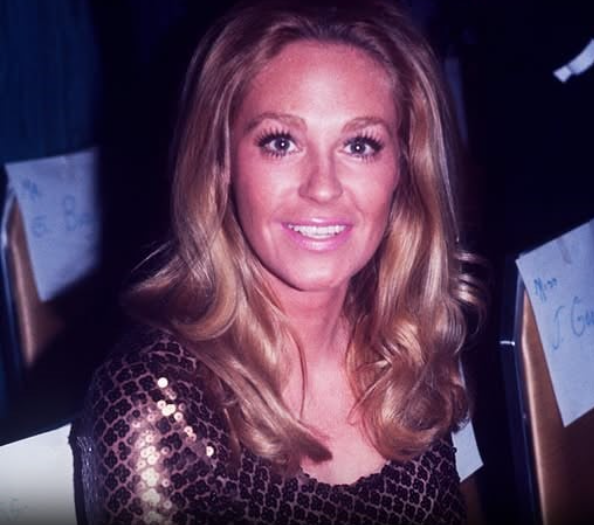
The passing of Joan Bennett Kennedy at 89 closes a chapter in American history written in the margins of power and vulnerability. For decades, she lived at the intersection of immense influence and profound personal challenge—a woman enmeshed in the towering myth of Camelot, yet never wholly consumed by it. As the first wife of Senator Edward M. Kennedy, Joan stepped into a political dynasty that demanded perfection, stoicism, and public resilience often at the expense of private well-being. Yet, despite betrayals, the heavy toll of addiction, and the unrelenting glare of global attention, she preserved a gentleness that became her most enduring defiance.
To understand Joan Bennett Kennedy is to grasp the suffocating expectations of the Kennedy era. Arriving into the family at the height of its mid-century prominence, she was the quintessential telegenic debutante—a woman seemingly destined for magazine covers. But the reality of life as a Kennedy wife was far from the idyllic images of touch football and white-sailed sloops. Political ambition often eclipsed personal care, leaving women to navigate trauma in the shadows of their husbands’ legacies. Joan endured the fallout of the Chappaquiddick incident, the loss of brothers-in-law to assassination, and the systemic infidelities that long went unspoken, all while maintaining her composure.
In a life dominated by public performance, the piano remained Joan’s truest refuge. A gifted musician who once dreamed of a professional career, she found in music a private sanctuary untouched by tabloid scrutiny. When marital fractures widened or media pressure became unbearable, she retreated to the keys. Each note bore the weight of what she could not voice in Senate halls or at Hyannis Port dinner parties. Watching her play was witnessing a woman reclaim her identity, note by note, refusing to be reduced to a mere footnote in her husband’s biography.
Her battle with alcoholism was among her most public struggles, often misunderstood in the judgmental climate of the 1970s and ’80s. Yet her legacy is one of honesty and resilience. By speaking openly about recovery, she shattered the code of silence that governed elite society, offering a reflection for countless women confronting addiction, loneliness, and societal pressure. Her strength lay not in flawless endurance, but in the quiet courage with which she rose again and again.
Friends and confidants remember not the scandals, but her warmth. Despite being cast as a secondary character in a grand political drama, Joan exhibited deep empathy. She was a devoted mother to Kara, Teddy Jr., and Patrick, shielding them from the turbulence of their father’s world. Even after her divorce from Ted Kennedy in 1982, she carried herself with dignity, free of bitterness, living later years surrounded by the melodies that had sustained her through Camelot’s darkest nights.
The “Grace of Camelot” is often linked to Jacqueline Kennedy’s intellectual elegance or Ethel Kennedy’s fierce maternal devotion. Joan offered a different grace—the grace of survival. Her life demonstrated that one could be broken by circumstance yet remain tender, showing that vulnerability is not weakness but a prerequisite for true strength. In her final decades, she lived largely on her own terms, away from the flashbulbs, guided by the music that had been her companion through hardship.
As history reflects on the 20th century, Joan Bennett Kennedy will be remembered as a woman who endured the most intense era of American political scrutiny with her humanity intact. She witnessed history, bore its excesses, and ultimately composed her own redemption. Her passing marks the close of an era of American royalty that will never return, yet her melody endures—a soft, lasting echo reminding us that, while power erects monuments and enacts laws, it is the quiet resilience of the human spirit that truly prevails.
She was the woman who preserved grace even when myth failed her. She showed that beauty lies in the persistence of music, even when the auditorium is empty and the lights dim. Her legacy is not in legislation but in the hearts of those who learned from her: it is possible to endure the world’s betrayals and still reach for the piano.