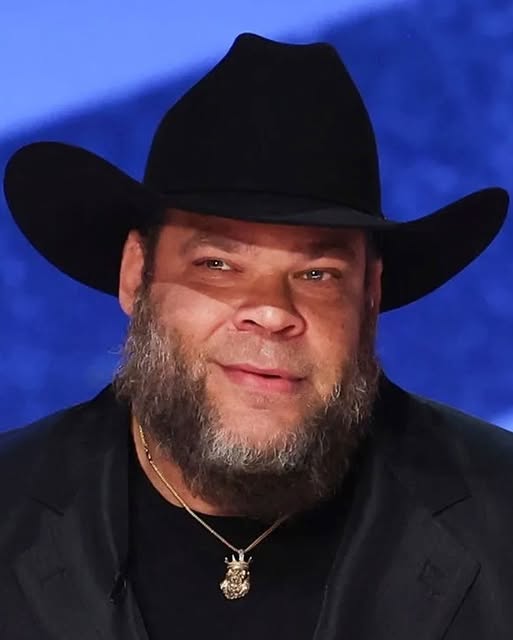
The pain started long before the spotlight ever found him.
Long before the championship belts were wrapped around his waist. Before the television contracts, the interviews, the recognition, and the image of success that people now associate with his name. Before the headlines that speak of a multi-million-dollar net worth and a life that, from the outside, looks complete. Long before all of that, George “Tyrus” Murdoch was simply a boy trying to survive a world that offered him very little stability and even less certainty.
His childhood was not built on comfort or consistency. It was shaped by foster homes, by constant movement, by environments that changed too quickly to ever feel safe. There was no steady foundation, no sense of belonging that most children take for granted. Instead, there was the quiet, persistent fear of being unwanted, of never truly having a place to call home. Those early years left marks that don’t simply disappear with time or success. They settle deep, becoming part of how a person sees the world—and themselves.
When fame eventually arrived, it didn’t erase those scars. It didn’t rewrite the past or quiet the memories. If anything, it made them louder. Because success can amplify what already exists inside you. The spotlight doesn’t just reveal strength—it exposes the battles that never really ended. And for Tyrus, the fight wasn’t just in the ring or on the field. It was internal, constant, and deeply personal.
What truly defines him today isn’t the noise of the crowd or the bright lights of television studios. It’s not the persona he built for the public or the roles he played in front of cameras. What defines him is something far quieter, but far more powerful: the determination to become the kind of man he never had growing up.
The discipline he once directed toward football and professional wrestling didn’t disappear—it evolved. It found a new purpose, one rooted not in competition, but in connection. Today, that same focus and commitment are poured into his family life, into his marriage with entrepreneur Ingrid Rinck, and into the blended family they have built together with intention and care.
For Tyrus, fatherhood is not just a role—it is a mission.
Every small moment carries weight. Driving his kids to school. Sitting down for conversations that stretch late into the night. Being present not just physically, but emotionally. Showing up again and again, even when it’s difficult. These aren’t ordinary acts to him—they are deliberate choices. Each one is a quiet act of defiance against the instability he once knew. Each one is proof that cycles, no matter how deeply rooted, can be broken.
He understands something that only experience can teach: that the things people chase in public life—titles, recognition, status—are temporary. Belts are eventually passed on. Characters fade. Applause dies down. The spotlight moves to someone else. And when it does, what remains is not the image the world saw, but the life you built when no one was watching.
For him, legacy is not measured in championships like the NWA Worlds Heavyweight title or in the reach of television fame. It’s measured in something far more enduring—what his children will carry with them into their own lives. Stability. Love. Presence. The feeling of being seen, supported, and safe.
Those are the victories that matter.
Because the real achievement isn’t what he overcame—it’s what he refuses to pass on.
Tyrus knows what it means to grow up carrying wounds alone. And that knowledge shapes every decision he makes as a father and as a partner. He isn’t trying to erase his past. He’s transforming it into something meaningful, something that ensures his children will never have to question whether they belong.
In the end, his story is not just about survival or success. It’s about transformation. About taking pain and turning it into purpose. About choosing, every single day, to be better than the circumstances that tried to define him.
Because for Tyrus, the greatest championship isn’t won in a ring or on a stage.
It’s built at home.
And it’s measured in the kind of life his children will never have to recover from.