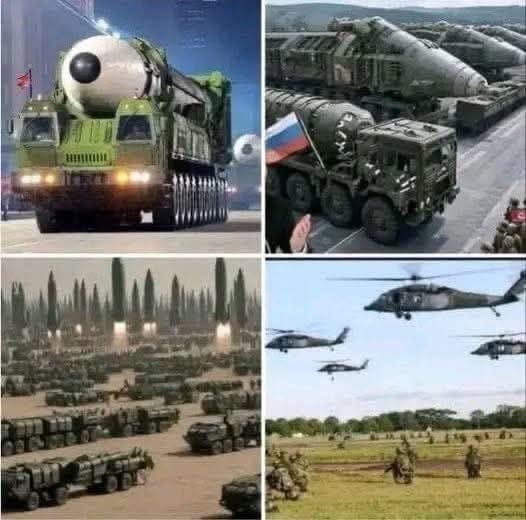
The cobblestone streets of Brussels, long associated with bureaucracy and diplomatic finesse, now pulse with a rhythm more like a command center than a trade hub. For decades, the European Union operated under the comforting assumption of “The End of History,” believing that economic integration and liberal democracy had rendered large-scale war an anachronism. The full-scale invasion of Ukraine by Russia, however, shattered that illusion. Europe is waking to a stark reality: the era of peace was a luxury—and that luxury has expired. The continent is now racing to rebuild its military, industrial, and psychological foundations before the next storm hits.
The shift in rhetoric from European capitals is unmistakable. Diplomacy alone is no longer enough; military readiness is the priority. Intelligence agencies and defense ministers warn that Europe may have seen its “last summer of peace.” NATO Secretary General Mark Rutte has bluntly suggested that Russian ambitions extend beyond Ukraine, framing an attack on NATO territory not as a hypothetical, but as an eventuality—possibly within five years. Moscow’s own statements about being “prepared for a fight” only reinforce these fears.
Yet Brussels faces a critical obstacle: public reluctance. Across the EU, surveys show deep hesitation to take up arms. In a poll of nearly 10,000 Europeans, 75% said they would not fight to defend the union’s borders, with only 19% expressing readiness to serve. Concern about Russian aggression is highest in frontline states, such as Denmark (62%) and Lithuania (57%), but the broader public is more focused on energy security and economic fallout than direct defense. This “readiness gap” complicates plans for a continent seeking to build a fortress on ambivalent ground.
Eastern Europe, however, is acting decisively. Poland, Finland, and Sweden are reviving civil defense protocols with modern innovations. Sweden has mailed “If Crisis or War Comes” brochures to every household, while Lithuania is constructing drone walls and restoring wetlands to serve as natural barriers. Latvia and Poland are integrating firearms safety and national defense into school curricula. Online searches for bomb shelters and evacuation plans suggest that, while unwilling to fight, Europeans are increasingly aware that preparation is survival.
Behind Brussels’ doors, the EU’s financial and logistical machinery is being rewired. Defense spending exceeded €300 billion in 2024, but future projections dwarf that sum. The “Readiness 2030” roadmap aims to solve the “Military Schengen” problem—reducing the time for moving troops and heavy equipment across borders from days to hours. Five hundred critical infrastructure points, including bridges, tunnels, and ports, are slated for upgrades, at an estimated cost of €100 billion.
To fund this, the EU launched “ReArm Europe,” consolidating the fragmented defense industry. The platform leverages the European Defence Industry Programme (EDIP) and the €150 billion Strategic Armament Financing Envelope (SAFE) to pool resources and accelerate purchases of air defense systems, drones, and long-range missiles. Demand has already surged, reflecting a continent urgently seeking to catch up.
A growing sense of U.S. retrenchment is accelerating this push. Washington’s “America First” posture frames Europe as a “weakened partner,” signaling that the U.S. expects Europe to shoulder most conventional defense by 2027. This has intensified the debate over “strategic autonomy.” While leaders like Council President António Costa and foreign policy chief Kaja Kallas push back, Europe cannot rely on unconditional American guarantees. The Hague summit’s agreement to aim for 5% GDP defense spending by 2035 underscores this pressure, even as many countries struggle to meet NATO’s 2% baseline.
The challenge for Brussels is not just financial—it is temporal. Decades of underinvestment and industrial decline cannot be reversed overnight. Regulatory bottlenecks and production limits constrain the ramp-up of equipment and ammunition. Even with fast-tracked reforms, structural limits remain formidable.
As 2026 unfolds, the question haunting Brussels is no longer whether Europe has the will to defend itself—it is whether it has the capacity to prepare before the window of opportunity closes. The continent is no longer debating its future; it is racing to build the walls that will determine if it has one at all.