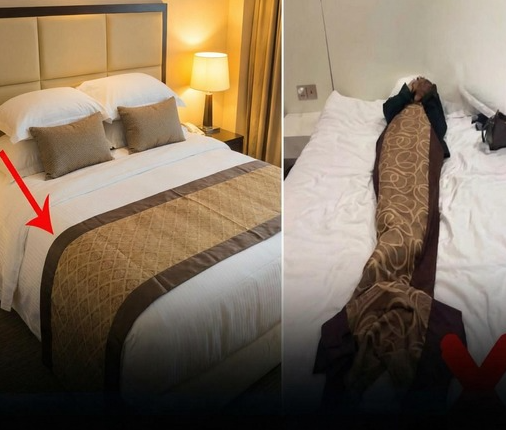
Most travelers walk into a hotel room, drop their bags on the floor, scan the space, and almost instantly notice that narrow strip of fabric stretched neatly across the foot of the bed. It’s colorful, coordinated with the décor, and perfectly straight—so perfect that many guests assume it’s there purely for decoration. But the truth is far more practical. Hotels rarely put anything in a room without purpose, and that small strip, called a bed runner, is doing much more than people realize. Once you understand its role, the entire setup suddenly makes perfect sense.
Sure, it adds visual appeal. Hoteliers know that first impressions are everything, and that pop of color across an otherwise plain white bed instantly makes the room feel more polished and inviting. It’s an inexpensive way to add warmth and personality without constantly replacing full comforters. But the runner’s real job is far more functional: it quietly protects the bedding from the nonstop cycle of guest habits that would otherwise wear down those pristine linens.
Think about what almost everyone does the moment they enter a hotel room. They sit on the edge of the bed to take off their shoes, check their phone, rummage through a suitcase, or just catch their breath after traveling. They set snacks, drinks, guidebooks, and sometimes even takeout containers right on top of the bed. Instead of letting crumbs, spills, smudges, or dirt hit the main bedding, the runner absorbs the first wave. It’s easier to clean, cheaper to replace, and specifically designed to take this kind of abuse. Housekeeping relies on it to protect expensive linens, keep the sheets cleaner for longer, and reduce the need for full bedding changes during shorter guest stays.
It also serves as a hygienic buffer between the bed and your belongings. Most travelers instinctively place backpacks, purses, jackets, laptop bags, or travel gear on the bed without thinking. These items have been dragged through airports, buses, taxis, restrooms, and sidewalks. Putting them directly on a white duvet isn’t ideal, so the bed runner becomes a designated landing zone. It takes the dirt and friction so the bedding doesn’t have to, giving guests a convenient, worry-free spot to organize their things.
There’s another subtle purpose: it provides a comfortable place to sit without ruining the bed’s perfectly made appearance. Guests constantly sit at the foot of the bed to tie their shoes, repack luggage, or unwind. The runner acts as a sit-down zone that keeps the bedding tidy for the next time housekeeping checks the room—or simply for when guests want to return to a bed that still looks crisp and neat. In an industry obsessed with calm, cleanliness, and visual order, even small details like this matter.
The fabric itself is chosen strategically. Bed runners are made from sturdy, easy-to-clean materials that handle friction, stains, and daily wear better than full comforters. Instead of washing bulky bedding after every check-out—which would increase costs dramatically and waste huge amounts of water—hotels can simply launder the runner and maintain the illusion of spotless luxury. It’s the quiet workhorse of hotel bedding, taking the damage so the rest doesn’t have to.
And while hygiene and protection are its core functions, it doubles as a design element that ties the room together. A thoughtfully chosen runner adds color, texture, and cohesion, linking the bed to the furniture, curtains, or overall theme. It’s a small detail with big impact—one that subtly tells guests that care has gone into every corner of the space.
So next time you step into a hotel room and notice that sleek fabric strip at the foot of the bed, know this: it’s not just a decorative accessory. It’s a carefully engineered part of your stay. It keeps the bedding cleaner, protects your belongings, absorbs the wear and tear of everyday travel habits, and helps preserve the sense of calm and order that hotels strive to create. What looks like a simple bit of decoration is actually a smart, multipurpose tool working quietly to make your stay more pleasant, cleaner, and far more comfortable.