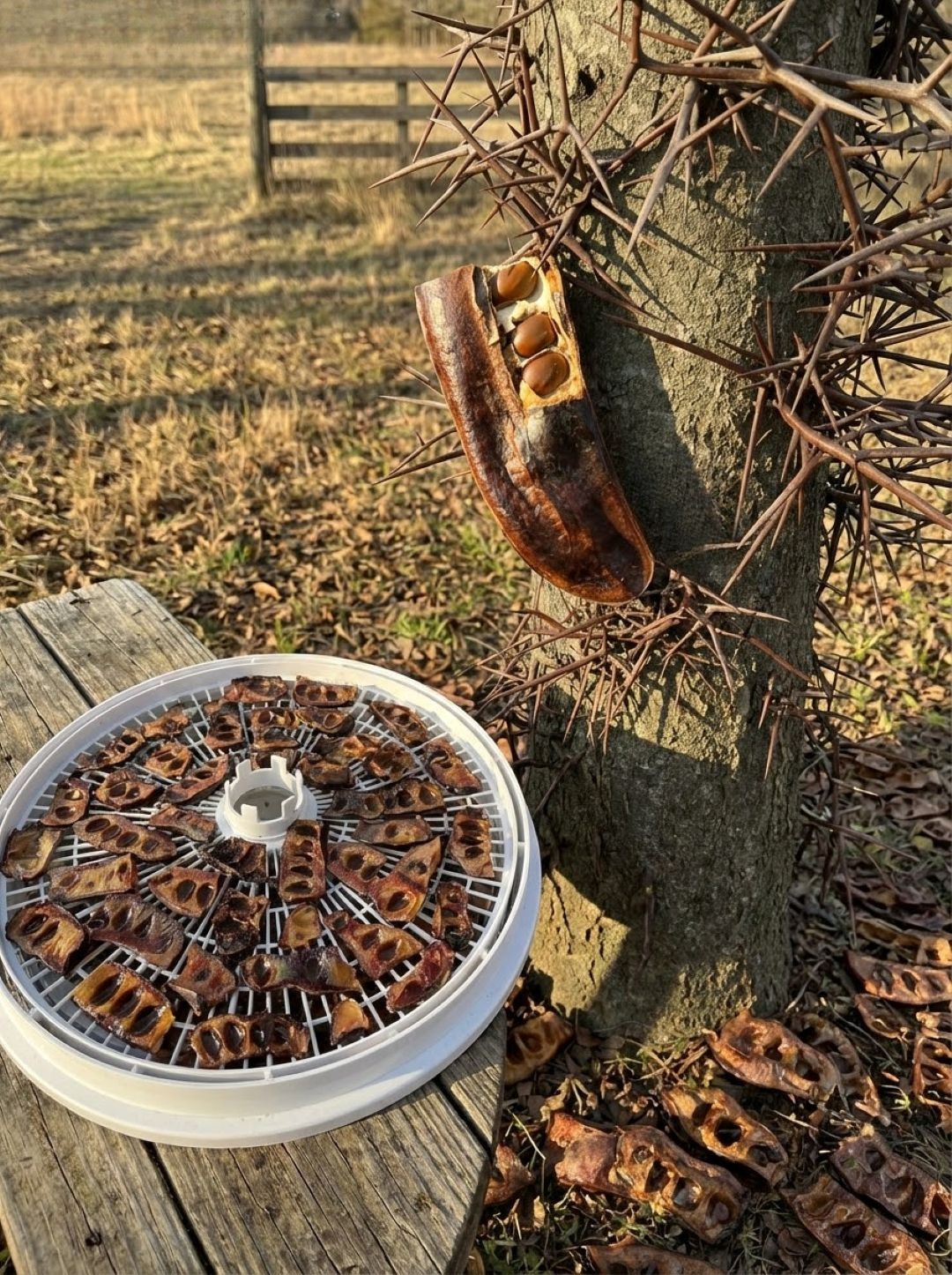
Across the diverse forests of North America, few trees carry a history as rich—and as quietly overlooked—as the honey locust, scientifically known as Gleditsia triacanthos. To many people today, especially in suburban settings, it is simply a dependable shade tree, valued for its fine, feathery leaves that allow soft sunlight to filter through. Yet reducing the honey locust to a decorative role ignores its long-standing importance. Native to the fertile lands of the Mississippi Valley and the Appalachian region, this tree once played a crucial role in daily survival for Indigenous communities and early settlers. Long before factories, supermarkets, and mass production, the honey locust functioned as a natural storehouse, providing food, medicine, and durable materials to those who understood its many uses.
One of the honey locust’s most recognizable features is its abundance of long, twisting seed pods that darken and harden as they mature. Inside these pods lies the source of the tree’s name: a thick, sticky pulp surrounding the hard seeds. This pulp is exceptionally sweet and rich in natural sugars, retaining moisture long after the pods fall to the ground. For generations, this sweetness served as an essential substitute for refined sugar, which was rare and expensive. Indigenous peoples and early pioneers gathered the pods in autumn, eating the pulp raw or boiling it down into thick syrups. In certain areas, this sugary liquid was even fermented into simple drinks, allowing the harvest to be preserved and enjoyed long after the season had passed.
The benefits of the honey locust extended beyond sweetness. Its seeds, though encased in extremely tough shells, became valuable once roasted. When prepared this way, they released a deep, nutty aroma and were often brewed as a coffee alternative on the frontier. Ground into meal, the seeds could also be added to porridges or mixed into flour, providing sustenance during harsh winters or times of crop failure. This dual role—offering both a treat and a survival food—made the honey locust a treasured presence near homes and settlements.
Its usefulness was just as significant outside the kitchen. Honey locust wood earned a reputation for exceptional hardness and longevity. Naturally rich in tannins and resins, the heartwood resists rot even when buried in damp soil. This quality made it especially valuable for fence posts that needed to last for decades. The wood’s strength and shock resistance also made it ideal for wagon parts, tool handles, and the structural pins used in timber-frame buildings. For settlers carving out lives in unfamiliar territory, a grove of honey locust trees represented durability and reliability—a natural foundation for construction and daily labor.
The tree also contributed to hygiene and household maintenance in ways that are often forgotten today. Both its bark and pods contain saponins, natural compounds that produce a mild lather when mixed with water. Before commercial soaps were widely available, these plant-based cleansers offered a gentler option for washing skin, wool, and delicate fabrics. This natural soap allowed families to maintain cleanliness without damaging their belongings, reinforcing the honey locust’s role as an indispensable household resource.
In the wild, the honey locust displays a more intimidating side. Large, branching thorns grow directly from its trunk and lower branches, forming formidable clusters several inches long. These thorns are believed to have evolved as protection against now-extinct megafauna that once roamed the continent. While dangerous to careless passersby, the thorns were repurposed by humans as sewing needles, pins, and even simple fishing hooks. Modern cultivation has produced thornless varieties for urban landscapes, but the original, thorn-covered trees remain powerful reminders of the species’ ancient defenses.
Ecologically, the honey locust is remarkably cooperative. Its delicate, compound leaves create what is known as “light shade,” allowing sunlight to reach the ground below. Unlike dense-canopied trees that suppress undergrowth, the honey locust supports grasses, wildflowers, and other plants beneath it, encouraging biodiversity. During winter, its fallen pods become an essential food source for wildlife, including deer, squirrels, and birds. These animals, in turn, help spread the seeds, ensuring the tree’s continued presence across the landscape.
In today’s world of synthetic materials and processed goods, much of the traditional knowledge surrounding the honey locust has faded. Yet the tree itself remains resilient, thriving in cities where heat, drought, and poor soil challenge other species. It stands as a living connection between past and present, reminding us that many of the trees we consider ordinary once sustained entire communities. The honey locust demands little from the land, yet offers an extraordinary range of benefits to those who take the time to understand it.
To truly appreciate the honey locust, one must look beyond modern convenience and recognize the intelligence woven into the natural world. Whether offering sweetness from its pods, strength from its wood, or shelter for wildlife, the tree continues to serve its ancient purpose. It reminds us that nature’s most valuable resources are often hidden in plain sight—waiting quietly in the bark, the wood, and the seed pods of a tree that has stood watch over the American landscape for thousands of years. Understanding the honey locust is, in many ways, understanding the land itself: resilient, generous, and endlessly resourceful.