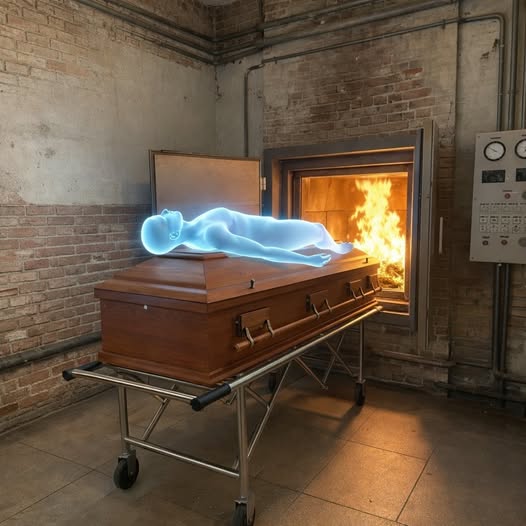
The deep roar of the furnace, and the final transformation of a physical body into a small collection of ash, has become an increasingly familiar image in the modern experience of death. In recent decades, much of the Western world has shifted away from the traditional green landscapes of cemeteries toward the efficiency and simplicity of cremation. This change has been influenced by several practical realities: the rising cost of burial plots, the limited availability of land in densely populated cities, and a growing awareness of the environmental impact associated with embalming chemicals and long-term burial practices. As a result, more families are choosing cremation as a practical and affordable alternative.
Yet even as cremation becomes more common, it continues to raise deep spiritual and emotional questions. For many believers, a lingering concern remains: is cremation considered a sin in the eyes of God? This question is not merely about practice, but about faith, tradition, and the meaning of the human body in the context of eternity.
To understand this tension, it is necessary to return to the foundations of Judeo-Christian belief. For thousands of years, burial has been more than a cultural habit—it has been a deeply symbolic act. In the ancient Near East, how a person was laid to rest reflected both respect for the deceased and reverence for God. Throughout the Old Testament, burial is consistently portrayed as the honored practice among the faithful. Abraham, for example, went to great lengths to secure the cave of Machpelah in Hebron to bury his wife Sarah, a resting place that later became the burial site of the patriarchs themselves. Even Moses, one of the most significant figures in scripture, was buried in a place known only to God, emphasizing the sacred nature of the body after death.
This tradition of burial carries into the New Testament, where it is reinforced by the central event of Christian faith: the death and resurrection of Jesus Christ. After His crucifixion, Jesus’ body was carefully wrapped in linen and placed in a sealed tomb. For early Christians, this became the model for how believers should treat the dead. Burial symbolized the body being “sown” into the earth like a seed, with the hope of future resurrection into a glorified form. This imagery is central to the theological hesitation surrounding cremation. If the body is described by the Apostle Paul as a “temple of the Holy Spirit,” then some have wondered whether reducing it to ashes might be seen as dishonoring that sacred temple.
Historically, many early Christian communities strongly favored burial. In fact, cremation was often associated with pagan customs or with attempts to deny the Christian belief in bodily resurrection. During periods of persecution, some enemies of Christianity even burned the bodies of martyrs as an act of defiance, intending to destroy any hope of resurrection. In response, burial became not just a practice, but a public declaration of faith—an affirmation that death was temporary and that the body would one day be restored by God. This historical context is one reason why some traditional believers still feel discomfort toward cremation today, viewing it as less aligned with biblical symbolism.
However, a closer examination of Scripture reveals an important detail: there is no explicit biblical command that forbids cremation. Nowhere in the Bible is cremation directly condemned as sinful. While burial is clearly the most frequently described and culturally accepted practice among biblical figures, it appears as tradition rather than divine law. Instances where burning is mentioned in scripture are generally connected to judgment or destruction, not as a universal instruction regarding funerary practices.
In modern theological discussions, many scholars emphasize a more balanced interpretation. The core message of Christianity is not centered on the preservation of the physical body, but on the redemption of the soul and the power of God over life and death. From this perspective, the resurrection does not depend on the condition of earthly remains. If divine power created the universe from nothing, then restoring life—whether from dust, ashes, or scattered elements—is not beyond God’s ability. The mystery of resurrection is therefore seen as an act of divine authority, not a process limited by physical circumstances.
This understanding has led many modern believers to approach cremation without spiritual fear or guilt. Instead of viewing it as a rejection of biblical values, they see it as another form of returning to the earth—an accelerated version of the phrase “dust to dust.” Whether a body decomposes naturally over time or is reduced to ashes through flame, the ultimate physical outcome is the same. What remains essential is not the material body itself, but the soul, identity, and eternal place of the individual in God’s care.
Supporters of cremation also point out that it can be carried out with deep respect and reverence. A meaningful memorial service centered on prayer, scripture, and remembrance can honor the deceased just as profoundly as a traditional burial. In addition, the financial savings associated with cremation can allow families to direct resources toward charitable acts, community support, or living legacies that reflect the values of the person who has passed. In this way, honoring the dead can extend into acts that benefit the living.
Ultimately, the discussion surrounding cremation reflects a broader spiritual tension between tradition and interpretation, between symbolic practice and theological essence. Burial carries powerful historical and biblical imagery, but it is not presented as an absolute requirement for salvation or divine acceptance. Instead, it functions as a meaningful tradition within a larger framework of faith.
The Christian hope, at its core, is not dependent on the physical state of the body left behind. It rests in the promise of resurrection and eternal life, where God restores all things according to His will. Whether a person is laid to rest in a cemetery beneath stone markers or their ashes are scattered in a place of significance, the ultimate promise remains unchanged.
Death, in this belief, is not the end but a transition. And for those who hold faith, neither flame nor earth can separate a person from the promise of God. What endures is the life that was lived, the love that was shared, and the eternal hope that one day, all things will be made new.