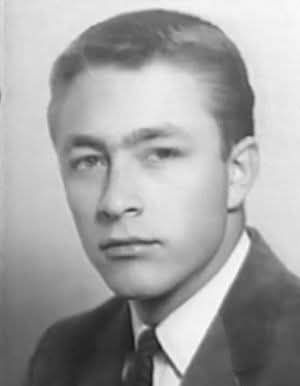
For generations of television viewers, Bill Bixby is best remembered as the mild-mannered scientist burdened with a dangerous secret, famously cautioning that people “wouldn’t like him when he was angry.” What few knew at the peak of his popularity was how much personal pain he carried behind the scenes. When he died in 1993, it marked the end of a career spanning more than thirty years, but also closed a life shaped by endurance, profound loss, and a long battle with illness that gradually pulled him out of the public eye.
Born Wilfred Bailey Everett Bixby III on January 22, 1934, in San Francisco, California, Bixby was an only child who showed early signs of intelligence, curiosity, and a natural gift for communication. While attending Lowell High School, he excelled in speech and debate, discovering an ability to connect emotionally with audiences—an ability that would define his career.
After graduating, he enrolled at City College of San Francisco and later the University of California, Berkeley. However, the pull of acting proved stronger than academia. He left college to pursue entertainment work, supporting himself through modeling and commercial appearances while auditioning for roles. Though the path was difficult, his comfort in front of the camera quickly made him stand out.
His breakthrough came in 1963 with the role of Tim O’Hara on My Favorite Martian. Playing the level-headed human alongside Ray Walston’s quirky alien character, Bixby brought warmth and charm to the series, which ran for three seasons and made him a familiar face in American homes. Walston later remarked that audiences seemed to like Bixby immediately—a testament to his natural likability.
Success followed quickly. He starred in The Courtship of Eddie’s Father as Tom Corbett, a widower raising his young son. The role highlighted his emotional subtlety and earned him three Emmy nominations, solidifying his reputation as a reliable and deeply relatable television actor.
In the early 1970s, Bixby headlined The Magician, portraying illusionist Anthony Blake. Though the series was short-lived, it attracted a loyal fan base and further demonstrated his versatility. He also appeared in films such as Lonely Are the Brave and made guest appearances across popular television shows, proving he could move easily between genres.
In 1978, Bixby took on the role that would define his legacy: Dr. David Banner in The Incredible Hulk. Rather than leaning into superhero bravado, he portrayed Banner as gentle, troubled, and emotionally wounded. His understated performance gave the series its emotional core and made the character deeply human. He later reprised the role in several television movies and directed two of them himself.
Around the same time, Bixby increasingly turned to directing. He found fulfillment in shaping stories from behind the camera, directing episodes of shows such as Goodnight, Beantown, Sledge Hammer!, and eventually becoming a regular director on Blossom. Fellow actors and crew admired his calm leadership and empathy, qualities shaped by years of acting experience.
While his career thrived, his personal life was marked by tragedy. He married actress Brenda Benet, but the marriage ended in divorce in 1980. The following year, their six-year-old son, Christopher, died suddenly from a rare infection, a loss that devastated Bixby and left lasting emotional scars.
In 1982, tragedy struck again when Benet died by suicide. Within a short span, Bixby had lost both his child and his former wife—grief that remained largely hidden from the public. Despite the pain, he continued working, channeling his energy into his craft rather than retreating.
Though often described during the 1970s as one of Hollywood’s most eligible bachelors, Bixby disliked the spotlight. He avoided parties and industry events, preferring solitude and quiet time at his Malibu beach home. He valued privacy and close personal connections over fame.
That desire for privacy deepened after his health declined. In 1991, he was diagnosed with aggressive prostate cancer. Treatment weakened him considerably, but he chose to speak openly about the illness, hoping to encourage early detection in others. In private, he acknowledged the seriousness of his condition and expressed a wish for a peaceful death.
He married Laura Michaels in 1990, though the marriage ended a year later as his health worsened. In October 1993, just weeks before his passing, he married artist Judith Kliban. By then, his strength was fading rapidly. While directing Blossom, he often worked seated or lying down, too weak to stand. Kliban cared for him at their home near Century City as his condition deteriorated.
On November 21, 1993, Bill Bixby slipped into a coma and died at the age of 59. His death came far too soon, leaving behind unfulfilled plans and a legacy built on sincerity rather than spectacle.
Bixby’s impact on television remains significant. From the lighthearted charm of My Favorite Martian to the emotional depth of The Courtship of Eddie’s Father, from the quiet suffering of David Banner to his thoughtful work as a director, he brought humanity to every project.
Outside of his career, he enjoyed simple pleasures—Chinese cooking, bridge, music, and gardening—which offered comfort in a life often touched by loss.
Years later, new audiences continue to discover Bill Bixby through reruns and streaming platforms. His performances endure because they feel genuine and deeply human. Behind the iconic roles was a man who endured immense pain with quiet dignity, worked relentlessly, and left television richer for having him.