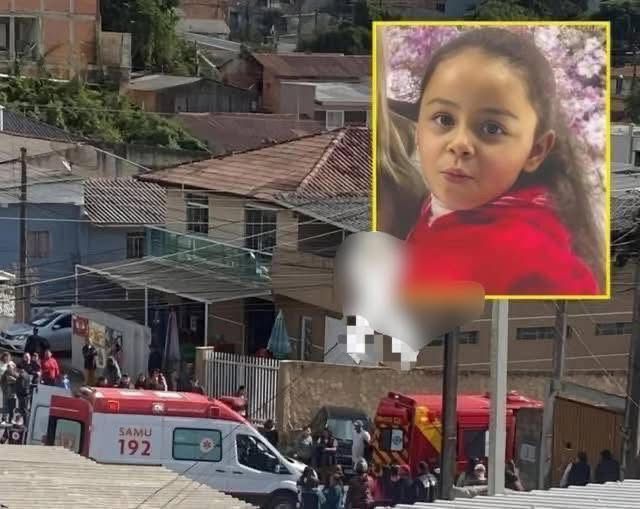
The Santa Martha Acatitla neighborhood in Mexico City is usually defined by its steady, everyday rhythm. Neighbors talk from their doorways, street vendors advertise their goods, and children often run quick errands for their families—a normal routine that reflects a closely connected community. But that sense of ordinary life was abruptly broken on a Friday that began like any other, triggering events that would soon draw national attention and end in a discovery that left the city in deep mourning.
Ten-year-old Perla Alison was a bright and cherished child whose presence meant everything to her family. That afternoon, she left home on a simple errand: to buy candy from a nearby shop just a few blocks away. It was the kind of short, familiar trip children make every day, something so routine that no one could have imagined it would be the last time she was seen. When she didn’t return after a reasonable amount of time, concern quickly turned into panic. By evening, it was clear she was missing.
Her family reacted immediately, and authorities were alerted the same day. A nationwide Amber Alert was issued, spreading her photo and details across screens, billboards, and social media feeds across the country. Within hours, thousands of people joined the search virtually and physically, sharing her image and hoping someone might recognize her. Perla became more than a missing child case—she became a symbol of collective urgency.
On the ground, volunteers and relatives searched tirelessly. Flyers were posted on walls and poles, and teams walked through the neighborhood calling her name. For four days, hope remained fragile but alive. Some believed she might be found safe, confused or lost. But as time passed, the silence became heavier, and optimism began to fade.
The search came to a devastating end on a Tuesday evening. A resident near the Constitución de 1917 metro station reported a strong, unusual odor coming from an abandoned lot. Authorities responded quickly, sealing off the area. Forensic teams from the Mexico City Attorney General’s Office arrived shortly after and recovered a body later confirmed to be Perla Alison. What they found transformed hope into grief, and grief into shock.
The discovery deeply shook the Santa Martha Acatitla community. The abandoned lot became a site of mourning almost immediately, filled with candles, flowers, and messages of sorrow placed behind police tape. Residents who had once searched together now stood together in grief and anger, struggling to comprehend how a child could disappear during such a short and ordinary errand in broad daylight.
Authorities opened a femicide investigation, recognizing the possibility that Perla’s death was part of a broader pattern of gender-based violence. Investigators began reconstructing her final movements, reviewing surveillance footage and interviewing witnesses in an effort to determine what happened and who was responsible.
Perla Alison’s case has since grown beyond a single investigation. It has become a painful reminder of ongoing concerns about child safety and the limitations of rapid alert systems when faced with sudden violence. In Mexico City, the site where she was found now stands as a somber symbol of loss and a call for accountability.
As the investigation continues, public demand for justice has intensified. The community and wider public are calling for answers, while Perla’s family is left with the unbearable absence of a child who only went out for candy. Her story remains a stark reminder of how quickly ordinary moments can turn into irreversible tragedy, and how deeply a city can be changed by the loss of a single life.