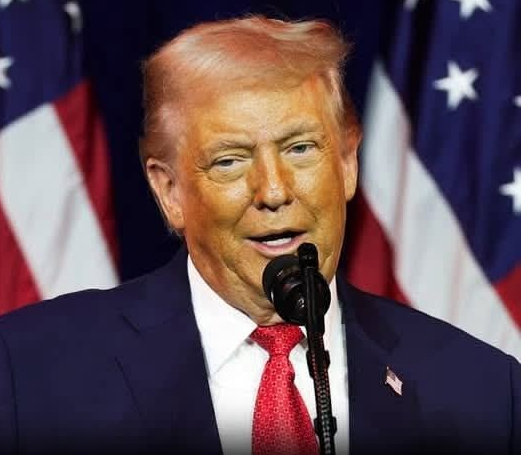
The international economic arena has been stirred by a bold proposal from former President Donald Trump, who recently announced on his Truth Social platform a concept he calls the “American Dividend.” According to his posts, the plan would provide every qualifying American citizen with a direct payment of no less than $2,000. The funds, Trump claims, would come entirely from revenue generated by sweeping new tariffs on imported products. This idea marks a sharp break from conventional economic policy, aiming to redefine how the U.S. government approaches foreign trade and household finances. By linking personal financial benefits to protectionist trade strategies, Trump presents the proposal as a populist mechanism designed to restore America’s economic supremacy on the global stage.
Central to this vision is a redefinition of tariffs themselves. Traditionally, tariffs have functioned either as a protective measure for domestic industries or as a general source of government income. Under Trump’s proposal, however, tariffs would become a targeted revenue source used specifically to fund direct payments to citizens. He argues that foreign companies seeking access to the U.S. market should bear a heavier financial burden, allowing the government to collect substantial sums and redistribute them to Americans. Trump frames this as a way of shifting costs away from domestic taxpayers and onto foreign competitors—essentially “charging the world” for access to the American consumer base. The dividend, he says, would be directed primarily toward middle- and lower-income Americans, with wealthier individuals excluded to ensure the aid reaches those most affected by rising living costs.
Trump has strongly rejected criticism from economists, often dismissing skeptics as out of touch with the historical effectiveness of protectionist policies. He frequently points to his first term in office, arguing that tariffs played a key role in economic growth, strong markets, and controlled inflation. Although he has not released detailed figures or legislative proposals, his message is clear: the American Dividend would serve both as a reward for national economic strength and as a tool to counter unfair trade practices by foreign nations.
Experts and financial analysts have begun evaluating the idea, noting that while it would be highly unusual at the federal level, it is not entirely without precedent. Comparisons are often made to the Alaska Permanent Fund, which distributes annual payments to residents using revenue from natural resources. In Trump’s version, the shared resource would not be oil or minerals, but the American marketplace itself. Supporters argue that putting direct cash into consumers’ hands could stimulate spending on domestic goods and services, potentially boosting economic growth.
Critics, however, warn of serious risks. One major concern is that high tariffs could significantly increase the cost of everyday products, as businesses typically pass import costs on to consumers. If prices for items like electronics, vehicles, and clothing rise sharply, the $2,000 payment could be quickly offset by higher living expenses. Additionally, economists fear retaliation from major trading partners such as China or the European Union. Counter-tariffs on American exports could harm key industries, including agriculture and manufacturing, leading to job losses that might outweigh the benefits of the dividend.
Many practical details of the American Dividend remain unclear. The proposal currently exists more as a political concept than a structured policy. Key questions—such as who qualifies, how often payments would be made, and what tariff levels would be required—have not been answered. To distribute $2,000 to roughly 250 million eligible adults, the government would need around $500 billion in annual tariff revenue beyond current levels. Generating such funds would require a dramatic expansion of trade barriers, likely disrupting global supply chains and reshaping international trade relationships.
Implementation would also require congressional approval. Any significant change to taxation or the creation of a new federal payment program would face major legislative hurdles, especially in today’s polarized political environment. Even with executive support, convincing lawmakers that the benefits outweigh the risks would be a formidable challenge.
Despite these obstacles, the proposal has resonated with voters who feel excluded from traditional economic gains. The promise of a straightforward cash payment funded by foreign trade penalties appeals to those frustrated with complex tax systems and indirect relief measures. Trump’s messaging taps into this sentiment, portraying the dividend as a way for ordinary Americans to directly benefit from the nation’s global economic power.
As political debate intensifies, the American Dividend is likely to remain a controversial focal point. It highlights a broader clash between competing economic philosophies—one favoring free trade and global cooperation, the other advocating economic nationalism and market leverage. Whether the plan represents innovative thinking or a dangerous experiment remains uncertain. For now, it stands as a bold expression of Trump’s economic vision, one that seeks to return wealth to citizens by rewriting the rules of international trade.