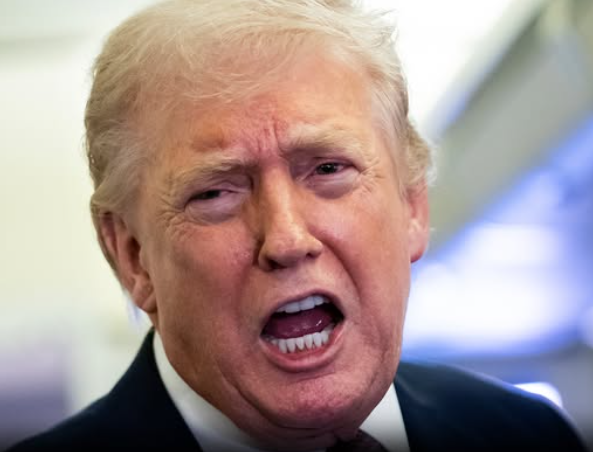
In a move that has sent shockwaves through nearly every corner of American society, the very definition of what it means to be “American” is facing an existential challenge unlike any seen in over a century. On April 3, 2026, the nation’s political landscape erupted when former President Donald Trump advanced a highly controversial executive order aimed at dismantling birthright citizenship, a cornerstone principle enshrined in the 14th Amendment. While much of the public debate has focused on undocumented immigrants, the implications of the policy are far broader and more radical: the order could effectively strip millions of children—born to legal residents, international students, and skilled foreign workers currently residing in the United States—of the citizenship they would otherwise acquire at birth. The move has ignited outrage among civil rights advocates, lawmakers, and legal scholars alike, raising profound questions about the future of American identity.
For more than 150 years, the 14th Amendment has served as the bedrock of U.S. citizenship, guaranteeing that anyone born on American soil automatically holds the rights and privileges of being a citizen. “Period. Full stop,” as Connecticut Attorney General William Tong recently asserted. The new executive order seeks to circumvent this constitutional guarantee, stipulating that children born to parents who are in the country unlawfully—or even temporarily on legal visas—would no longer automatically be considered citizens. Under this interpretation, infants born to an H-1B specialty worker from India, a graduate student from Canada, or even a visiting tourist from the United Kingdom could be denied the status of American citizens at birth. For many, this represents a seismic shift in the understanding of what it means to belong in the United States.
The scale of the potential impact is staggering. Data from Pew Research indicates that in 2022 alone, roughly 1.2 million U.S. citizens were born to undocumented immigrants. Under the proposed policy, these children would face the prospect of statelessness or being forced to assume the nationality of their parents’ home countries—a circumstance that could leave many disconnected from the only country they have ever known. Moreover, the order threatens to undermine the “American Dream” for thousands of legal visa holders, including high-tech workers and international scholars whose contributions to the U.S. economy, research, and innovation are valued in the billions of dollars annually. The implications stretch far beyond immigration politics, touching fundamental questions of equity, human rights, and the principles on which the country was founded.
Legal opposition has been immediate and vociferous. Attorneys general from 22 states have already filed lawsuits challenging the order, asserting that no president has the authority to override the Constitution with a single signature. The dispute quickly escalated to the U.S. Supreme Court, where historic arguments began this week. In an unprecedented move, Trump personally attended the proceedings, marking the first time a sitting or former president has directly participated in a Supreme Court hearing of this magnitude. The courtroom was a microcosm of the nation itself, with the debate extending from constitutional law into the heart of American values, national identity, and the practical consequences for millions of families.
The rhetoric surrounding the executive order has reached a fever pitch. On social media platform Truth Social, Trump defended the policy by claiming that birthright citizenship has been exploited by wealthy individuals from “China and the rest of the world” seeking to secure U.S. citizenship for their children through financial means. He argued that the original intent of the 14th Amendment was narrowly tied to the aftermath of the Civil War, specifically to the children of formerly enslaved people, and was never meant to provide universal citizenship to all born on American soil. “The world is laughing at how stupid our U.S. court system has become,” he stated, connecting the issue to his broader agenda of tariffs, national sovereignty, and border enforcement.
As the Supreme Court deliberates, the nation remains in a tense state of uncertainty. A ruling in favor of the executive order would constitute the most significant contraction of civil rights in modern American history, effectively creating a two-tier system of belonging in which the circumstances of a parent’s legal status dictate the fundamental rights of their child. Families currently expecting children on U.S. soil now face an unsettling reality: being born in the United States may no longer guarantee citizenship. The world is watching closely, aware that if the principle of birthright citizenship is overturned, the very essence of the American “Melting Pot”—long celebrated as a symbol of inclusion, diversity, and opportunity—may finally reach a tipping point that could redefine the nation for generations to come.