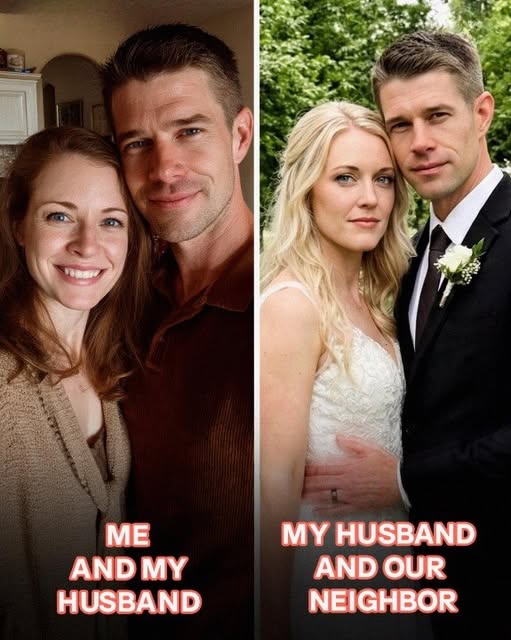
Rachel moved in next door with a warm smile and an energy that made her instantly likable. At first, her kindness seemed simple and genuine—she brought over food, watered plants, and checked in whenever she could. To anyone watching from the outside, she looked like the perfect neighbor. But little by little, almost without notice, she became a constant presence in Claire and Daniel’s life.
What started as harmless generosity slowly shifted into something more. Rachel was always around—stopping by without warning, staying longer than expected, laughing just a bit too easily at Daniel’s jokes. Claire felt it before she could explain it, that quiet change, the subtle feeling that her home no longer fully belonged to her. Still, she pushed the thought away, convincing herself she was overthinking, that she was being unfair.
Until she couldn’t ignore it anymore.
Daniel began to change. He grew distant, distracted, and emotionally unavailable even when he was right there beside her. Their conversations became shorter, emptier. Eye contact faded. And then one day, with almost no emotion, he said it—he was leaving.
There was no real argument, no dramatic confrontation. Just a quiet confession that echoed louder than any fight could have. Within days, he was gone. And not far—he had moved next door. With Rachel.
The betrayal wasn’t just emotional—it was visible, constant, impossible to escape. Every glance out the window, every familiar sound, every corner of the house became a reminder. Losing her husband hurt, but losing the space that once held their life together cut even deeper.
So Claire made a choice.
She let it go.
She sold the house, packed away the memories, and started over somewhere new—somewhere quiet enough to think, to breathe, and to slowly rebuild herself piece by piece.
Time passed.
Then one day, an envelope arrived.
A wedding invitation.
Daniel and Rachel.
For a long moment, Claire simply stared at it. Then, instead of throwing it away, she made a decision that surprised even her.
She would go.
Not out of anger. Not out of revenge. But because she refused to keep avoiding something that had already shaped her life. She wanted to face it—completely, without running.
On the day of the wedding, everything looked flawless. The decorations were perfect, the guests were smiling, and soft music filled the room. To anyone else, it was a celebration of love.
But the past has a way of resurfacing when it’s been buried too long.
Claire didn’t cause a scene. She didn’t interrupt or accuse. She didn’t need to. Her presence alone was enough. People recognized her. Conversations paused. Whispers began. Questions followed.
When did their relationship actually start?
Wasn’t he still married at the time?
How long had this really been going on?
What had once been quiet speculation slowly became undeniable. Guests started connecting the pieces, realizing the timeline didn’t match the story they had been told. The atmosphere shifted. Smiles faded. Some people grew uncomfortable. Others looked disappointed.
One by one, guests began to leave.
The celebration slowly unraveled—and Claire barely said a word. The truth no longer needed her voice. It had made its way into the room on its own.
Standing there, watching everything fall apart, Claire felt something unexpected.
Relief.
Because in that moment, she understood something clearly. She hadn’t lost something whole. She had been holding on to something that had already been breaking long before Rachel ever entered their lives.
The marriage she thought she had lost had already been slipping away.
And now, she wasn’t angry anymore.
She was free.
Claire turned and walked out, this time without looking back. She wasn’t carrying the weight she once had. Only a quiet sense of clarity—and the steady realization that her life hadn’t ended.
It had simply been waiting for her to begin again.