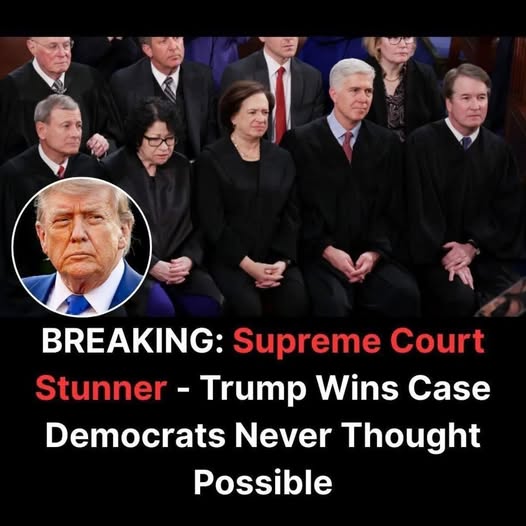
The ruling hit like a thunderclap—an explosive judicial decision that reverberated far beyond the polished marble hallways of the Supreme Court. In a single stroke, the highest court in the United States granted President Donald Trump the legal weapon he had long sought: broader authority to carry out sweeping deportations and immigration enforcement actions in and around Los Angeles. What once were restrictions on federal agents’ powers now lie in tatters, allowing immigration enforcement officials to resume strategies that critics decry as tantamount to racial or ethnic profiling. Supporters of the decision, meanwhile, describe it as nothing more than common sense and necessary law enforcement flexibility. But the implications of this decision—especially the fact that ethnicity, language, and geographic location can now be considered “relevant factors” in immigration stops—have sent shockwaves through immigrant communities and civil liberties advocates, raising urgent questions about rights, fear, and the future of families across Southern California and beyond.
At its core, the Court’s ruling does much more than adjust a legal technicality in immigration enforcement—it redraws the boundary between national security prerogatives and individual civil liberties. By allowing federal officers to consider a person’s ethnicity, the language they speak, or where they are located as part of a profile to justify immigration stops, the majority signaled a new tolerance for suspicion built on traits tied to identity. Chief among those who framed the ruling was Justice Brett Kavanaugh, whose concurring opinion emphasized deference to executive branch enforcement prerogatives and “common sense” factors in making stops. According to Kavanaugh, ethnicity may be a relevant factor when considered alongside other indicators. But to millions of immigrants—and even U.S. citizens who share similar appearances or linguistic traits—the ruling feels less like clarification of legal standards and more like a warning flare signaling that broad, discretionary enforcement actions could become normalized.
From Los Angeles to cities across the nation where mixed-status families live and work side by side, the psychological impact of the ruling may be as powerful—or even more powerful—than its legal effect. In neighborhoods already wary of law enforcement, there is now a palpable fear that routine interactions could escalate into immigration interrogations. A traffic stop, a casual walk through a park, or a check at a job site might suddenly become a flashpoint for invasive questioning or detention. Supporters of the vote insist that the ruling simply restores the federal government’s ability to enforce immigration laws fully, enabling agents to pursue suspects based on a combination of lawful factors. They argue that enforcement agencies must have tools sensitive to real-world conditions, especially in areas with large undocumented populations.
But opponents see the decision very differently. To them, it represents the opening of a door to normalized profiling, where people are judged and potentially detained because of how they look or speak rather than because of individualized evidence of wrongdoing. In dissent, Justice Sonia Sotomayor—joined by Justices Elena Kagan and Ketanji Brown Jackson—pronounced the ruling “unconscionably irreconcilable with our nation’s constitutional guarantees,” warning that the Fourth Amendment protections against unreasonable searches and seizures should apply universally. Sotomayor’s pointed critique underscored the concern that Latinos, Spanish speakers, and other visible immigrant communities could be treated as perpetual suspects under the law.
In Los Angeles, where immigrant families are not only common but woven into the economic and cultural fabric of the city, the ruling has inflamed an already volatile environment. Mixed-status households—where some members are U.S. citizens and others are undocumented—now face the grim prospect that ordinary days could turn into encounters with immigration enforcement patrols, increasing anxiety and distrust. Critics also fear that the decision sets a precedent that extends far beyond California; similar tactics could be deployed in other major U.S. cities, fundamentally altering how federal immigration authorities operate nationwide.
As the legal battle continues in lower courts, the public debate unfolds on multiple fronts: lawmakers and civil rights organizations argue that this judicial stance weakens essential constitutional safeguards, while proponents argue that it restores the government’s ability to protect national borders and enforce existing laws. Ultimately, judges will continue to consider contracts, injunctions, and appeals. Yet the steeper challenge belongs to the American public: deciding whether to view this decision as a necessary tool for lawful enforcement, a case of judicial overreach, or a reflection of deeper cultural tensions about identity, fear, and justice in the United States.