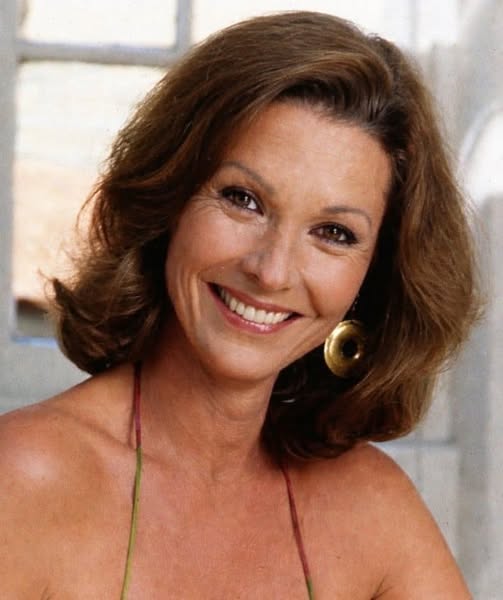
The worlds of television, film, and theatre feel noticeably quieter this week following the passing of Pamela Salem, a distinguished actress whose graceful presence left an indelible mark on some of the most beloved franchises in entertainment. She passed away peacefully at the age of 80 in her home in Surfside, Florida, leaving behind a career defined not only by range and professionalism, but by a generosity of spirit that resonated with colleagues at every level of the industry. Though audiences remember her for her roles in James Bond, Doctor Who, and EastEnders, those who worked alongside her speak most often of her warmth, humility, and unmistakable kindness.
Born in Mumbai, India, in 1944, Salem’s path to acting was shaped by a truly international education. She studied at the University of Heidelberg in Germany before refining her craft at London’s renowned Central School of Speech and Drama. Her early career unfolded in British repertory theatre, notably in Chesterfield and York, where she developed a strong classical foundation. Immersed in Shakespeare, Chekhov, and Harold Pinter, she gained a versatility that later allowed her to move effortlessly between traditional theatre and major international productions.
Her most widely recognized role arrived in 1983, when she portrayed Miss Moneypenny in Never Say Never Again, starring opposite Sean Connery in his final appearance as James Bond. Salem brought elegance, intelligence, and subtle authority to the role, offering more than a familiar archetype. Her interpretation provided a refined counterbalance to Bond’s seasoned spy, adding depth and poise to their interactions. While the performance secured her a lasting place in cinematic history, Salem herself never treated fame as anything more than a byproduct of her devotion to storytelling.
Later in the decade, she demonstrated another side of her talent in EastEnders, embracing the show’s darker realism. From 1988 to 1989, she appeared as Joanne Francis, a commanding and morally complex character connected to the criminal organization known as “the Firm.” Sent to manage Strokes Winebar—secretly a hub for illegal gambling—Joanne quickly became entangled in conflict with Den Watts. Under Salem’s nuanced performance, the character evolved beyond a typical antagonist. What began as hostility gradually transformed into a layered relationship, driven by strong chemistry with Leslie Grantham. Her 37-episode storyline remains a memorable chapter from the series’ grittier era.
Away from television cameras, Salem found renewed creative fulfillment in audio drama, particularly through her long collaboration with Big Finish Productions. Reprising roles from Doctor Who and exploring new narratives, she became a cherished figure in the audio world. Producer David Richardson recalled her as an artist of remarkable talent paired with complete absence of ego. Despite living in Florida, she regularly traveled alone to London for recordings, never expecting special treatment and never arriving without warmth.
Her presence transformed recording sessions. She greeted everyone with genuine affection, often bringing gifts and taking time to engage with cast, crew, and visitors alike. Salem’s curiosity about people was sincere and constant. She spoke with joy about her life in Surfside, describing mornings shaped by ocean waves and sunlight—an environment that brought her peace after decades in the industry. It was evident that she had found contentment far removed from the pressures of fame.
Among science fiction fans, her contributions to Doctor Who were especially treasured. From her appearance in the 1977 serial The Robots of Death to her later returns in expanded media, Salem treated the genre with respect and seriousness. She understood the emotional significance these stories held for audiences and approached them with the same discipline she applied to classical theatre. This commitment helped make her performances timeless and deeply believable.
Pamela Salem’s passing is felt internationally. In Britain, she is remembered as part of a golden era of television; in Florida, as a valued member of her local community; and worldwide, as a lasting presence in the Bond legacy. Her career reflected a generation of classically trained performers who navigated radio, stage, film, and television with equal skill and confidence.
When news of her death spread on January 26, 2026, tributes poured in from fans and colleagues alike. Many focused not only on her impressive body of work, but on her character—her effortless elegance, her professionalism, and the way she uplifted those around her. In an industry often marked by transience, Salem stood out as a constant example of grace and integrity.
Her legacy lives on not only in the performances she left behind, but in the memories of those who experienced her kindness firsthand. From the dramatic streets of Walford to the polished corridors of MI6, and finally to the calm shores of Miami Beach, Pamela Salem lived a life as rich and varied as her roles. She demonstrated that it is possible to achieve success without sacrificing humanity, and that the most lasting influence an artist can leave is warmth. As she takes her place among the greats, we remember her not only as a gifted actress, but as a luminous presence whose smile could light up a room—or a screen—anywhere in the world.