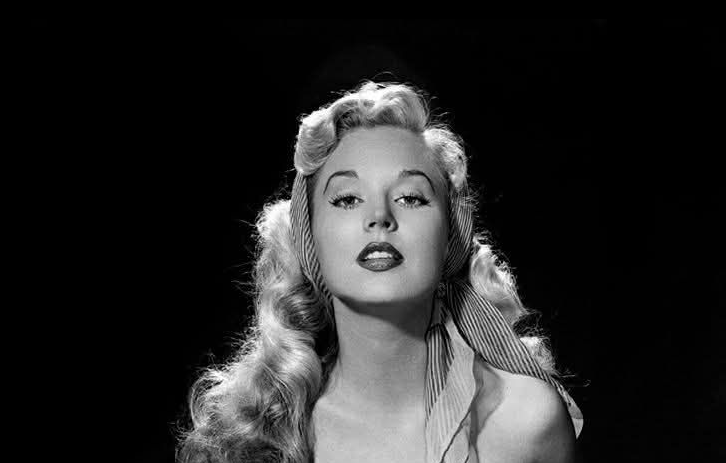
Tempest Storm lived a life that didn’t just ignite—it burned through every expectation in her path. Even her name seemed destined for drama. With hair like a struck match and a presence that could stop a room mid-breath, she built an empire of glamour, grit, and sheer will. Yet long before the marquees, headlines, and legendary burlesque stages, she was Annie Blanche Banks, born on Leap Day 1928 in Eastman, Georgia, shaped only by hardship and hunger.
Her childhood was steeped in poverty, instability, and trials that would have crushed most kids. But Annie learned early that survival wasn’t passive—it was something you fought for. Home offered no protection, no affection, no future worth staying for. By fourteen, she didn’t just leave—she ran. Not impulsively, but with the quiet certainty of someone who already knew the cost of remaining in a life too small for her ambitions.
Her escape led to a string of rapid choices—two teenage marriages, both short-lived, both attempts to create stability from thin air. None fulfilled what she truly sought: space to breathe and the chance to live fully. She wasn’t after security; she was chasing possibility. And Hollywood was the only place big enough for the fire she carried.
Arriving in Los Angeles with no money, no contacts, and no roadmap, Annie had one advantage: a natural magnetism that drew people in before she even spoke. She worked diner shifts, took any temporary job she could find, and studied the world she aimed to enter. Glamour wasn’t just beauty—it was strategy, performance, and control. Pain became presence. And when she stepped into her first burlesque club, she recognized power the moment she saw it. It didn’t intimidate her. It beckoned.
Her rise was swift, not due to luck, but because she instinctively knew how to craft a persona no audience could ignore. She took the name Tempest Storm—a declaration, not just a stage name—and reinvented herself completely. Where Annie Banks had been overlooked, Tempest Storm became unforgettable. Her routines were bold, precise, and fully owned. She didn’t present herself as someone else’s fantasy; she embodied a force of nature—and the crowd responded.
Onstage, she ruled the room like a conductor. She mastered timing, expression, and anticipation. Burlesque wasn’t just teasing—it was storytelling with velvet gloves and razor edges. Tempest elevated it into high art, redefining seduction, power, and female autonomy. Men watched with awe. Women watched with recognition.
Hollywood noticed. In an era of polished starlets and manufactured studio images, Tempest stood apart because she had lived too intensely to fake anything. Photographers, studio executives, and directors were drawn to her authenticity. Opportunities arose, yet she refused to let anyone reshape her into something smaller, softer, or more compliant. She had escaped control once; she wasn’t going back.
Her fame extended beyond the stage. Headlines followed her, rumors swirled, and men tried—and failed—to claim her success. Tempest Storm was nobody’s creation. She built her career, negotiated contracts, and earned record-breaking salaries at a time when most women performers were given scraps.
But her true distinction wasn’t fame—it was longevity. While others faded with the decades, Tempest evolved. She adapted her shows, updated her image, and performed long after many had stepped aside. The stage didn’t drain her; it sustained her. Audiences aged, tastes changed, cities transformed, but Tempest remained—timeless yet grounded in the self she had always known. She worked into her seventies, driven not by need but devotion to a craft that had saved her life.
Behind the glamour was a woman who understood hard work better than most. She knew survival on nothing, the art of rebuilding after setbacks, and that reinvention is not a one-time act but a lifelong practice. That ability to transform without losing herself was her greatest strength.
Her personal life matched the intensity of her career. She loved fiercely, lived boldly, and never apologized for her choices. Tempest Storm didn’t chase respectability; she pursued truth. Sometimes messy, sometimes beautiful, but always hers. In a world that sought to define and confine women, her authenticity was rebellion.
As she aged, her legacy became clear. She wasn’t just a burlesque legend—she was a pioneer of sexual autonomy, a performer who elevated a misunderstood art, and proof that women could own their image, bodies, careers, and narratives without apology. Young artists looked to her as evidence that power, control, and self-definition were attainable.
Her story wasn’t tidy or delicate. It didn’t fit neatly into a Hollywood biography. It was bigger, braver, and far more complicated. Tempest Storm carved her place in an era that wasn’t designed for women to rise on their own terms—and she did it with style, strength, and unyielding fearlessness.
From a runaway girl in rural Georgia to an icon whose name still sparks awe, she proved that destiny isn’t inherited—it’s built, demanded, and lived out loud. Tempest Storm didn’t just succeed; she stormed into history, leaving echoes that still resonate today.