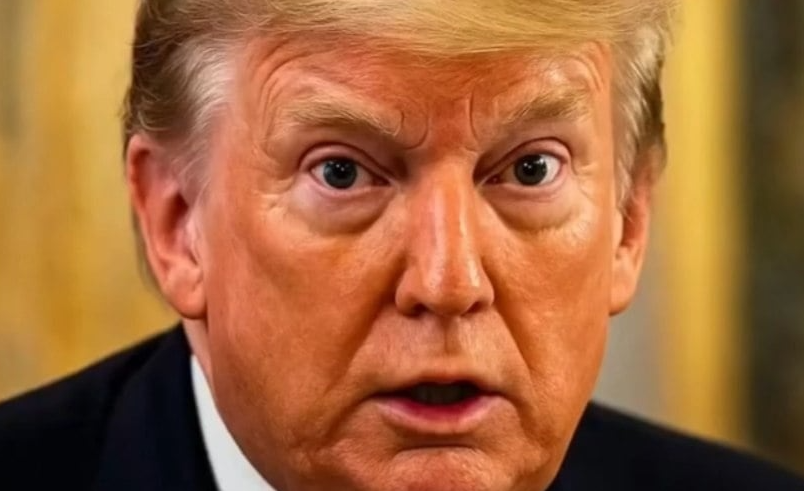
o president before him had spoken quite like that, and certainly not on live television. The words weren’t shouted, nor dressed up as policy. They were delivered calmly, almost casually—which made them land even harder. A clear warning to the press. A signal that scrutiny itself was the problem—and that it would be addressed.
Moments like this matter because they test the strength of institutions designed to hold power accountable. A free press doesn’t exist for comfort. It exists to ask questions that make the powerful uneasy. When a president openly signals hostility toward that role, the danger isn’t abstract—it is immediate and structural.
History shows press freedom rarely disappears overnight. It erodes in stages. First come the insults, then delegitimization, then pressure—legal, financial, political. Eventually, journalists start pulling punches, not because they were ordered to, but because they’ve learned the cost of not doing so. That’s the real threat: not censorship by decree, but self-censorship born of fear, fatigue, and fragmentation.
That’s why timid responses fail. Quiet editorials buried on page twelve fail. Carefully worded statements that avoid naming the threat fail. When power tests the limits, the response must be visible, coordinated, and unapologetic.
Newsrooms should do the opposite of what intimidation seeks. They should lean in, not retreat. That means doubling down on rigorous fact-checking, especially regarding those in office. It means publishing uncomfortable truths clearly and repeatedly, without softening language to appear “balanced” when the facts are not. Neutrality does not mean silence in the face of pressure.
Equally important, journalists should stop treating threats against the press as internal industry problems. They are not. They are attacks on the public’s right to know. When a newsroom faces pressure, the audience deserves to see it. Publish the threats. Document attempts at coercion. Explain plainly, without drama, what is being demanded and why it matters.
Sunlight works both ways. If leaders try to pressure the press behind closed doors, open those doors. Let the public see exactly how power behaves when it thinks no one is watching.
Unity matters even more. One of the oldest tactics against a free press is divide and conquer—pitting outlets against one another based on ideology, audience, or competition. When one newsroom is attacked, others should report it prominently, regardless of political alignment or editorial rivalry. Silence from peers is read as permission by those applying pressure.
This isn’t about agreeing on politics. It’s about agreeing on principles. A conservative outlet threatened today sets a precedent for a progressive outlet tomorrow, and vice versa. Once the line is crossed, it doesn’t stay neatly confined to one side.
Legal organizations, press-freedom advocates, universities, and civil society groups also have a role to play—and their involvement shouldn’t be hidden in footnotes. Their actions should be front and center. Lawsuits, public statements, court filings, expert analysis—make it visible and accessible. The goal isn’t outrage; it’s clarity. People need to understand what’s at stake and how quickly norms can unravel if left unchecked.
There’s a temptation, especially in polarized times, to treat attacks on the press as just another political skirmish. That’s a mistake. A president signaling that “rules are about to change” is not using normal rhetoric. He is testing whether the institutions designed to limit him still function—or whether they’ve grown too cautious to respond.
The strongest response to that test is calm defiance. Not theatrics. Not hysteria. Just a steady, collective refusal to back down. A united message: we are not going anywhere, and neither are the rights we exercise on behalf of the public.
The press doesn’t need to be perfect to be essential. It needs to be independent, persistent, and visible. Mistakes can be corrected. Retractions can be issued. But intimidation, once normalized, is far harder to reverse.
Democracies do not collapse only through dramatic coups or tanks in the streets. More often, they weaken through slow erosion of norms—through quiet acceptance of behavior that once would have triggered alarm. When threats against journalists are shrugged off as “just talk,” the damage is already underway.
This moment demands more than concern. It demands resolve. The press exists precisely because power prefers not to be questioned. When that power declares, on camera, that things are going to change, the response must be equally public and unmistakable.
Not loud. Not angry. Just firm.
We are here. We are watching. And we are not backing down.