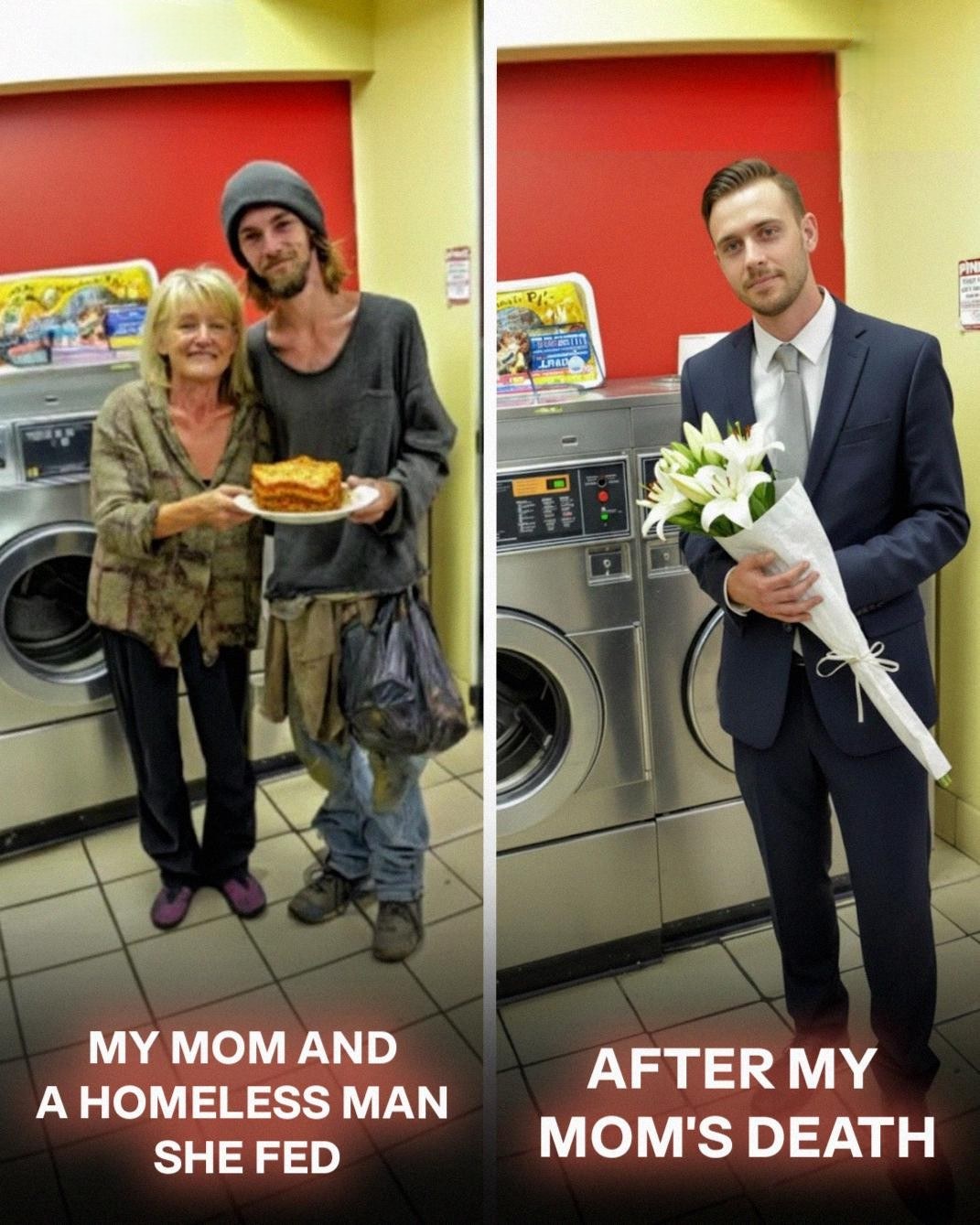
Every Christmas, My Mother Fed a Homeless Man — This Year, I Finally Understood Why
People love to showcase Christmas traditions as if they’re proof that life follows a perfect script. Matching pajamas, picture-perfect dinners, traditions polished enough to post online.
Ours was never like that.
Every Christmas Eve, my mother cooked a meal that filled our small apartment with warmth—the kind she was always trying to create, even when life made it difficult. If money allowed, there was honey-glazed ham. If it didn’t, she still made it feel special. Mashed potatoes rich with butter, green beans cooked with bacon, cornbread baked until the top cracked golden in the oven.
But the most important plate never stayed at our table.
She wrapped it carefully in foil, placed it inside a grocery bag, and tied the handles tightly. She did it slowly, deliberately, as if the food carried more than just nourishment—as if it carried intention.
I was eight when I first asked about it.
“Who’s that for?” I said, watching her lift the bag.
She didn’t answer right away. She put on her coat, checked the knot, and finally said, “That one isn’t for us.”
Years later, when I was fourteen, I pushed harder.
“Who is it for, Mom?”
She handed me my jacket and replied simply, “Someone who needs it.”
That was all. No lecture. No explanation. Just a truth she treated as obvious.
We lived in a town where everyone noticed everything—except the people they chose not to see. The invisible ones. The ones people stepped around to avoid feeling uncomfortable.
At the end of our street sat a twenty-four-hour laundromat. Fluorescent lights buzzed nonstop, the air thick with detergent and heat. That’s where he stayed.
His name was Eli.
The first year I noticed him, he looked young—maybe late twenties. He wore the same worn hoodie every time, sleeves frayed, fabric stretched thin. Everything he owned fit into a plastic bag and a ripped backpack. He slept curled near the vending machine, small and quiet, as if trying not to exist.
He never asked for anything. Never spoke unless spoken to.
But my mother approached him every Christmas like he was expected.
She knelt beside him so she wouldn’t tower over him, placed the bag gently near his hands, and spoke softly.
“Hi,” she’d say. “I brought you dinner.”
Eli would sit up slowly, blinking like he wasn’t sure it was real.
“Thank you, ma’am,” he’d say every time. “You don’t have to.”
“I know,” my mother always replied. “But I want to.”
As a teenager, I didn’t understand. I thought kindness required justification. I thought people on the margins were dangerous.
One year, I whispered, “What if he’s not safe?”
My mother didn’t hesitate.
“A hungry person the world forgot is dangerous,” she said. “A man who says thank you isn’t.”
Over time, fragments of Eli’s story emerged—not because she interrogated him, but because she kept showing up.
When I was sixteen, he looked exhausted, eyes raw with sleeplessness. After taking the food, he said quietly, “I used to have a little sister.”
They’d aged out of foster care together. She died in a car accident.
That was all he shared. It was enough.
After that, my mother added gloves to the bag. Then socks. One year, a grocery card she pretended had arrived by mistake. Another year, she offered to help him find housing.
He refused.
“I’d rather freeze than owe anyone,” he said.
She respected that. Never pushed. Just kept feeding him.
Then my mother got sick.
At first, it was subtle—fatigue, weight loss, her laughter growing thinner. She dismissed it. It wasn’t nothing.
She was gone within a year.
By Christmas, I was barely functioning. Grief had turned everything dull and heavy. I stood in her kitchen staring at her old pan, unsure I could keep her traditions alive without her.
But I heard her voice.
“It’s for someone who needs it.”
So I cooked. Nothing fancy. Chicken, instant potatoes, canned vegetables. Warm, imperfect, real.
I wrapped the plate the way she always did and drove to the laundromat, gripping the steering wheel like it was the only thing holding me together.
The place looked the same.
But inside, everything was different.
Eli was standing.
He wore a fitted dark suit, clean and pressed. No hoodie. No bags. In his hand were white lilies.
He looked at me and his face softened, eyes filling.
“You came,” he said.
“I brought food,” I managed.
He smiled gently. “She taught you.”
I asked about the suit.
“These are for her,” he said.
Then he told me everything.
How he’d once helped a little girl at a fair—a girl with a glitter butterfly on her cheek. How her mother thanked him and asked his name. How she came back a week later with a sandwich.
How she quietly connected him to counseling, job training, help. How it took years—but he rebuilt his life.
“She made me promise,” he said, “that if I ever made it, I’d wear a suit so she’d know I was okay.”
He handed me an envelope. Inside was a photo of my mother and me at the fair. And in the corner—Eli, watching over us.
“She saved me,” he said.
We went to her grave together. He placed the lilies gently and whispered goodbye.
Then he told me her last request.
“She asked me to look out for you. Like family.”
That night, we ate together. Quietly. Comfortably.
And I finally understood.
My mother hadn’t just been feeding someone.
She’d been building family.
One meal at a time.
It’s uplifting to know that Grace still exists in this Trump world.