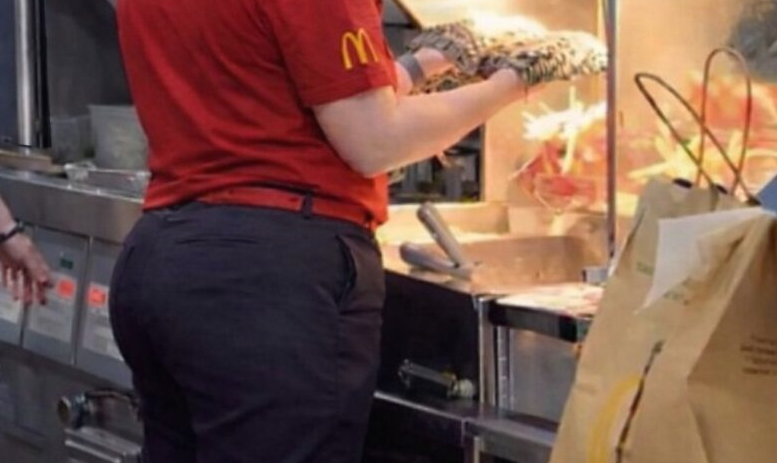
McDonald’s, one of the most recognizable fast-food chains in the world, found itself embroiled in controversy after a video from an Australian location went viral. The footage, shot at a branch in Brisbane, sparked outrage and reignited debates about hygiene standards in the fast-food industry.
In the video, a McDonald’s employee is seen placing a visibly wet mop underneath a heat lamp, typically used to keep French fries warm before serving. These heat lamps are intended to maintain food at safe temperatures, not to dry cleaning equipment. The situation became even more contentious after claims surfaced that a manager was aware of the actions and may have even instructed the employee to do so, though this detail was widely debated online.
The incident occurred in full view of customers. According to reports shared alongside the video, another staff member warned that putting the mop under the heat lamp could be a health and safety hazard. Despite the warning, the action allegedly continued, prompting witnesses to record and share the footage. The video soon spread across platforms like TikTok, X (formerly Twitter), and Facebook.
As the video gained widespread attention, many viewers expressed their disgust and frustration. Many questioned how such a decision could be made in a professional kitchen environment. Others raised broader concerns about what practices might occur out of sight if such a visible mistake could happen. For some, the incident reaffirmed long-held doubts about fast-food hygiene, while for others it was a surprising and unexpected lapse from a global brand known for its operational rigor.
McDonald’s Australia quickly responded. A company spokesperson acknowledged the seriousness of the incident and confirmed corrective actions were taken. While specific disciplinary measures weren’t disclosed, the company emphasized that the behavior did not align with its food safety protocols. McDonald’s reiterated its commitment to maintaining high cleanliness standards and assured customers that the matter was addressed swiftly.
The backlash on social media was fast and intense. Some users called for the temporary closure of the affected location, arguing that breaches like this undermine public trust. Others demanded greater transparency in employee training and oversight. This incident became part of a broader conversation about accountability within the fast-food sector and the pressures employees face in high-speed kitchen environments.
Large restaurant chains, such as McDonald’s, operate under strict food safety guidelines meant to prevent contamination. Heat lamps, for example, are calibrated to keep food within specific temperature ranges that prevent bacterial growth. Introducing non-food items—especially cleaning tools like mops—into this environment directly contradicts basic hygiene practices. Even though the mop never touched food, the optics of the situation were enough to alarm the public.
Experts in health and safety stress that perception is just as important as procedure in food service. Customers expect visible cleanliness and a clear separation between food preparation and cleaning tools. Any situation that suggests these standards are not being met can severely damage consumer trust, even if contamination didn’t occur.
The controversy also highlighted the significant role social media plays in shaping public opinion. A short video shot on a smartphone was able to spark international headlines and force a corporate response. In today’s digital age, businesses face constant scrutiny, and incidents that might have once remained local can now go global in a matter of hours.
For McDonald’s, the challenge was not just dealing with one location but with its global brand. As a multinational corporation serving millions of customers daily, maintaining consistent standards across thousands of locations is no small feat. An isolated incident can still shape the public’s perception of the entire brand.
Rebuilding trust after such events requires more than just issuing a statement. It involves reinforcing training programs, reviewing oversight practices, and maintaining clear communication with customers. Transparency is crucial. Companies that openly acknowledge their mistakes and outline corrective steps typically recover better than those that ignore or dismiss the issue.
This incident underscores the broader importance of hygiene in the food industry. Proper handling of equipment, keeping cleaning supplies separate from food areas, and maintaining vigilant supervision are essential. Even small lapses can have long-lasting reputational effects.
At the same time, it’s important to recognize the complexity of fast-food operations. Employees work in high-pressure environments where speed and efficiency are prioritized. While this context doesn’t excuse poor decisions, it highlights the need for comprehensive training and leadership that models the right behavior.
In the months following the incident, the conversation largely faded as online attention moved elsewhere. However, for many viewers, the image of a mop beneath a heat lamp remained hard to forget. The story became a reminder of how quickly public trust can be shaken—and how challenging it is to restore it.
Ultimately, ensuring the well-being of customers depends on strict adherence to safety standards. Food service companies are responsible not only for providing quick and affordable meals but also for preparing those meals in hygienic environments. Incidents like this highlight the importance of vigilance, accountability, and consistent oversight.
As businesses continue navigating an era of instant digital exposure, maintaining integrity in the kitchen is more important than ever. Reputation, once damaged, requires significant effort to repair. Whether for global brands or local eateries, every decision made behind the counter matters—both for public health and for maintaining consumer trust.