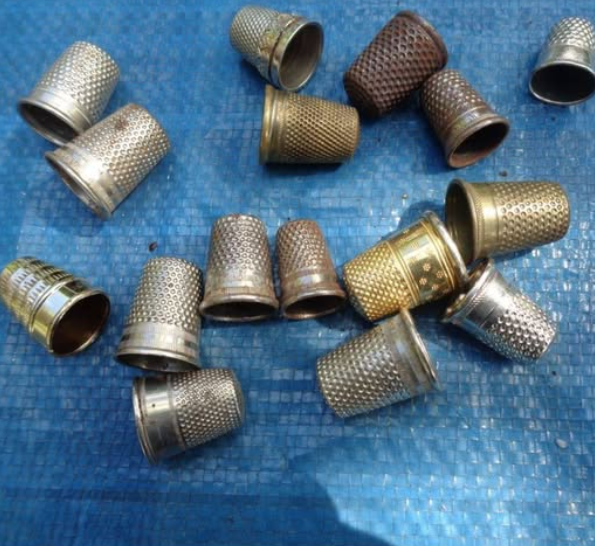
In the intricate world of textile arts, where precision and patience are paramount, few tools are as unassuming yet essential as the thimble. Often overlooked by the casual observer, this small cap serves as both a protector and a lever, acting as a crucial interface between the human hand and the piercing steel of a needle. In a world increasingly dominated by automation, the thimble remains a steadfast companion to tailors, quilters, and artisans, who understand that the finest details of garments or heirloom quilts require the intimate touch of hand-stitching.
The primary purpose of a thimble is protection, but its role goes far beyond preventing a needle prick. When working with heavy fabrics like denim, thick leather, or layers of batting, the human fingertip lacks the rigidity to apply sufficient force. Wearing a thimble—typically on the middle finger or thumb—allows the sewer to use the strength of their entire hand to push the needle through tough fibers without injury. The dimpled surface of many thimbles isn’t just for show; these “pips” are designed to catch the needle, ensuring it doesn’t slip and that every ounce of pressure is directed where it’s needed.
The history of the thimble spans millennia and nearly every major civilization. The earliest examples, made from bone, ivory, and leather, were found in ancient China and the Roman Empire. These early tools were often considered treasured possessions, sometimes buried with their owners as symbols of their utility and value in domestic life.
Over the centuries, the thimble evolved from a simple tool to a symbol of status. In the 16th and 17th centuries, the craft reached its artistic zenith in Europe. For the nobility and merchant class, thimbles were made from precious metals such as sterling silver and gold. These miniature masterpieces were often intricately engraved or adorned with gemstones, becoming cherished gifts for brides or family heirlooms passed down through generations. The word “thimble” itself comes from the Old English “thumb-bell,” referencing its original design and bell-like shape.
In today’s sewing world, thimbles have evolved to meet the needs of various crafts. Here are some common types:
Closed-Top Thimbles: The iconic design, fully enclosed, providing comprehensive protection for the finger. It’s perfect for general mending and embroidery where the needle is pushed with the tip of the finger.
Open-Top or Tailor’s Thimbles: Preferred by professional garment makers, these thimbles are open at the top for better ventilation and to accommodate longer nails. They provide greater tactile feedback, which is essential for tailors who often guide the needle with the side of the finger.
Leather Thimbles: A soft, breathable alternative to metal, these mold to the shape of the finger over time, offering a “second skin” feel. Popular among quilters, leather thimbles allow the user to feel the fabric’s tension while still protecting their skin.
Adjustable Ring Thimbles: Worn as a textured metal band on the finger, these are ideal for techniques like Japanese sashiko stitching or heavy quilting, where the needle is pushed through the fabric sideways.
Materials and Modern Innovation: Metal remains the most popular choice for its durability, with stainless steel, brass, and copper being common for heavy-duty work. However, the 20th century saw the rise of plastic and resin thimbles, which are lightweight, inexpensive, and come in a rainbow of colors. For those with arthritis or grip issues, ergonomic silicone thimbles have revolutionized comfort and usability, proving that even a centuries-old tool can be adapted with modern technology.
Beyond its functional uses, the thimble has taken on a place in folklore and culture. In some traditions, a thimble hidden in a wedding cake symbolized a life of self-sufficiency for the finder. In the world of collectibles, “digitabulists” (thimble collectors) search for rare or commemorative pieces, some marking royal events or featuring hand-painted porcelain scenes.
The thimble stands as a testament to the enduring nature of handcraftsmanship. In a world of fast fashion and mass production, the simple act of stitching while wearing a thimble becomes a quiet rebellion—a dedication to the slow, methodical process of creation and repair. Whether it’s a simple plastic cap or a precious silver heirloom, the thimble remains the silent guardian of the artisan’s hand, ensuring that the ancient tradition of sewing continues, one stitch at a time.