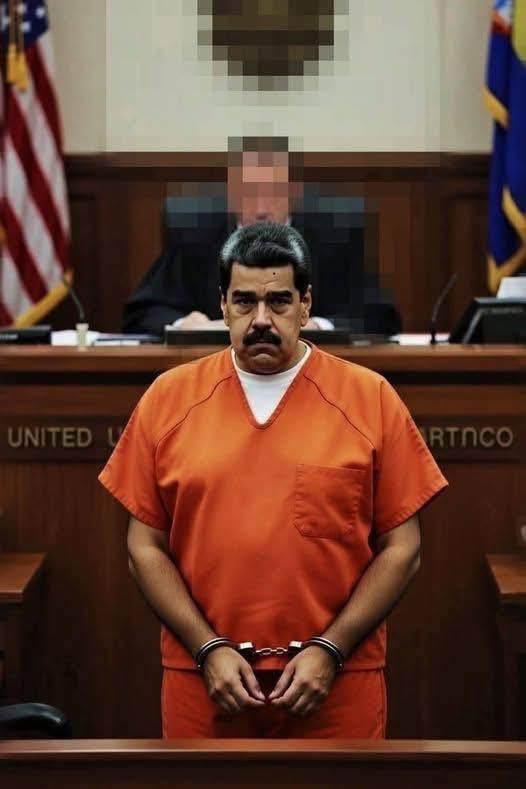
The United States Senate has become the stage for a tense constitutional confrontation, sparked by a high-stakes military operation in Venezuela that has tested the limits of executive authority. After U.S. forces executed a daring overnight raid to capture Nicolás Maduro, the nation now grapples with the legal and ethical consequences of the mission. Initially framed by the Trump administration as a precise law-enforcement action, the operation has evolved into a profound debate over presidential war powers, congressional oversight, and what constitutes “hostilities” in today’s geopolitical environment.
The raid itself was executed with remarkable military precision, yet it immediately became a lightning rod for controversy. In early January, elite U.S. units struck in Caracas, detaining Maduro and his wife and transferring them to New York to face longstanding narcotics and corruption charges. While the administration presented it as the capture of an indicted criminal, the scale of the operation—advanced aircraft, special operations forces, and the violation of Venezuelan sovereignty—led critics to label it effectively an act of war. Many argued that bypassing Congress amounted to a unilateral regime change under the pretense of law enforcement.
This tension culminated in a dramatic showdown over a War Powers Resolution. Sponsored by a bipartisan coalition including Senators Tim Kaine and Rand Paul, the resolution sought to require explicit congressional approval for any further military engagement in Venezuela. Debate on the Senate floor was charged, with lawmakers grappling with the precedent set by the raid. Senator Paul insisted that removing a foreign head of state by force is inherently an act of war, regardless of criminal charges, while Senator Kaine added that labeling it “law enforcement” did not withstand scrutiny given the geopolitical stakes.
The conflict reached its peak on January 14, when the Senate voted on the resolution. Some Republican senators initially supportive of the measure reversed their position under White House pressure, resulting in a 50-50 tie. Vice President J.D. Vance cast the deciding vote to block the resolution, preserving the administration’s ability to act unilaterally, at least temporarily. The narrow outcome, however, highlighted the widening divide between the executive and legislative branches.
Supporters of the raid argue that it was a surgical strike against a dangerous criminal, not an act of war. They emphasize that no U.S. troops remain in Venezuela and that the War Powers Act does not apply when no formal war exists. To them, Maduro’s status as a narco-terrorist justified rapid executive action, as delaying for congressional approval could have jeopardized the mission.
Internationally, the operation raised serious concerns. Legal experts warned that seizing a sitting leader without UN Security Council approval could undermine global norms on the use of force. Diplomats worry that this “New York extraction” model might embolden other nations to conduct similar cross-border operations under the guise of justice. In the region, protests erupted outside U.S. embassies, while traditional allies expressed unease over precedent-setting unilateral intervention. Within Venezuela, the political landscape is rapidly shifting, with CIA Director John Ratcliffe’s visit to Caracas to meet acting President Delcy Rodríguez signaling efforts to stabilize the new interim government.
Symbolic moments, such as President Trump receiving Nobel laureate María Corina Machado at the White House to thank him for Maduro’s removal, underscored the ideological tensions the operation has sparked. While supporters celebrated it as a victory for liberty, critics viewed it as a troubling blend of unilateral military action and political theatrics.
As the immediate crisis subsides, the broader constitutional debate continues. House members are drafting their own versions of the War Powers Resolution, and legal challenges may eventually reach the Supreme Court. The central question remains: in an era of precision strikes, where do presidential law-enforcement powers end and war powers begin? If the president can apprehend a foreign leader without consulting Congress, the traditional balance of checks and balances may be at risk.
Ultimately, the Maduro operation represents a pivotal moment in U.S. foreign policy and constitutional law. It forces a reckoning over the president’s authority to act globally and has placed the Senate on the defensive, striving to maintain relevance amid increasing executive dominance. While the raid may be a tactical victory, its impact on the constitutional order could be a lasting consequence. The debate in Washington is no longer solely about Venezuela—it is about the future contours of American governance and the limits of power concentrated in the Oval Office.