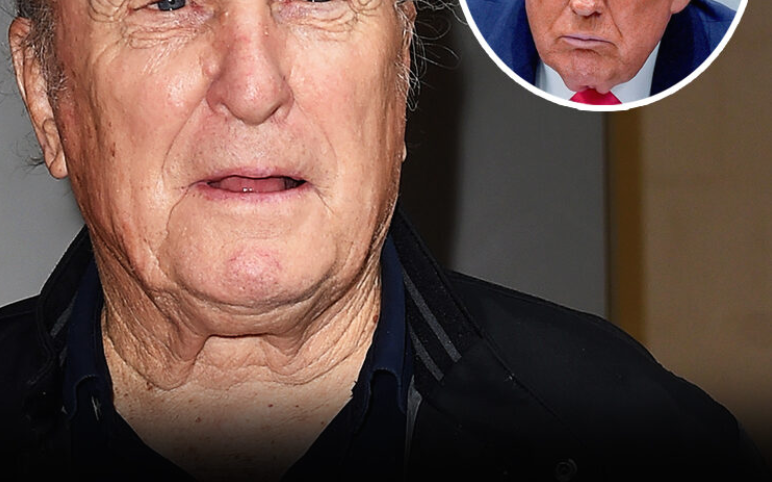
The death of Robert Duvall at 95 signals the loss of one of the most powerful yet understated figures in American film. A seven-time Academy Award nominee who won for his unforgettable performance in Tender Mercies, Duvall passed away this Sunday at his home in Middleburg. Surrounded by the peaceful Virginia countryside he cherished, he died with his family close by, closing a career that lasted nearly seventy years and helped shape 1970s Hollywood.
His wife, Luciana Pedraza, offered a heartfelt tribute, describing not just the celebrated actor but the private man. While the public saw an Oscar winner, director, and storyteller of rare depth, those closest to him knew someone whose love of life extended well beyond film sets. Whether dancing tango or caring for his horses, Duvall pursued authenticity in everything he did. He avoided the vanity often linked to stardom and instead focused on sincerity and the simple truths of human nature.
Politically, Duvall stood apart from many in Hollywood. A lifelong conservative, he approached politics thoughtfully rather than combatively. Often called a “quiet conservative,” he valued history, personal responsibility, and resilience over party conflict. In a 2014 interview, he reflected on divisions within both major political parties, even joking that his wife considered herself a “tree-hugging Republican.” He managed to support certain traditionally liberal ideas while firmly holding conservative principles, viewing America as imperfect but fundamentally strong.
Following his death, renewed attention has been given to a striking comment he reportedly made in 2016. During the early stages of the presidential race, when most analysts predicted victory for Hillary Clinton, Duvall confidently predicted that Donald Trump would win. According to broadcaster Dan Patrick, Duvall was unwavering in that belief. At the time, such a forecast seemed improbable, yet history proved him correct. Whether it was political instinct or a deep understanding of the national mood, the moment reflected his connection to the American characters he so often portrayed.
Duvall’s acting was marked by extraordinary range. As Tom Hagen in The Godfather and Lieutenant Colonel Bill Kilgore in Apocalypse Now, he transformed completely into his roles. He didn’t simply perform; he inhabited his characters. That dedication allowed him to continue working well into his later years. Unlike many celebrities, he chose a quiet life in Virginia over the spotlight of Los Angeles, valuing privacy and authenticity.
His 2016 prediction is now seen by some as evidence that, despite his reserved nature, he understood the changing cultural landscape. In a time when celebrity political commentary often feels disconnected, Duvall’s perspective carried credibility rooted in decades of observing and portraying everyday Americans.
As tributes pour in, there is a shared feeling that a particular kind of Hollywood presence has faded. Duvall valued substance over spectacle and restraint over controversy. His death on February 15, 2026, comes during another intense political moment, yet admiration for his artistry crosses ideological lines. Even critics of his views acknowledge his immense contribution to cinema.
Images of President Donald Trump speaking aboard Air Force One shortly before Duvall’s passing offer a symbolic reminder of the political shift he once foresaw. Still, his legacy will rest far more on the emotional power of his performances—the quiet strength of his Western heroes or the vulnerability of his troubled country singer.
Robert Duvall leaves behind a body of work as expansive as the Virginia landscape he loved. He remained somewhat enigmatic even after decades in the spotlight, finding peace in a life far removed from the noise of modern fame. His passing marks the end of an era defined by disciplined craftsmanship and quiet brilliance. Political anecdotes may fade, but the characters he brought to life will endure, continuing to reflect the depth and complexity of the human spirit.
Ultimately, Duvall demonstrated that it is possible to hold firm convictions while treating others with respect, and to reach the highest level of success without sacrificing integrity. As Luciana Pedraza expressed so movingly, the world saw a legend—but to those who knew him, he was simply everything.