One of Hollywood’s most respected and quietly influential actors has taken his final bow. The passing of Robert Duvall marks the end of an extraordinary chapter in the history of cinema, leaving behind a legacy defined not only by his immense talent but also by his humility, dedication, and unwavering commitment to authentic storytelling. Revered for his unforgettable performances in cinematic landmarks such as The Godfather, Apocalypse Now, and Tender Mercies, Duvall’s impact on film extended far beyond the screen. While his face became iconic in roles that shaped the cultural imagination, those closest to him often remarked that the man behind the characters valued the simpler pleasures of life far more than fame or public acclaim. For decades, he maintained a grounded, private existence, balancing Hollywood success with personal contentment and quiet reflection.
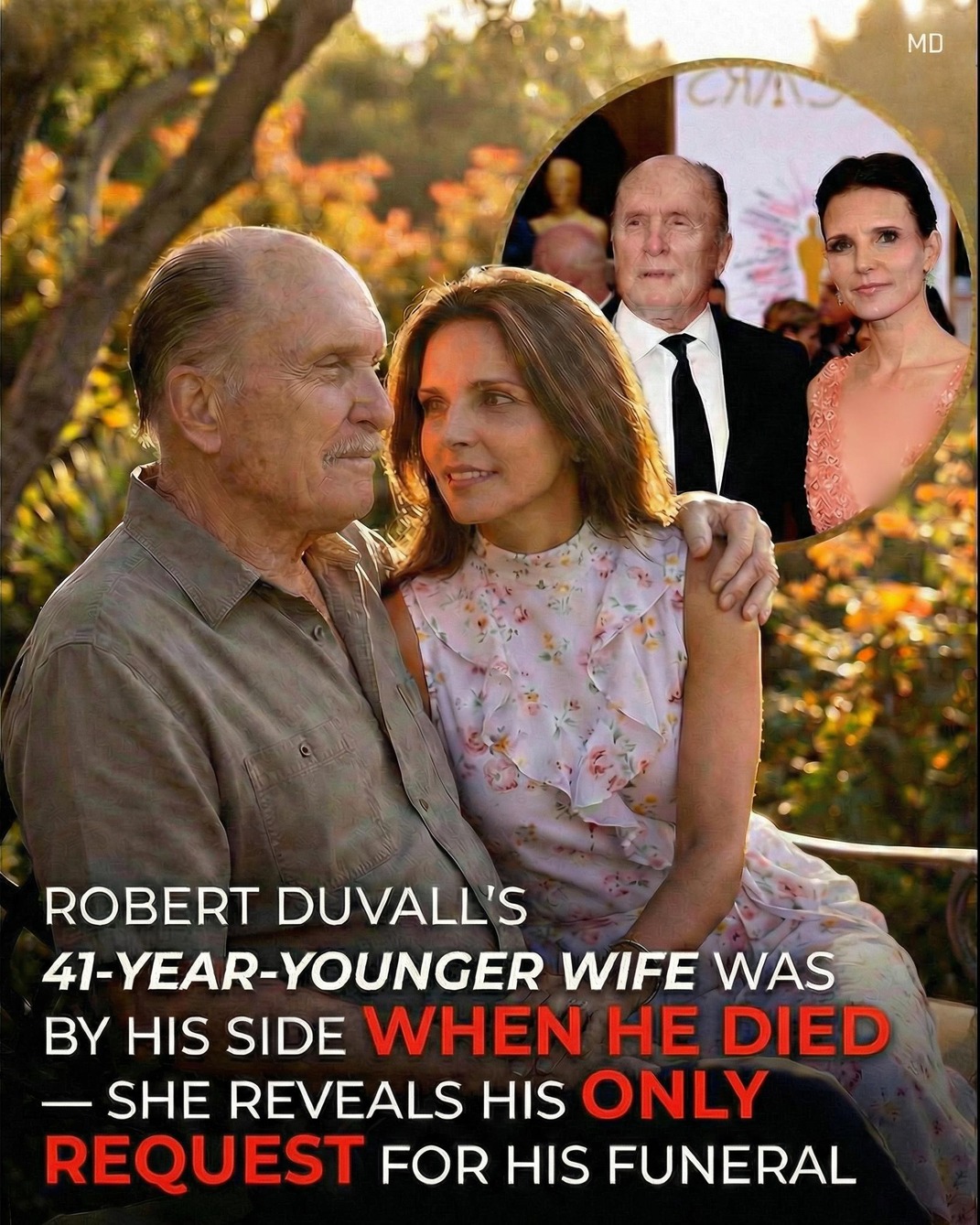
Robert Selden Duvall passed away peacefully on February 15, 2026, at the age of 95. His wife, Luciana Duvall, released a touching statement celebrating both his professional accomplishments and his character off-screen. She described him as a legendary actor whose dedication to his craft was matched by his loyalty, kindness, and gentle sense of humor. The family emphasized that Duvall did not wish for an elaborate public memorial, preferring instead that friends, fans, and colleagues honor his memory in personal and meaningful ways. “Watch a film that inspires you, spend time in nature, share a story with a friend—these are the things that truly celebrate Robert’s life,” Luciana said, reflecting his belief that joy and fulfillment were often found in life’s quieter, more intimate moments.
Duvall’s career spanned more than six decades, during which he built one of the most admired and enduring bodies of work in American cinema. He earned seven Academy Award nominations over a career that showcased his remarkable range, ultimately winning the Oscar for Best Actor in 1984 for his performance in Tender Mercies. Critics and audiences alike praised the film for the subtle emotional complexity he brought to the role of Mac Sledge, a character grappling with faith, redemption, and human vulnerability. His nominations, spanning from The Great Santini to The Apostle, A Civil Action, and The Judge, underscored a consistency of craft that few actors have maintained over multiple decades. Fellow performers often highlighted Duvall’s ability to inhabit his characters fully, creating portrayals that felt lived-in and real rather than performed or stylized. Beyond his on-screen presence, colleagues remembered him for his generosity, patience, and the genuine warmth he brought to sets, mentoring younger actors while never seeking the spotlight for himself.
Even as he aged, Duvall remained deeply engaged with his work and creative pursuits. In interviews, he often spoke of the importance of routine, friendship, and meaningful companionship, reflecting a life lived deliberately and thoughtfully. Although he and Luciana did not have children, those closest to him insisted that he never felt a sense of incompleteness; he derived profound satisfaction from relationships, artistry, and the quiet rhythms of everyday life. Friends recall long afternoons spent discussing literature, film, and music, or simply enjoying the tranquility of nature, embodying the serenity that became a hallmark of his personal life.
Tributes to Duvall have poured in from across the globe, with fans, critics, and fellow actors revisiting the films that defined his career. Many highlight how he brought authenticity to every role, whether portraying military leaders, troubled priests, or complex family men, creating characters whose humanity resonated deeply with audiences. His performances often combined emotional subtlety with moral gravity, leaving viewers both moved and profoundly aware of the intricacies of the human experience. Film scholars note that Duvall’s approach bridged generations of actors, influencing a style of naturalistic performance that continues to shape contemporary cinema.
Outside the spotlight, Duvall embraced a life of quiet reflection, valuing privacy, nature, and the enduring bonds of friendship. He loved simple routines, from enjoying a morning coffee on his porch to tending to hobbies and passions that kept him connected to the world beyond Hollywood. In his later years, he spoke openly about the sense of contentment he found in small joys and the fulfillment that came from living a life guided by principle and curiosity rather than fame alone.
Robert Duvall’s passing marks the loss of one of Hollywood’s most remarkable and enduring talents, but his legacy will continue to thrive in the films he brought to life. From early portrayals in groundbreaking classics to later performances imbued with wisdom and nuance, his work remains a masterclass in acting and a reminder of the enduring power of cinema. Audiences new and old will continue to celebrate his contributions, ensuring that the name Robert Duvall is remembered not only as an actor of immense skill but also as a man who lived fully, thoughtfully, and with a profound respect for both art and life.