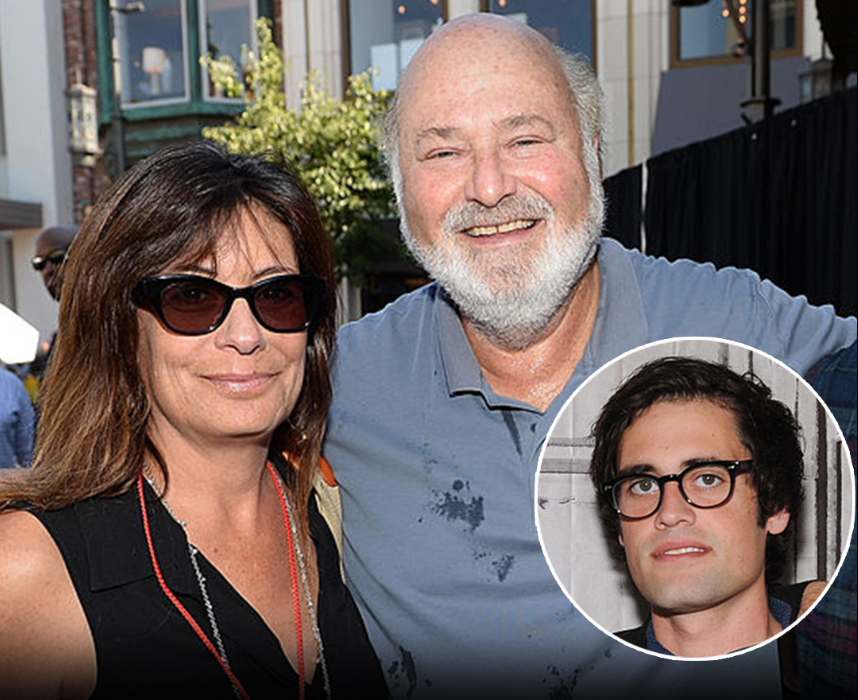
The shocking double murder of acclaimed filmmaker Rob Reiner and his wife, Michele Singer Reiner, has reverberated throughout the global entertainment world, prompting renewed scrutiny of the troubled relationship they shared with their son, Nick Reiner. After the devastating discovery at the couple’s Brentwood home on December 14, 2025, a portrait has emerged of a family deeply affected by long-term trauma, addiction, and unresolved psychological struggle. Nick Reiner, age thirty-two, was taken into custody on suspicion of murder. Although bail was initially set at four million dollars, authorities later ruled that he would remain detained without bail as the investigation intensified.
In the days following the killings, disturbing details about the family’s final interactions began to surface. Reports reveal that Rob, Michele, and Nick attended a Christmas gathering hosted by Conan O’Brien just one day before the deaths. Witnesses described a heated and highly visible confrontation between father and son—an argument so intense it drew the attention of other guests. In hindsight, that public clash now appears to foreshadow the tragic crime scene uncovered hours later. For those following developments in Hollywood and criminal investigations, the timeline suggests a sudden and dangerous escalation of a conflict that had been simmering for years.
To fully grasp the weight of this tragedy, it is necessary to revisit the creative project that once symbolized hope for reconciliation within the family. In 2015, Rob and Nick collaborated on the semi-autobiographical film Being Charlie, an effort to confront their strained relationship through storytelling. Written by Nick and directed by Rob, the film explored addiction, resistance to treatment, and the painful tension between a struggling son and a powerful, well-known father. At the time, the project was widely interpreted as a healing endeavor—one that seemed to mirror a genuine emotional breakthrough between them.
Today, however, past interviews from that period carry a far more troubling resonance. Rob Reiner openly acknowledged feelings of guilt over Nick’s upbringing, admitting that he and Michele often relied heavily on treatment professionals instead of fully hearing their son. Nick spent years cycling through rehabilitation programs and even endured periods without stable housing—an experience that sharply contradicted the public image associated with his family name. Rob later admitted that working together on the film often reignited deep conflicts, though he still described Nick as the emotional core of the project.
Nick’s own reflections painted an equally complicated picture. While he respected his father’s creative brilliance, he frequently felt emotionally unheard in their personal relationship. According to Nick, the film set became the only environment where genuine communication seemed possible. This blending of professional collaboration with unresolved personal pain is a pattern often seen in families led by high-achieving public figures. Despite the apparent progress made during the film, the underlying challenges of addiction and mental instability clearly remained unresolved.
Recent accounts have also shed light on Michele Singer Reiner’s emotional state in the months leading up to her death. Friends report that she felt overwhelmed, frightened, and increasingly exhausted by Nick’s unpredictable behavior. She confided that the family had pursued every option available—interventions, therapy, psychiatric care—yet remained unable to pull him out of repeated relapse. This prolonged emotional strain is now a key focus for investigators and forensic psychologists assessing the circumstances surrounding the crime.
Nick’s prior history of violent behavior has resurfaced as well. In a 2018 podcast appearance, he described an episode in which he destroyed property while under the influence of stimulants, an incident that now reads as a chilling precursor to the violence in Brentwood. For prosecutors and defense attorneys alike, these documented episodes will likely play a central role in evaluating motive, intent, and criminal responsibility.
The broader impact of the Reiners’ deaths has been both cultural and economic. As legal teams begin managing the family estate, the entertainment industry mourns the loss of a filmmaker whose work—from The Princess Bride to A Few Good Men—left a lasting imprint on American cinema. Viewership of Rob Reiner’s films has surged, as audiences revisit his work in an effort to honor his legacy. At the same time, public debate has intensified around mental health policy, addiction treatment, and the limits of existing legal safeguards.
Under the direction of Los Angeles police leadership, the investigation continues to reveal a family that appeared successful in public while quietly unraveling in private. The resurfacing of past interviews now paints a devastating image of parents who fought relentlessly to save their son, even as his condition worsened. The Brentwood killings are not merely a sensational headline—they represent a profound human tragedy that exposes the limits of love, wealth, and influence when confronted by severe mental illness.
As the case moves toward preliminary hearings, it is expected to become one of the most closely followed trials in recent memory. It sits at the intersection of celebrity, crime, and mental health law, raising difficult questions about accountability and treatment within the justice system. Ultimately, the story of the Reiner family stands as a sobering reminder that behind celebrated careers and public admiration often lie private struggles with devastating consequences. The legacy of Rob and Michele Reiner is now inseparably linked to this tragic final chapter—one that has left the entertainment world, and the public at large, in quiet and enduring reflection.