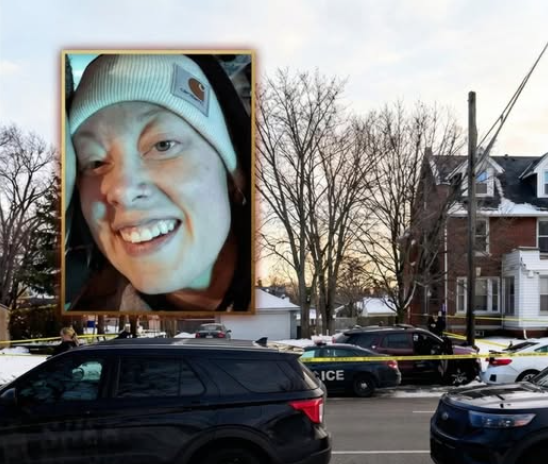
Those who knew Renee Nicole Good often struggled to describe her with a single label, not because she was complicated, but because she lived quietly in many roles at once. She was a mother, a neighbor, a writer, a listener, a friend, and a steady presence in her Minneapolis community. She did not seek attention or recognition. Instead, she showed up in small, consistent ways that rarely make headlines but shape lives profoundly and lastingly. That is why the events of January 7, 2026, have left such a deep and unsettled ache in the people who knew her best.
Renee was 37 years old, and her life was measured not in public accolades but in the rhythms and rituals of family. She was raising three children, each at different stages, navigating the delicate balance of responsibility and love that defines motherhood. Friends describe her as profoundly devoted, the kind of parent whose care went beyond the obvious: she remembered each child’s favorite story, the specific way they liked their hair brushed, the songs that calmed them when storms—literal or emotional—raged outside. Her home revolved around routines that seemed ordinary, but each act of care was intentional: the precise timing of breakfast so no one missed the bus, bedtime stories that doubled as lessons about empathy and patience, gentle corrections offered in whispers rather than raised voices. Her children were never just part of her life; they were the axis around which it revolved.
Creativity was a subtle but constant thread in Renee’s life. She had studied creative writing in college, her poetry praised for honesty and emotional restraint, yet she rarely sought acclaim. Writing was a lens through which she understood the world, a private conversation with herself that helped her make sense of complexity. Her notebooks were full of reflections on small but meaningful experiences: a neighbor’s act of kindness, the fleeting beauty of snow on an early morning, or the quiet triumph of her child mastering a new skill. Music was equally important. Friends recall playlists meticulously curated for long drives, quiet evenings at home, or solitary reflection—songs chosen for emotional resonance rather than popularity, melodies that mirrored the rhythms of her inner life. Even the act of listening to music was a practice in attention, a way of slowing time and savoring life’s textures.
Those close to Renee often described her as gentle, yet not fragile. She was steady, grounded, and quietly resilient, shaped by faith, introspection, and a remarkable capacity for empathy. She listened more than she spoke, and when she did, it was usually with thoughtfulness and care. She was not confrontational by nature, nor did she seek public recognition or debate; her values were enacted through her everyday choices, through how she treated people, and through the example she set for her children. She believed that small acts of attentiveness could ripple outward to create profound change. A kind word at the right moment, a gesture of assistance without expectation, a meal shared with someone in need—these were her quiet revolutions.
In recent years, Renee had made a conscious choice to center her life on motherhood. This was not a retreat, but a declaration of focus. She found fulfillment in the ordinary: walking her children to school, exchanging greetings with neighbors, participating in local events, and becoming a familiar and comforting presence on her block. Her community noticed. She remembered birthdays, anniversaries, and milestones, not as obligations but as genuine gestures of care. Even casual interactions—checking in on a neighbor, offering a smile to a shy child, asking after someone who had been absent from school—carried the weight of her attentiveness.
The morning of January 7 began like many others. Renee followed her routine with precision: breakfast, dressing the children, a wave to neighbors, and the school drop-off that had become an almost ceremonial start to the day. Yet that morning, there was something different in the air. Residents later reported a noticeable increase in law enforcement presence near the school and surrounding streets. Federal officers were conducting operations in the area, though details remain incomplete and under investigation. Even so, the sight of uniformed personnel moving purposefully through the neighborhood created a quiet unease, one that Renee, ever mindful, would have noticed even while focused on her family.
What happened next unfolded quickly and tragically. Accounts vary, and investigations are ongoing, but it is known that Renee was involved in a brief encounter that resulted in her vehicle crashing. She sustained fatal injuries. Witnesses describe a scene of confusion and fear in the moments that followed: neighbors rushing toward the accident, children watching in shock from nearby sidewalks, parents calling out names, and the air thick with disbelief. In an instant, a life lived with care and intention ended in a way that felt both abrupt and senseless to those who knew her.
News of Renee’s death spread rapidly through her family, her community, and her broader circle of friends. Shock gave way to grief, and grief to a collective disbelief. People struggled to reconcile the gentle, thoughtful woman they knew with the circumstances of her death. For her children, the loss was immeasurable—a sudden absence where guidance, warmth, and maternal love had always been present. For her partner, it was a rupture in a life built on shared routine, trust, and silent understanding. Friends spoke of instinctively reaching for their phones to message her, only to remember she was gone. The world she had moved through—the home, the streets, the school, the familiar corners of Minneapolis—felt fundamentally altered by her absence.
Vigils were organized quickly, fueled by community grief and affection. Candles flickered on sidewalks, flowers accumulated near the site of the crash, and notes appeared recounting memories: a kind word shared during school pick-up, a helpful gesture offered without recognition, or a quiet reassurance at a time of need. Strangers who had briefly encountered Renee added their voices, leaving handwritten notes or flowers, moved by the clarity of the goodness she represented in a world often indifferent to small acts of care.
Her family expressed the profound absence she left behind, emphasizing not only the loss but the enduring presence of her life’s lessons. Children had lost a guide, a nurturer, and a model of thoughtful attention. Her partner had lost a confidant and a life partner whose life had been quietly, steadily intertwined with theirs. Friends mourned in both public and private spaces, honoring the routines she had maintained and the countless small gestures that now felt infinitely more precious.
Even amid ongoing investigations and public debate, those who knew Renee insist on remembering her life rather than reducing it to the circumstances of her death. She is remembered as a person of depth and attention, someone who found beauty in quiet moments, who believed in showing up without expectation, who lived with integrity, and who cared deeply about others. Her life cannot be summed by headlines or speculation; it is defined by years of care, creativity, and human connection.
Renee Nicole Good’s life was multifaceted, defined by small victories, ordinary routines, and the quiet but profound shaping of the lives around her. She was a mother who raised children with intention, a writer who explored the emotional texture of life, a friend who offered understanding without judgment, and a neighbor who made her community feel seen. Her absence is palpable, felt in subtle ways: the missing wave on a street corner, the empty space at school pick-up, the silence where her laughter once resonated. Yet, in memory and in the impact she had on those around her, Renee’s presence endures.
Through her example, she leaves a lesson for those who remain: a life lived with intention, compassion, and grace, even in its quietest moments, is a life that matters profoundly. Renee’s story is not just a reflection of loss—it is a testament to the power of attentive, purposeful, and empathetic living, a legacy that will continue in the hearts and actions of all who knew her.