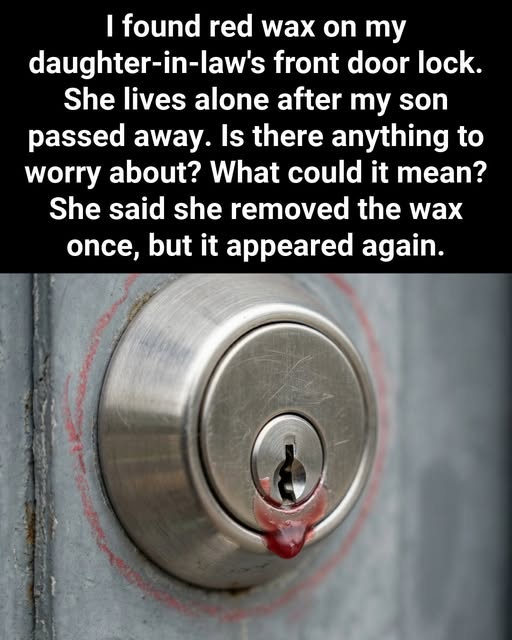
Finding red wax on your house lock is one of those tiny details that makes your stomach tighten before your brain even catches up. It’s small, easy to overlook, and completely out of place—yet once you notice it, you can’t unsee it. Most people’s first instinct is to shrug it off: a prank, leftover candle wax, or something that accidentally brushed against the door. But when it comes to home security, unexplained details deserve attention—not panic, just attention.
Red wax on a lock is unsettling because it doesn’t belong there. Locks are practical objects. They don’t change color, texture, or shape without reason. When something unfamiliar appears—especially something deliberate-looking—it raises a legitimate question: why would anyone mark this door?
In some cases, red wax can be a silent signal. Criminals have long used subtle markers to communicate with each other. These signs aren’t meant for homeowners or passersby—they’re designed to blend into the environment while still being noticeable to those who know what to look for. A small dab of wax on a lock can mark a property quietly, without drawing attention.
The purpose of such a mark varies. It might indicate the house has been checked and found potentially vulnerable. It could signal that the residents are usually away at certain times. Sometimes it’s a test—left to see whether it’s removed quickly or ignored. If it stays, it suggests no one is paying attention. That information alone can be valuable to someone looking for an easy target.
Wax is particularly useful for signaling because it’s simple and discreet. It can be applied in seconds and requires no tools. It’s easy to explain if questioned and doesn’t immediately look like damage. Red, while noticeable to someone searching for it, doesn’t scream danger to the average person. On metal or painted surfaces, it can be mistaken for rust, residue, or dirt.
This doesn’t mean every instance of red wax is a criminal marker. There are innocent explanations: nearby construction, candles carried past the door, children playing, or decorative wax seals from previous residents. The issue isn’t the wax itself—it’s the uncertainty. When you don’t know how it got there, it deserves attention.
The first step is inspection. Look at your entire entryway, not just the lock. Check door frames, hinges, windows, mailboxes, and gates. Are there new scratches or signs of tampering? Small marks, chalk lines, or unusual smudges? Criminals often test multiple access points, not just the front door. A single mark could be part of a larger pattern.
Document what you find. Take clear photos of the wax and any other suspicious details before removing anything. This creates a record in case you need to report it or notice something similar later. Then remove the wax completely and clean the area. If it reappears, it’s no longer a coincidence.
Next, examine your lock itself. If it’s old, basic, or easy to manipulate, consider upgrading. High-quality deadbolts, reinforced strike plates, and modern smart locks make forced entry much harder. Criminals prefer quick, quiet access. Anything that adds time or noise makes your house less attractive.
Visible security measures matter more than most realize. Cameras don’t just record—they deter. Even a single, clearly visible camera near an entry point can discourage someone testing a property. Motion-sensor lights work similarly. Darkness is cover; light removes it.
Equally important is communication. Talk to your neighbors. Ask if they’ve noticed anything unusual. Criminal activity rarely targets a single home. Patterns often emerge across a street. A neighbor noticing a similar mark can turn a strange detail into a shared warning.
If you feel uneasy or see repeated signs, contact local law enforcement. Reporting doesn’t mean accusing anyone. It creates a record. Police track trends, and small reports can connect dots you can’t see. Even if nothing happens immediately, your information could prevent a bigger problem later.
Daily habits matter more than people admit. Predictability is a vulnerability. Leaving and returning at the same times, letting mail pile up, or keeping blinds open signals when a house is empty. Small changes—holding mail when away, using light timers, varying routines—add layers of protection with little effort.
Complacency is dangerous. Many assume serious crime happens elsewhere. Criminals rely on that assumption. A friend once ignored a strange mark on their door. They didn’t report it, didn’t change anything. A week later, someone tried to break in. The only reason it failed was a motion sensor alarm. The mark wasn’t proof, but it was a warning.
Home security isn’t about fear. It’s about awareness. Red wax on a lock doesn’t mean a robbery will happen—it means something unusual occurred, and unusual things deserve attention. Calm, practical steps can turn potential risks into non-events.
Your home is more than walls and locks. It’s where you sleep, live your routines, and let your guard down. Protecting it doesn’t require paranoia—just attention and action when something feels off. Next time you approach your door, take a second look. Notice the small things. Often, they’re the first signs that matter.