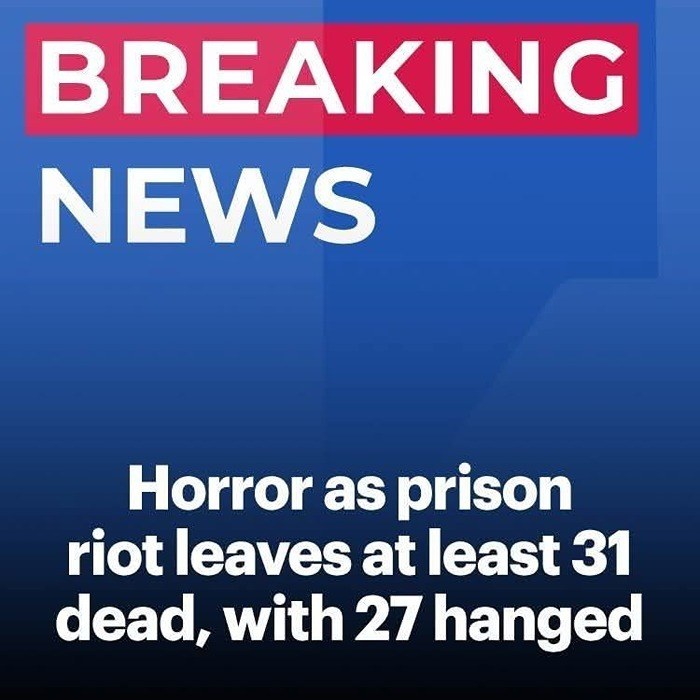
The riot inside Machala’s prison had started long before anyone outside realized what was happening. For the families waiting beyond the concrete walls, it seemed like just another tense night; for the inmates trapped inside, it was a full-scale collapse — swift, brutal, and unstoppable.
By the time dawn crept across the razor wire, the toll was staggering: at least 31 inmates dead, many found hanged or suffocated in their cells, others scattered in corridors, burned by grenades or riddled with bullets. Tactical police units eventually stormed the compound, but their arrival felt more like a grim tally of the devastation that had already occurred. More than 30 inmates were injured, along with a police officer caught in the crossfire. For Ecuador, already weary from a wave of prison violence, this tragedy added to an ever-growing toll — hundreds of deaths since 2021.
Behind the numbers lies a stark reality that Ecuadorians know all too well: the prisons no longer function as institutions of control. Instead, they have become heavily fortified strongholds for powerful criminal organizations, with each cell block ruled not by guards, but by gang leaders commanding armies both inside and outside the walls. Overcrowding, underfunding, and corruption have created a system where the state maintains only the illusion of authority. The real power — and the real terror — lies with rival groups battling for dominance over drug routes, extortion networks, and territories stretching far beyond the prison gates.
The riot at Machala reportedly stemmed from a shift in internal leadership — a routine administrative decision that, in a functioning system, might have generated paperwork and minor annoyance. But in Ecuador’s prisons, every transfer, reorganization, or rumor of power changes becomes an explosive trigger. When one gang senses an opening to weaken another, they strike quickly and violently. By the time guards realize what’s happening, the damage is irreversible.
Residents near the prison described hearing bursts of gunfire and explosions throughout the night — sounds all too familiar in recent years. Some stayed inside their homes, others peered from balconies or pressed their ears against windows, knowing that the chaos inside was beyond their influence. Later, phone videos circulated showing flames licking the edges of the compound, smoke rising in heavy columns against the dark sky.
Meanwhile, at the prison gates, families gathered in anxious clusters. Mothers clutched photographs, fathers anxiously checked their phones for messages that never arrived. Siblings repeated names to officials who could provide no answers. The uncertainty was its own kind of cruelty. In Ecuador, when violence erupts inside prison walls, silence becomes the most terrifying sound of all — it means someone’s son, brother, or husband might be lying unclaimed on a metal table, another casualty of a system spiraling out of control.
President Daniel Noboa reiterated his promise of a firm response, declaring the state would no longer allow prisons to function as “criminal command centers.” His administration has spoken of structural reforms, military intervention, and long-term strategies to regain control. Yet, many citizens have heard similar promises before. Each new vow is met with cautious hope and skepticism, because each reform seems to carry unintended consequences. When authorities tighten restrictions, gangs retaliate. When inmates are transferred to dismantle criminal networks, rival factions strike. When negotiations happen, the very groups authorities want to dismantle become legitimized.
For the families outside Machala, politics held no meaning in that moment. They weren’t thinking about national policy or future reforms; they were thinking about the people they loved trapped behind concrete walls soaked in violence. Some cried openly. Others stood motionless in stunned silence. Some shouted at officials, demanding answers, names — anything to break the unbearable uncertainty.
As hours passed and the smoke began to clear, names slowly began to emerge. Survivors contacted relatives through borrowed phones. Hospital lists leaked. Photographs began circulating — some of survivors, battered and shaken; others of the dead, their bodies lined up in stark rows. The nation watched as each new image deepened the collective grief.
The Machala riot laid bare painful truths. Ecuador’s prisons have become battlegrounds where the state is outnumbered, outmaneuvered, and often outgunned. Reform requires more than tough speeches; it demands the dismantling of deeply rooted criminal networks, tackling corruption at every level, and rebuilding institutions that have crumbled over decades. But even if those efforts begin tomorrow, change won’t come fast enough for the families mourning today.
What lingers after a tragedy like this is not only the horror of what occurred, but the dread of what could happen next. Across the country, other prisons remain ticking time bombs — overcrowded, unstable, and simmering with rival factions waiting for the smallest spark. Communities near these facilities live in constant tension, knowing that at any moment, another night of gunfire and explosions could break out.
At Machala, as the sun rose higher and officials finally addressed the waiting crowd, some families were told their loved ones had survived. Others broke into fresh waves of grief when they were informed of the identification procedures. Many more remained in suspense, clinging to the faintest hope for more information.
And through it all, one heartbreaking question echoed over and over: How many more?
How many more must die before the system changes? How many mothers must wait outside prison gates, praying for a name that never comes? How many more riots, how many more funerals, how many more promises will pass before Ecuador’s prisons stop producing one tragedy after another?
The riot at Machala ended. But the crisis that caused it is still very much alive — and the nation knows it will return unless something fundamental shifts.
For now, the families wait, the officials speak, the nation mourns, and the world watches as Ecuador grapples with a crisis that has long since slipped beyond its walls.