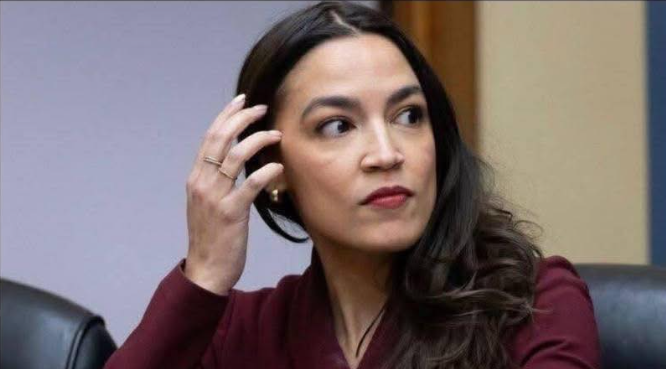
Rep. Alexandria Ocasio-Cortez (D-NY) recently announced that she will not pursue the top Democratic role on the House Oversight Committee, ending weeks of speculation about her possible ambitions within the caucus while simultaneously fueling rumors about her future political trajectory, including potential plans for the 2028 elections.
Declining the Oversight Chair
The opportunity arose after Rep. Gerry Connolly (D-VA) disclosed that he would be stepping down from his leadership position due to health complications following a recurrence of cancer. This announcement immediately sparked widespread discussion about who might step into one of Congress’s most influential oversight roles, and Ocasio-Cortez’s name was quickly mentioned as a possible contender given her national profile and growing influence within the party.
At first, Ocasio-Cortez played down the speculation, telling reporters there was “not really a vacancy to run for,” suggesting she wasn’t yet interested in a power struggle. However, by last week, she acknowledged she was “weighing” a bid, leaving many political observers on edge. On Monday, she decisively clarified that she would not pursue the position, citing structural barriers within the caucus and the long-standing seniority system as significant factors in her decision.
“It’s actually clear to me that the underlying dynamics in the caucus have not shifted with respect to seniority as much as I think would be necessary,” she explained. “And so, I believe I’ll be staying put at Energy and Commerce.”
Seniority and Procedural Challenges
House rules create notable restrictions for members who already hold seats on exclusive committees, such as Energy and Commerce, where Ocasio-Cortez currently serves. Members cannot simply switch committees without a formal waiver or special approval, making it procedurally challenging for her to assume the Oversight leadership. These technical hurdles underscore a larger, persistent reality: despite her prominent public profile, Ocasio-Cortez’s relative lack of seniority has long limited her access to top committee roles.
This situation reflects the broader institutional structures in Congress, where experience and tenure often outweigh national recognition. While she has become a symbol of progressive activism and grassroots energy, the internal hierarchy of the Democratic caucus remains an influential factor in leadership selection.
Generational Dynamics
Ocasio-Cortez’s decision also highlights generational tensions within the Democratic Party. Following the Republican gains in the 2024 midterms, younger Democrats have increasingly called for a reshuffling of leadership roles, advocating for a new wave of lawmakers to assume high-ranking positions.
Some younger representatives have broken through, such as Rep. Angie Craig (D-MN), who became the ranking member on the House Agriculture Committee last December before launching a Senate campaign in Minnesota, and Rep. Jared Huffman (D-CA), who assumed leadership of the Natural Resources Committee after the late Rep. Raúl Grijalva withdrew. Nevertheless, the pace of change remains slow, and the party continues to balance tradition with calls for generational renewal.
In this context, Ocasio-Cortez’s choice to remain on Energy and Commerce is understandable. Her remarks suggest that she recognizes the limits of pushing against entrenched seniority at this moment, preferring to maintain influence where she can exercise it effectively without an internal confrontation.
Fundraising and Broader Ambitions
While she sidestepped the Oversight chair, her recent fundraising activity signals ambitions that extend well beyond committee politics. Campaign finance reports indicate that Ocasio-Cortez has amassed over $10 million—a remarkable sum for a representative from a safely Democratic New York district.
Such resources suggest potential future plans on a statewide or national level. Analysts and political insiders speculate that she may be positioning herself for higher office, whether that involves a Senate campaign, a statewide run, or even a future presidential bid. Her strategic retention of her Energy and Commerce seat allows her to continue building a record on issues central to her progressive agenda, including healthcare, climate change, and technology policy—issues that resonate nationally and strengthen her profile.
The Importance of the Oversight Committee
The House Oversight Committee holds one of the most powerful investigative roles in Congress, with authority over government spending, ethics inquiries, and regulatory oversight. The chair or ranking member wields considerable influence, especially during periods of partisan gridlock.
For Democrats, selecting a new ranking member is more than symbolic; it determines who will lead the party’s voice in high-profile investigations and hearings in the upcoming congressional session. By stepping aside, Ocasio-Cortez effectively leaves the path clear for more senior members to maintain control over these key discussions, ensuring stability but limiting her immediate visibility in national oversight issues.
Reactions and Strategic Calculations
Democratic aides note that while some younger lawmakers may have been disappointed by her decision, it was widely anticipated. One aide commented:
“She has the national profile, the grassroots fundraising, and the ability to bring attention to important issues, but the caucus isn’t ready to elevate someone with her limited seniority to such a powerful position.”
Others suggest her move reflects strategic calculation. By avoiding an uphill battle within the caucus, she preserves political capital and avoids internal division that could weaken her position in the long term.
Looking Toward 2028
Even as she steps away from the Oversight race, speculation about her political future remains intense. With President Trump reportedly aiming for a 2028 bid and both parties preparing for generational shifts, many see Ocasio-Cortez as part of a rising cohort of younger Democrats poised for higher office.
Remaining on Energy and Commerce allows her to stay connected to substantive legislative work, maintaining her policy credentials and progressive platform while keeping doors open for a future statewide or national campaign. Political strategists suggest this move could position her for a more calculated leap in the coming years, rather than a premature confrontation for leadership that might limit her options.
Continuing Influence
Ocasio-Cortez remains an active legislator, engaged in issues ranging from climate action and housing affordability to financial regulation and healthcare policy. Her national presence and fundraising strength keep her at the forefront of the party’s progressive wing.
Her announcement regarding the Oversight Committee also serves as a reminder of the structural constraints younger members face within Congress, as well as the careful balancing act required to navigate institutional norms while pursuing long-term ambitions.
Conclusion
Rep. Alexandria Ocasio-Cortez’s choice not to pursue the House Oversight Committee leadership demonstrates both the realities of seniority in Congress and her strategic vision for the future. While she remains on Energy and Commerce for now, her growing fundraising base, legislative accomplishments, and national profile signal ambitions that extend well beyond committee assignments.
As the Democratic Party debates the future of its leadership and prepares for the 2028 election cycle, Ocasio-Cortez’s next moves will be closely observed. Whether she eventually challenges institutional limitations from within or seeks higher office directly, her trajectory is poised to be a defining story in the coming years.