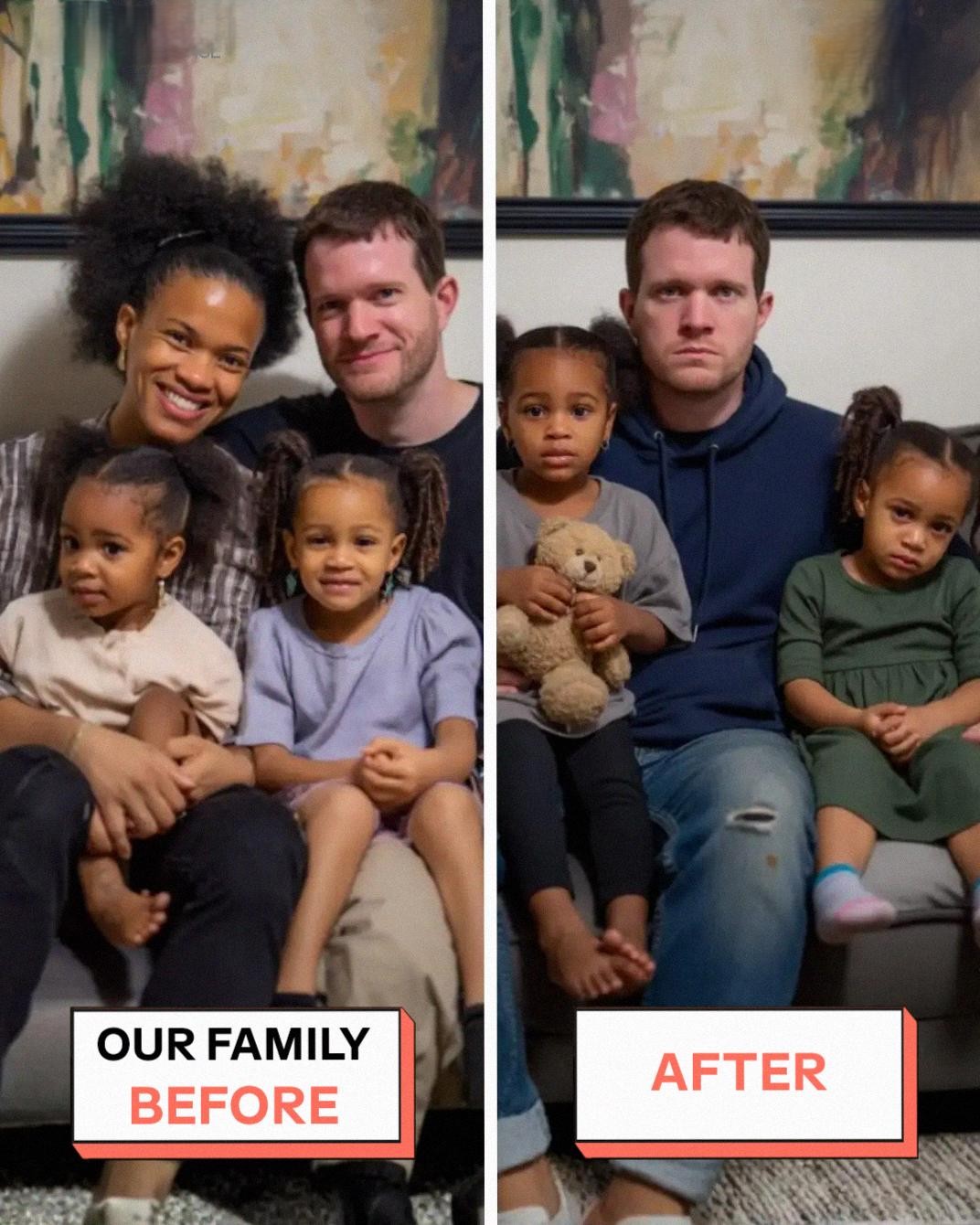
The rhythmic pulse of a home is something a husband and father feels more than he hears. On a typical Tuesday, that rhythm consists of the high-pitched chatter of six-year-old twins, the clatter of pots and pans, and the familiar scents of laundry and home-cooked meals. But the evening I arrived fifteen minutes late was defined by a terrifying, hollow stillness. In our house, fifteen minutes could mean the difference between an orderly bedtime and chaos—but that night, fifteen minutes had been long enough for my entire life to unravel.
The signs were subtle at first. No backpacks abandoned on the porch, no chalk drawings on the driveway, and most tellingly, the porch light remained off. Inside, the house felt like a museum of a life interrupted. A pot of macaroni and cheese sat cold on the stove, half-stirred. I called out for Jyll, my wife, but only the low hum of the refrigerator answered.
In the living room, our babysitter, Mikayla, stood stiffly by the armchair, as if she were presiding over a funeral. Curled on the sofa were my daughters, Emma and Lily, faces pale, eyes wide with confusion too deep for words. Mikayla explained that Jyll had called at four o’clock, claiming an urgent errand. By the time Mikayla arrived, Jyll was already gone, suitcases in hand.
I knelt before my daughters, my heart hammering. Emma blinked slowly. “Mommy said goodbye forever,” she whispered. She recounted Jyll’s long, tearful hug and that I would have to explain everything. When I walked into our bedroom and saw her side of the closet stripped bare—her blue sweater gone, her laptop missing, even the framed photo from our beach vacation vanished—I realized I was the last person capable of explaining anything.
The “why” waited for me on the kitchen counter, scrawled on a folded piece of paper. Brief, polite, and piercing, Jyll’s note read: “If you want answers, I think it’s best you ask your mom.”
For years, I had seen the tension between my wife and my mother, Carol, as a simple personality clash. My mother, a woman of “structure” and “standards,” had viewed Jyll returning to work after the twins as a personal affront. I thought I was protecting the peace by staying neutral, telling Jyll to ignore my mother or not take her comments personally. In reality, I had been standing by while my mother systematically undermined the woman I loved.
That night, the breadcrumbs led me to Carol’s house. Her expression held no shock—only a grim, self-satisfied expectation. I demanded answers. Carol, smoothing her robe like a practiced martyr, spoke of Jyll being “fragile” and “unstable,” claiming she had only stepped in to provide the guidance Jyll lacked.
The truth emerged when I found a manila folder labeled “Emergency Custody Protocol.” Inside were notarized pages outlining a contingency plan for guardianship in case of Jyll’s “emotional instability”—complete with my signature, forged so precisely it made my stomach turn. My mother hadn’t just been interfering; she had been orchestrating a legal coup, using my perceived silence to convince Jyll I was on her side.
After fleeing Carol’s house with the girls, I discovered Jyll’s private journal tucked away in a bathroom drawer. Her entries mapped the slow erasure of a woman—therapy sessions canceled when boundaries were suggested, daily reminders that she was failing as a mother. One entry, dated just a week prior, read: “I miss being someone. Not just a mother, not just a wife. I miss being me.”
Jyll hadn’t left because she didn’t love us. She had left because she was drowning, and as long as Carol controlled the lifeboat, she would never reach the shore. My neutrality hadn’t been a bridge—it had been a wall, trapping Jyll in a room with her tormentor.
The next morning, the “mediator” in me died. I didn’t call my mother; I called a family lawyer. By noon, Carol was barred from school pickups, the forged documents flagged as fraud, and a formal no-contact order initiated. Years of trying to keep everyone happy had nearly cost me the person who truly mattered.
Three days later, Jyll called. I didn’t ask when she’d come back, nor did I tell her the girls had cried. I simply said I was sorry—that I had seen the files, read the journal, and finally understood the war she had been fighting alone. I told her my mother was gone from our lives—permanently.
“I should have chosen you,” I said, my voice heavy with six years of missed cues. “I didn’t realize I had to. But I do now.”
Jyll didn’t return immediately. She needed time to reclaim herself, free from my mother’s constant, critical voice. She sent packages—velvet scrunchies for the girls, a selfie by the ocean, tired but at peace.
For now, I am a single father navigating laundry, school projects, and the quiet questions of two little girls. But the house feels different. The stillness is no longer hollow—it is expectant. I leave the porch light on every night, not because Jyll is lost, but because she finally has a home that belongs only to her, to the girls, and to a husband who has finally learned to see.
Family isn’t about keeping the peace at all costs. It’s about knowing whose peace is worth fighting for. As I whisper Jyll’s name into the quiet evening, it feels like a promise I will keep for the rest of my life. I’ll be here—with the macaroni on the stove and the porch light shining—for as long as it takes.