In the quiet confines of a small town, reputations are earned through consistency, and Caleb was the embodiment of a safe, predictable choice. When he proposed during a simple dinner of Chinese takeout, I didn’t see a lack of romance; I saw stability. He was steady, reliable, and seemingly free from the kind of ego that often destroys relationships. Our wedding took place in a historic chapel, a space that felt as permanent as the life I imagined we were building together. During our vows, he whispered something I would carry in my mind for years: “I still don’t want a story. I want a life.” At the time, I interpreted it as a devotion to the present. I had no idea it was a warning—that he viewed our shared past as disposable.
The first years were calm and promising. Caleb’s career flourished, transforming him from the quiet man I married into a rising star with influence and connections. I watched with pride as he climbed the ladder, forging ties with the town’s key players. Within a year, we had achieved the dream many couples share: a three-bedroom house with a backyard. But beneath the surface, the foundation was quietly crumbling. Four years in, over breakfast, he delivered a casual yet devastating blow: “I don’t think I was ever meant to be a husband,” he said, pushing his plate away. Our life together, he explained, felt like a shirt “two sizes too small,” an analogy that reduced years of love and effort to mere discomfort he was ready to discard.
The divorce followed, quiet and painful, filtered through legal forms and the gossip of a town where everyone learns your story before you do. I moved into a small apartment, seeking space to recover, while Caleb remained entangled with my family—a detail I initially chalked up to small-town awkwardness. The true betrayal, however, was yet to surface. My sister, Lacey, who had always orbited separately, began to occupy the space I had vacated. A year after the split, she told me, with a chilling lack of irony, that she and Caleb were “seeing where things go.” When I protested the moral implications, she shrugged, invoking the inevitable excuse of “fate.”
The ultimate insult arrived in the mail: an invitation to their wedding. I intended to discard it, erase their names from my mind entirely. But a call from my father changed everything. His voice carried the weight of years, exhaustion laced through each word: “Brenna, I need you there.” Confused but loyal, I agreed.
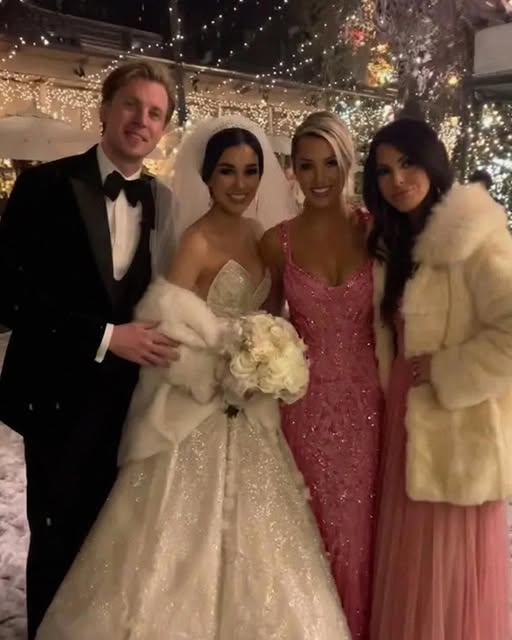
The wedding was staged at a picturesque vineyard, curated to the point of emptiness. I sat in the back row, a ghost among the celebration, watching my sister walk toward my ex-husband as if stepping into a fairytale rather than committing a betrayal. The vows blurred, but the reception brought the tension to a peak. Friends and family toasted “soulmates” and “destiny.” Caleb’s mother, who had once called me her daughter, offered a sympathetic smile that felt like a slap. It seemed the entire room had chosen collective amnesia, ignoring the wreckage beneath the surface of this new union.
Then my father took the microphone. Expecting a warm, traditional speech, the room froze when he began with rigid dignity: “There’s something you all need to know about the groom.” Silence enveloped the vineyard. Caleb’s face turned red with panic as my father’s gaze fixed on him.
He recounted a story I hadn’t fully grasped. Years ago, shortly after our wedding, Caleb had come to him for help—presenting himself as a man committed to building a secure life for me. My father, moved by his supposed devotion, had invested time, influence, and money: making calls to secure promotions and funding the down payment on our home. He had trusted Caleb, his daughter’s husband, to honor that bond.
“And then,” my father said, his voice tight with controlled hurt, “he decided he didn’t want to be a husband anymore.” He scanned the crowd, many shifting uncomfortably. “I watched my younger daughter step into that same man’s life, as if nothing had been broken. I cannot celebrate this marriage built on betrayal and the misuse of my family’s trust.”
The microphone squealed as he set it down, and the room fell into stunned silence. That was my moment. After a year of carrying the weight of hurt, I finally felt the armor fall away. Locking eyes with Lacey, I said: “I’m leaving. Good luck to you and your leftovers, Lacey.”
I stepped outside into the cool evening, not alone. My parents followed, along with aunts, uncles, and cousins who finally saw the truth. During the drive home, my father admitted, “I should have said something sooner.” I told him it didn’t matter—he had spoken when it counted.
Caleb had leveraged my father’s trust to build a life while using my sister to avoid responsibility for destroying mine. By speaking up, my father hadn’t just disrupted a wedding; he had dismantled a lie. He gave me permission to stop pretending civility mattered in the face of a profound violation of loyalty. I walked away with the only thing that mattered: the knowledge that loyalty can be sacred, and my father had chosen me, allowing me to finally choose myself.