People often say that grief comes in waves, but when my grandfather, Richard Ashford, died, there was no wave—only an emptiness. A deep, aching stillness, like the darkness that settles when the last light in a room is suddenly turned off. Richard was a man remembered by the smell of pipe tobacco, the solidity of polished wood, and a booming laugh that filled every corner of his study. To the outside world, he was a powerful real estate magnate, a man of wealth and influence. To my parents, Diana and Mark, he was little more than a financial resource, a safe they had spent years trying to pry open. But to me, he was just Grandpa—the one person who never treated me like a failure, but as someone worth listening to.
At the funeral, I stood near the back as rain traced slow lines down the stained-glass windows. My parents occupied the front row, displaying their sorrow with rehearsed elegance. Diana wore an expensive black dress, delicately pressing a handkerchief to eyes that never truly filled with tears. Mark shook hands solemnly, embodying the image of a devoted son. Watching them felt unbearable. I wanted to tell everyone the truth—that they hadn’t visited Richard in months, and that their last interaction with him had been a request for money to cover yet another disastrous business decision. But I said nothing. In the Ashford family order, I barely existed—the quiet son, too gentle for my father’s standards and too uninterested in status for my mother’s ambitions.
A week later, I was called to the reading of the will. Sitting in the offices of Harper & Associates, I felt out of place in my simple suit. Glenn Harper, my grandfather’s longtime friend, sat behind his desk looking exhausted, grief still heavy in his eyes. He told me Richard had been deeply concerned about my future and wanted to make sure I could live without being controlled by my parents. Then he broke the red wax seal. The sharp crack echoed through the room.
The will was precise and unforgiving. My parents were left the “family burden”—the enormous debts tied to the companies they had mismanaged. Everything else—the properties, investments, and liquid assets totaling around five million dollars—was left to me. The number barely felt real. It meant freedom, independence, and escape. But Glenn’s expression stayed dark. He explained that my parents had already challenged the will, claiming Richard had been mentally unfit and that I had manipulated him. They had hired Vance Clydesdale, a ruthless attorney known for crushing opponents. Glenn suggested settling for half to avoid a long fight. I remembered my grandfather once telling me I was stronger than I believed. I refused to settle.
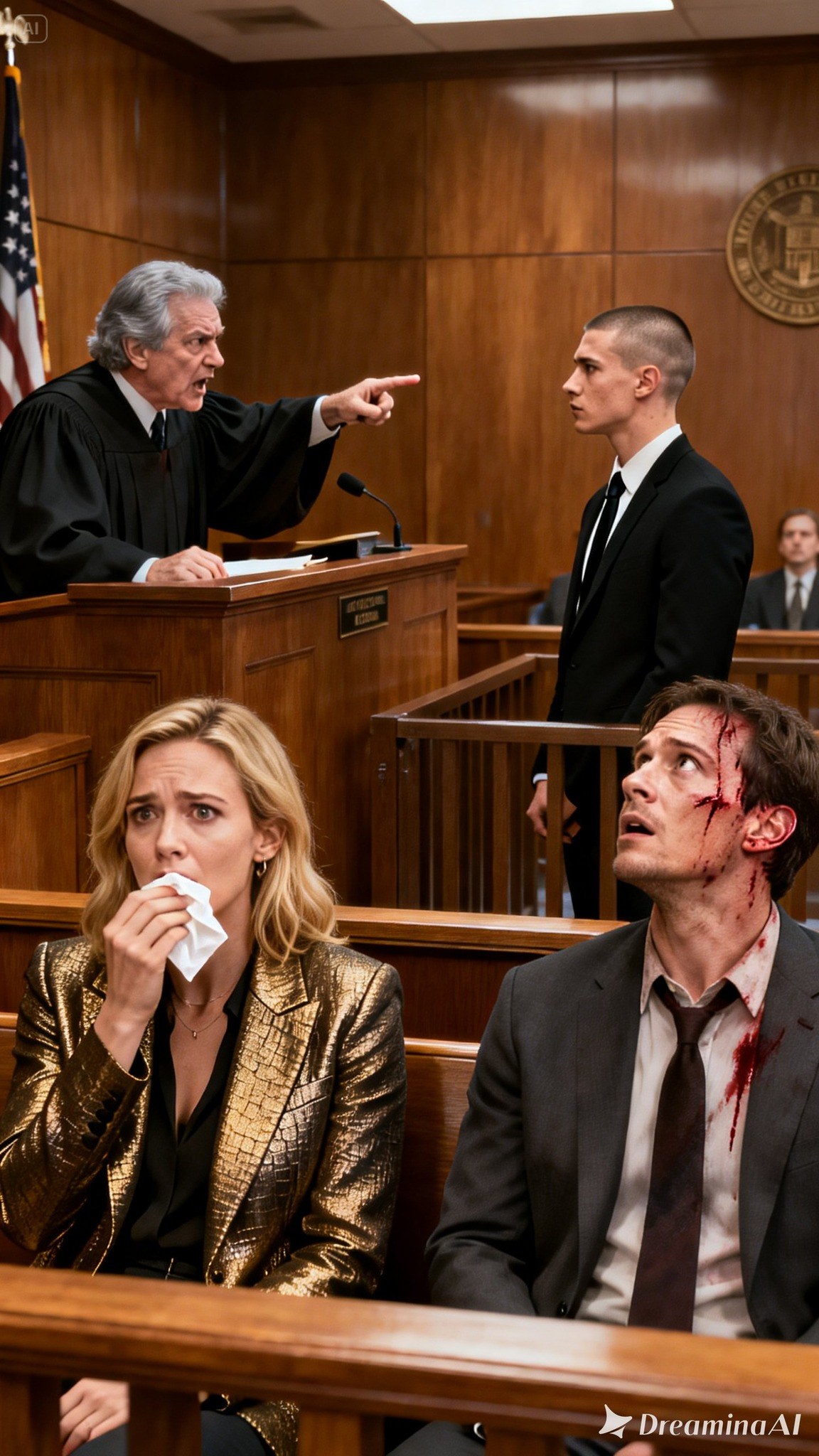
On the day of the hearing, the courthouse felt cold and imposing. My parents were already there, composed and confident. When Mark leaned toward me and accused me of stealing what belonged to them, I didn’t respond. Across the room, Clydesdale arranged his documents like a man preparing for surgery. When Judge Malcolm Reyes entered, the room fell silent. His presence commanded attention, his sharp eyes revealing nothing.
Clydesdale opened with a carefully constructed lie—portraying Richard as a confused old man suffering from dementia and me as a desperate grandson who had isolated and exploited him. Diana cried on cue. It was convincing, especially in a world that often mistakes quietness for weakness. My confidence wavered as the judge listened without expression.
When Glenn stood to respond, Judge Reyes interrupted him. Instead of addressing the lawyers, he fixed his gaze on me. He asked if I was Ethan Carter—the name I had used earlier in my career. My mother protested, insisting on my family name, but the judge ignored her completely.
He recognized me from a case years earlier—the OmniCorp embezzlement scandal. As my parents sat frozen, the judge explained what they never cared to know: I had been a forensic accounting intern who uncovered fraudulent records used to manipulate stock prices. I had reported the crime, testified against a major corporation, and sacrificed my career in the process, becoming blacklisted for violating an NDA in order to tell the truth. Thousands of workers had kept their pensions because of it. While my parents criticized my lack of ambition, I had chosen ethics over comfort.
The mood in the courtroom shifted instantly. Judge Reyes turned a cold stare toward Clydesdale and my parents, pointing out the absurdity of their claims. A man who had risked everything for integrity was now being accused of greed. Credibility, the judge said, mattered—and mine was unquestionable.
Mark exploded in anger, shouting accusations, but a single look from the judge silenced him. Medical records confirmed Richard’s mental clarity until his death. Financial records exposed the damage my parents had caused themselves.
“It appears,” Judge Reyes concluded, “that the real pressure placed on Richard Ashford came not from his grandson, but from his own children, who treated him as a financial instrument. This court finds no evidence of incapacity—and every indication of sound judgment.”
The challenge was dismissed. My parents were left with their debts and nothing else. I walked out with my grandfather’s legacy—and my self-respect. As I passed them in the hallway, they felt like strangers. Only then did I understand what Richard had truly given me. Not just wealth, but a moment where the truth spoke louder than they ever could. Stepping into the rain, I knew I was no longer invisible. I was finally standing on my own.