The news of my parents’ deaths didn’t arrive as one crushing blow. It came in fragments, spaced just far enough apart to let hope briefly surface before being taken away again. I was alone in my small Brooklyn studio, a lopsided cake from the corner deli slowly melting onto a paper plate. I’d lit a single candle—more felt unnecessary. The lawyer spoke calmly, methodically, outlining details with the detachment of someone reading off a checklist.
My younger sister, Savannah, had inherited everything that looked impressive on paper: the Westchester house with its trimmed hedges, the investment accounts, the art, the legacy that photographed well. I, meanwhile, was left with a deteriorating cabin in Alaska.
That was all. A cabin. No explanation in the lawyer’s voice, only a brief mention that my mother had left me a note. When the call ended, the quiet in the room felt heavier than the traffic outside. I stared at the candle flame, convinced there had been some mistake. Savannah had always been the obvious choice—the favored one, the pride of the family. I had learned early on how to be reliable without being visible.
My fiancé’s reaction only confirmed what I already feared. When I told him, he laughed—sharp, dismissive—like I’d told a bad joke. He talked about wasted potential, about how this proved I would always blend into the background. Then he ended our engagement as efficiently as canceling a service. He left behind the ring, a rusted key sent by the lawyer, and my mother’s handwritten note. It held just one line: You’ll understand why it had to be you.
At the time, I didn’t.
I went to Alaska because I had nowhere else to land. Brooklyn felt hostile, filled with reminders of a life that had quietly collapsed. The cabin sat far from the nearest town, buried in snow and silence. The roof sagged. The door protested when I forced it open. Inside, the air smelled of damp wood and old memories. I stood there shaking, unsure whether my parents had been cruel or simply detached.
The one warm memory I carried was of my grandfather, Elias. He’d lived there for decades and spent his summers teaching me what my parents never bothered with—how to split wood correctly, how to repair instead of replace, how to listen to the land. Praise never came easily from him, which made it matter when it did. He used to say that the world hides its value not because it’s rare, but because most people never slow down enough to notice it.
Back then, I thought it was just another of his strange sayings.
I stayed because leaving felt like surrender. Day by day, I repaired what I could—reinforcing beams, sealing walls, clearing snow. My hands cracked. My body ached. But the labor gave me something I hadn’t felt in years: direction. One night, exhausted and unfocused, I stepped on a section of floor that sounded hollow. It didn’t belong. I heard my grandfather’s voice in my head, urging me to look closer.
I pulled the boards apart.
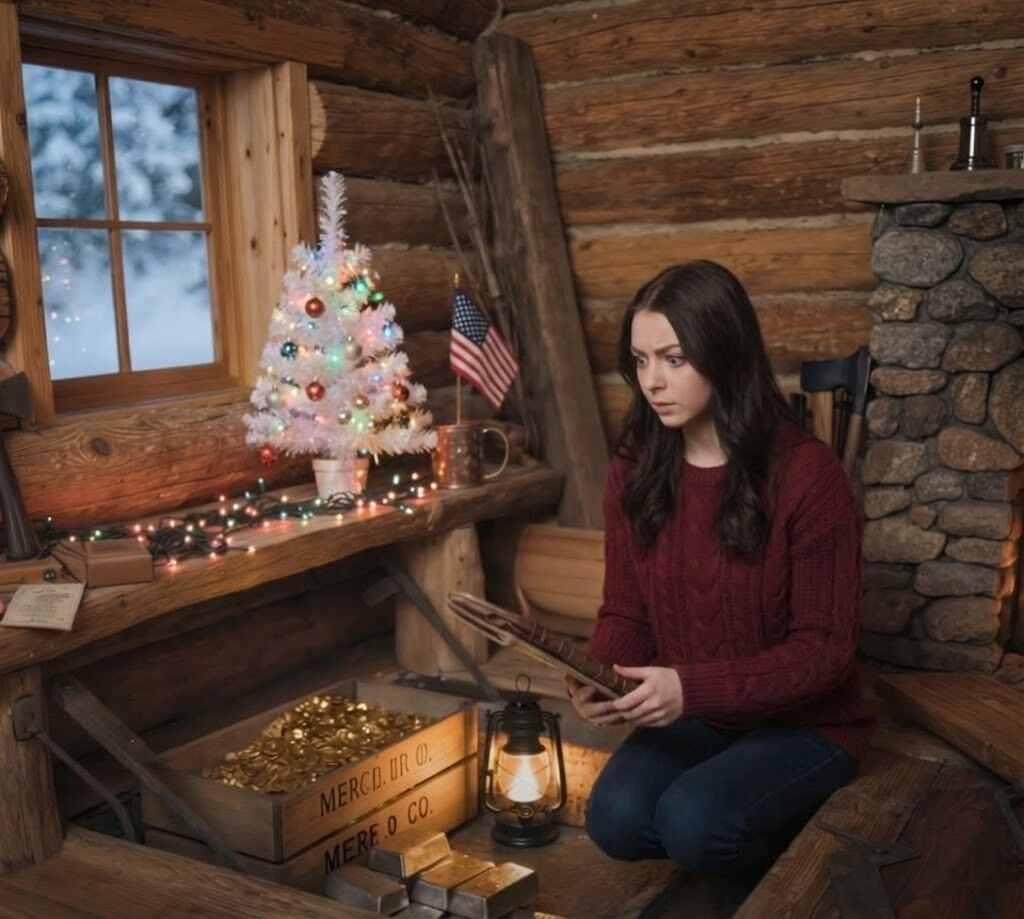
Beneath the cabin was a hidden cellar, carefully sealed. Inside were heavy crates—gold and silver bars, antique jewelry wrapped in cloth, documents detailing land ownership, leases, mineral rights, protected territories. It wasn’t just money. It was an entire system, deliberately built to remain unseen. My grandfather hadn’t been a quiet man living in isolation. He had been quietly building something immense.
I sat on the cold stone floor and laughed until tears came—not because of the wealth, but because I finally understood. The cabin hadn’t been a consolation. It was a test. Anyone chasing surface value would have sold it or walked away. Anyone impatient would have missed what lay beneath. My sister would have. My fiancé definitely would have.
I handled everything discreetly. I brought in professionals who valued privacy. I preserved my grandfather’s work instead of exploiting it, protecting the land and funding conservation and education efforts in his name. When Savannah eventually discovered the truth, she called in anger and disbelief, accusing me of deceit. I didn’t defend myself. There was nothing to explain.
By spring, the cabin was solid again—warm, lived in, real. It felt more like home than any apartment or estate ever had. People from my old life reached out once rumors of money began circulating. I turned them all away. Wealth has a way of clarifying intentions.
Each morning, I reread my mother’s note. Now, I understand it. Inheritance isn’t about appearances or equal division. It’s about trust. My parents hadn’t given me less—they had given me responsibility, knowing I was the one who wouldn’t waste it.
In the quiet of Alaska, surrounded by meaningful work and healing silence, I finally stopped measuring myself against anyone else. I know who I am now. And for the first time, that is enough.